Bill · H.R. 3198· House(119-HR-3198)
Intergovernmental Critical Minerals Task Force Act
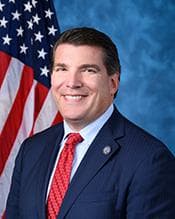
- Introduced
- 5/5/2025
- Last activity
- 5/5/2025 — Referred to the House Committee on Natural Resources.
- Sponsored by
- Jay Obernolte
- Cosponsors
- - 0 - 3
- Introduced
- In Committee
What this bill would do
The Intergovernmental Critical Minerals Task Force Act aims to reduce United States reliance on the People's Republic of China and other covered countries for critical minerals and rare Earth metals. It establishes a task force to coordinate efforts between the Federal Government and State, local, Tribal, and territorial jurisdictions. This task force will assess national security risks, recommend ways to secure supply chains, and identify domestic alternatives for these minerals. The bill also requires a study by the Comptroller General on the Federal and State regulatory landscape.
Yes· 3 of 18
Would Native Americans be better off under this?+6
The bill explicitly includes Indian Tribes in the task force and requires consultation with Tribal communities.
Would business owners be better off under this?+5
Mining and processing businesses stand to benefit from increased domestic production efforts.
Would people in rural areas be better off under this?+5
Domestic mineral extraction typically benefits rural areas through industrial development and employment.
The opposite
Does this make what the government does easier for the public to see?-2
The bill allows the redaction of information from public reports for national security reasons.
Who it would affect, and how
Potential Positive Impacts for People
-
Job Creation: The bill seeks recommendations to strengthen the domestic workforce by creating "good-paying, safe jobs" in the United States to support critical mineral supply chains (Section 3(g)(5)(A)(ii)(III)).
-
Environmental Responsibility: The task force is tasked with providing recommendations for the "environmentally responsible production" of domestic resources and the acceleration of "environmentally responsible domestic and international production" of minerals (Section 3(g)(5)(A)(ii)(I) and (II)).
-
National Security: By reducing reliance on covered countries for minerals used in military equipment, technology, and renewable energy, the bill aims to mitigate risks to the national security of the United States (Section 2 and Section 3(g)(5)(A)(ii)(VI)).
-
Intergovernmental Cooperation: The bill facilitates coordination and "mutual accountability" among Indian Tribes, State, local, and territorial governments and the Federal Government (Section 3(g)(1)(E)).
Potential Negative Impacts for People
-
Lack of Funding: The bill explicitly states that "No additional funds are authorized to be appropriated" for the task force, which may limit its ability to effectively carry out its duties (Section 3(g)(8)).
-
Potential for Secretive Findings: While the final report must be published in the Federal Register, the Chairperson or Co-Chairpersons can redact any information they determine "could pose a risk to the national security of the United States," potentially limiting public transparency (Section 3(g)(5)(C)(iii)).
Groups and Interests Ranking
Every group the model scored this bill for, from -10 to +10. Hover a score for the reason it gave.
- Demographic And Interest Groups
- Good For Native Americans+6Good For Business Owners+5Good For Rural Residents+5Good For Union Workers+3
- Environment Energy And Infrastructure
- Improves Environmental Protections+3Improves Rural Development+3Increases Renewable Energy Investment+3Improves Public Land Management+2Reduces Carbon Emissions+2
- National Security And Foreign Policy
- Improves International Alliances+5Improves Diplomatic Engagement+4Improves International Trade+3
- Economy And Finance
- Increases Job Creation+4Improves Economic Growth+3
- Governance And Ideology
- Improves Interstate Commerce+2Increase States Rights+2Increases Federal Power+2Improves Government Transparency-2
- Education And Technology
- Increases Scientific Research Funding+2
- 12/11/2025
- 1 Cosponsor added.
- 9/9/2025
- 1 Cosponsor added.
- 5/5/2025
- Referred to the House Committee on Natural Resources.
- 1 Cosponsor added.
- Introduced in House
One bill Congress.gov lists as related to this one — companions in the other chamber, earlier versions, and bills this one absorbed or was folded into.
 Susie Lee
Democrat · Nevada
 Kristen McDonald Rivet
Democrat · Michigan
 Eugene Vindman
Democrat · Virginia