Bill · H.R. 3161· House(119-HR-3161)
Preventing Environmental Hazards Act of 2025
- Introduced
- 5/1/2025
- Last activity
- 5/1/2025 — Referred to the House Committee on Financial Services.
- Sponsored by
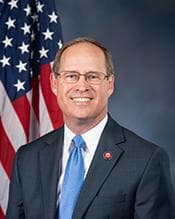
- Gregory Murphy
- Cosponsors
- - 2 - 2
- Introduced
- In Committee
What this bill would do
The Preventing Environmental Hazards Act of 2025 seeks to amend the National Flood Insurance Act of 1968. This bill would allow the National Flood Insurance Program to cover costs related to damage or loss caused by shoreline erosion and undermining. It provides for payments to help with the demolition or relocation of structures deemed unsafe due to imminent collapse or subsidence. These payments are subject to specific value limits and conditions regarding the timing of the action. Once assistance is provided, subsequent flood insurance or disaster relief is generally unavailable for that structure or land.
Yes· 3 of 4
Does this better protect air, water and wildlife?+4
The bill addresses the environmental hazard of shoreline erosion by funding the removal or demolition of threatened structures.
Would middle-income households be better off under this?+3
The bill offers a mechanism for homeowners to recoup value through demolition or relocation assistance.
Does this make housing cost less?+3
The bill provides financial assistance for the relocation of structures threatened by shoreline erosion.
The opposite
Does this reduce what the federal government spends?-2
The bill limits payout amounts to $250,000 or the contract coverage, which caps potential federal expenditures per claim.
Who it would affect, and how
Potential Positive Impacts for People
-
Financial assistance for demolition: If a structure is condemned or deemed unsafe due to erosion, the Administrator may pay 40 percent of the structure's value initially, and up to 60 percent after the demolition is completed, provided it happens within 6 months (Section 2(a)(1)(A)).
-
Financial assistance for relocation: For owners who choose to move their home rather than tear it down, the bill allows for payments of up to 40 percent of the structure's value to cover the cost of relocation, including the removal of septic systems (Section 2(a)(1)(B)).
-
Coverage for various erosion types: The protection applies whether the danger is caused by long-term, chronic erosion or by sudden waves and currents exceeding normal levels (Section 2(a)(1)).
Potential Negative Impacts for People
-
Loss of coverage for contents: Even if a structure is covered for demolition or relocation, the insurance will not pay for any loss or damage to the items inside the home (Section 2(a)(4)(B)).
-
Limits on total payout: The amount paid for a claim is capped at the lesser of the amount of coverage in the original flood insurance contract or $250,000 (Section 2(a)(4)(A)).
-
Restriction on future assistance: Once an owner receives assistance for a structure, they can no longer get flood insurance or disaster relief for that structure or any other structure on that same piece of land (Section 2(a)(6)).
-
Reduced payments for delays: If an owner waits too long—more than six months—or if the structure collapses before they act, the Administrator may limit the payment to only the initial 40 percent (Section 2(a)(2)).
-
Strict valuation methods: The value of the structure for the purpose of these payments might be limited to the lowest of several different calculation methods, which could result in a lower payout than expected (Section 2(a)(3)).
Groups and Interests Ranking
Every group the model scored this bill for, from -10 to +10. Hover a score for the reason it gave.
- Demographic And Interest Groups
- Good For Middle Class Households+3Good For High Income Households+2
- Environment Energy And Infrastructure
- Improves Environmental Protections+4
- Social Issues And Justice
- Improves Affordable Housing+3
- Economy And Finance
- Reduces Government Spending-2
- 5/1/2025
- Referred to the House Committee on Financial Services.
- 4 Cosponsors added.
- Introduced in House
 Donald Davis
Democrat · North Carolina
 Chellie Pingree
Democrat · Maine
 David Rouzer
Republican · North Carolina
 Robert Wittman
Republican · Virginia