 Bill · H.R. 3152· House(119-HR-3152)
Patent Eligibility Restoration Act of 2025
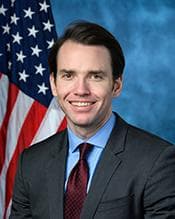
- Introduced
- 5/1/2025
- Last activity
- 5/1/2025 — Referred to the House Committee on the Judiciary.
- Sponsored by
- Kevin Kiley
- Cosponsors
- - 0 - 1
- Introduced
- In Committee
What this bill would do
The Patent Eligibility Restoration Act of 2025 aims to amend title 35 of the United States Code regarding patent subject matter eligibility. It seeks to eliminate judicial exceptions that have caused confusion and inconsistency in patent law. Under this bill, patent eligibility is expanded to include any useful process, machine, manufacture, or composition of matter. However, the Act establishes specific exclusions for items like mathematical formulas, certain mental processes, and unmodified natural materials. It also provides specific rules for how human genes and natural materials are treated when altered by human activity.
Yes· 3 of 4
Would business owners be better off under this?+4
Providing clearer rules for patent eligibility significantly benefits businesses involved in research and development.
Does this make patent and copyright rules fairer?+3
The bill provides more legal certainty and predictability for patent owners regarding subject matter eligibility.
Is this likely to grow the economy?+1
The clarity provided to patent owners may facilitate commercial innovation and investment.
The opposite
No question was scored the opposite.
Who it would affect, and how
Potential Positive Impacts for People
-
Increased Clarity for Patent Owners: The bill addresses findings that the current interpretation of section 101 is extremely confusing and difficult to apply with confidence, which may benefit patent owners and practitioners (Section 2).
-
Consistency in Law: By eliminating judicial exceptions, the Act seeks to resolve the lack of consistency and extensive confusion currently existing throughout the judicial branch and among patent practitioners (Section 2).
-
Expanded Patentability for Human-Altered Materials: A human gene or natural material will not be considered "unmodified" if it is purified, enriched, or otherwise altered by human activity, or employed in a useful invention or discovery (Section 3(a)(2)(b)(ii-C)).
-
Protection for Inventions Requiring Machines: An invention will not be excluded from eligibility if it cannot practically be performed without the use of a machine or manufacture (Section 3(a)(2)(b)(2)(A)).
Potential Negative Impacts for People
-
Exclusion of Mathematical Formulas: Mathematical formulas are ineligible for patent protection unless they are part of an invention in a specific category such as a process, machine, manufacture, or composition of matter (Section 3(a)(2)(1)(A)).
-
Exclusion of Human Mental Processes: Processes that are performed solely in the mind of a human being are not eligible for patent protection (Section 2(5)(D)(ii)).
-
Exclusion of Unmodified Natural Materials and Genes: Unmodified human genes as they exist in the human body, and unmodified natural materials as they exist in nature, are ineligible for patent protection (Section 2(5)(D)(iii-v)).
-
Exclusion of Certain Social or Economic Processes: Processes that are substantially economic, financial, business, social, cultural, or artistic are excluded from eligibility (Section 2(5)(D)(vi)).
-
Restrictions on Human-Driven Processes: Process claims that are drawn solely to steps undertaken by human beings—such as methods of doing business or performing dance moves—are not eligible for coverage (Section 2(5)(E)(i)).
Groups and Interests Ranking
Every group the model scored this bill for, from -10 to +10. Hover a score for the reason it gave.
- Demographic And Interest Groups
- Good For Business Owners+4
- Education And Technology
- Improves Intellectual Property Fairness+3
- Economy And Finance
- Improves Economic Growth+1
- Governance And Ideology
- Improves Due Process+1
- 5/1/2025
- Referred to the House Committee on the Judiciary.
- 1 Cosponsor added.
- Introduced in House
One bill Congress.gov lists as related to this one — companions in the other chamber, earlier versions, and bills this one absorbed or was folded into.
 Scott Peters
Democrat · California