Bill · H.R. 3106· House(119-HR-3106)
Weatherizing Infrastructure in the North and Terrorism Emergency Readiness Act of 2025
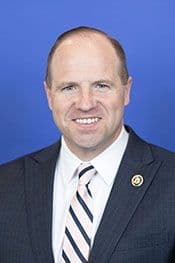
- Introduced
- 4/30/2025
- Last activity
- 7/14/2026 — Received in the Senate and Read twice and referred to the Committee on Homeland Security and Governmental Affairs.
- Sponsored by
- Timothy Kennedy
- Cosponsors
- - 1 - 0
- Introduced
- Passed House
- In Senate committee
What this bill would do
This Act, titled the "Weatherizing Infrastructure in the North and Terrorism Emergency Readiness Act of 2025," requires the Secretary of Homeland Security to conduct a specific terrorism exercise. The exercise must include a response to a terrorist attack occurring during an extreme cold weather event, such as a polar vortex. It focuses on managing cascading effects on critical infrastructure and maintaining access to critical services. The goal is to test how emergency managers, State officials, and private sector stakeholders can mitigate effects and bolster community resilience. Additionally, the Secretary must coordinate with various Federal, State, local, Tribal, and territorial agencies. Finally, a report must be submitted to specific Congressional committees within 60 days of the exercise.
Yes· 3 of 9
Does this improve help for people hit by a disaster?+4
The exercise improves coordination between government agencies and stakeholders to manage extreme weather and attack scenarios.
Would Native Americans be better off under this?+3
The bill mandates coordination with Tribal agencies to enhance their resilience to infrastructure failures.
Does this better protect the country from computer attacks?+3
The bill tests the security posture of critical infrastructure against coordinated attacks.
The opposite
No question was scored the opposite.
What Congress actually voted on
One recorded vote has been taken on this bill.
- The House: a fast-track vote, needing two-thirds to passPassed 400–7
The House sets aside its normal procedure to move quickly: no amendments, little debate, and a two-thirds bar instead of a simple majority. It is used for measures expected to be uncontroversial, so a bill that fails here failed despite broad expectations that it would not.
07/13/2026 · Roll call 234 · recorded as “On Motion to Suspend the Rules and Pass”
Who it would affect, and how
Potential Positive Impacts for People
-
Enhanced Domestic Preparedness: The exercise aims to enhance domestic preparedness for terrorism and test the homeland security posture of the United States (Section 2(a)).
-
Improved Mitigation Strategies: The exercise looks at how the effects of a successful terrorist attack against critical infrastructure could be mitigated by emergency managers, State officials, and private sector/community stakeholders (Section 2(b)(3)).
-
Increased Community Resilience: The provisions include testing how the resilience of impacted communities could be bolstered (Section 2(b)(4)).
-
Improved Coordination: The act requires coordination between Federal departments, State, local, Tribal, and territorial agencies, as well as private sector and community stakeholders (Section 2(b)(5) and Section 2(b)(6)).
Potential Negative Impacts for People
- No specific negative impacts or burdens are explicitly stated in the provided text.
Groups and Interests Ranking
Every group the model scored this bill for, from -10 to +10. Hover a score for the reason it gave.
- Demographic And Interest Groups
- Good For Native Americans+3Good For Low Income Households+2Good For Rural Residents+2Good For Urban Residents+2
- Environment Energy And Infrastructure
- Improves Disaster Relief And F E M A+4Improves Roads And Bridges+2
- National Security And Foreign Policy
- Improves Cybersecurity Defense+3Increases Counter Terrorism Funding+2
- Governance And Ideology
- Improves Government Transparency+2
- 7/14/2026
- Received in the Senate and Read twice and referred to the Committee on Homeland Security and Governmental Affairs.
- 7/13/2026
- Reported by the Committee on Homeland Security. H. Rept. 119-744.
- Placed on the Union Calendar, Calendar No. 648.
- Motion to reconsider laid on the table Agreed to without objection.
- Passed/agreed to in House: On motion to suspend the rules and pass the bill Agreed to by the Yeas and Nays: (2/3 required): 400 - 7 (Roll no. 234). (text: CR H4394-4395)
- On motion to suspend the rules and pass the bill Agreed to by the Yeas and Nays: (2/3 required): 400 - 7 (Roll no. 234). (text: CR H4394-4395)
- Considered as unfinished business. (consideration: CR H4403)
- At the conclusion of debate, the Yeas and Nays were demanded and ordered. Pursuant to the provisions of clause 8, rule XX, the Chair announced that further proceedings on the motion would be postponed.
- DEBATE - The House proceeded with forty minutes of debate on H.R. 3106.
- Considered under suspension of the rules. (consideration: CR H4394-4395)
- Mr. Garbarino moved to suspend the rules and pass the bill.
- 6/24/2026
- Subcommittee on Emergency Management and Technology Discharged
- Subcommittee on Counterterrorism and Intelligence Discharged
- Committee Consideration and Mark-up Session Held
- Ordered to be Reported by the Yeas and Nays: 30 - 0.
- 5/1/2025
- Referred to the Subcommittee on Counterterrorism and Intelligence.
- Referred to the Subcommittee on Emergency Management and Technology.
- 4/30/2025
- Referred to the House Committee on Homeland Security.
- 1 Cosponsor added.
- Introduced in House
 Bennie Thompson
Democrat · Mississippi