Bill · H.R. 3099· House(119-HR-3099)
STOP Health Threats Act
- Introduced
- 4/30/2025
- Last activity
- 4/30/2025 — Referred to the Subcommittee on Economic Development, Public Buildings, and Emergency Management.
- Sponsored by
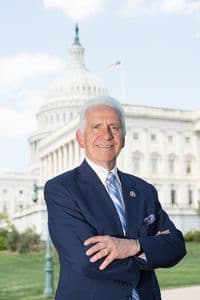
- Jim Costa
- Cosponsors
- - 0 - 3
- Introduced
- In Committee
What this bill would do
The "STOP Health Threats Act" directs the Secretary of Health and Human Services to provide grants to local governments. These grants are for training local enforcement officers to recognize and respond to public health threats caused by building code violations. The Secretary will consult with the Secretary of Housing and Urban Development and other relevant agencies. Local governments must apply for these grants and use the funds to develop training programs and coordinate with government agencies or nongovernmental organizations. Priority for grants will be based on the applicant's capacity to provide training and the identification of threats in their area.
Yes· 3 of 24
Would households on low incomes be better off under this?+3
Low-income households are more likely to live in buildings with code violations.
Would people in cities be better off under this?+3
Urban areas typically have higher densities of aging buildings with code violations.
Would children be better off under this?+2
Children are more vulnerable to health threats in building code violations (e.g., lead, mold).
The opposite
Does this reduce what the federal government owes?-1
The bill authorizes new federal grant spending, which slightly increases government expenditure.
Does this reduce what the federal government spends?-1
The bill mandates the Secretary of HHS to provide grants, increasing spending.
Who it would affect, and how
Potential Positive Impacts for People
-
Improved Public Health Safety: The bill provides training for officers to recognize and respond to public health threats arising from building code violations, which could lead to safer residential structures and facilities (Section 2(a)).
-
Inter-Agency Collaboration: The bill requires local governments to coordinate with public health departments, other government levels, and nongovernmental organizations with expertise, ensuring a more comprehensive response to health threats (Section 2(b)(3)).
Potential Negative Impacts for People
- Uneven Access to Training: Because the Secretary gives priority to applicants based on their existing capacity to provide training and areas where threats have already been identified, some local governments may not receive grants (Section 2(d)).
Groups and Interests Ranking
Every group the model scored this bill for, from -10 to +10. Hover a score for the reason it gave.
- Demographic And Interest Groups
- Good For Low Income Households+3Good For Urban Residents+3Good For Children+2Good For Immigrants+2Good For People With Disabilities+2Good For Retirees+2Good For Rural Residents+2Good For Seniors+2Good For African Americans+1Good For Asian Americans+1Good For Hispanic Americans+1Good For Middle Aged+1Good For Middle Class Households+1Good For Native Americans+1Good For Students+1Good For White Americans+1Good For Young Adults+1
- Social Issues And Justice
- Improves Affordable Housing+2Improves Disability Rights+1
- Environment Energy And Infrastructure
- Improves Environmental Protections+1Improves Rural Development+1
- Economy And Finance
- Improves Consumer Protection+1Reduces Government Spending-1Reduces National Debt-1
- Governance And Ideology
- Increases Federal Power+1
- Healthcare
- Improves Healthcare Access+1
- 9/26/2025
- 1 Cosponsor added.
- 5/7/2025
- 1 Cosponsor added.
- 4/30/2025
- Referred to the House Committee on Transportation and Infrastructure.
- Referred to the Subcommittee on Economic Development, Public Buildings, and Emergency Management.
- 1 Cosponsor added.
- Introduced in House
 Brian Fitzpatrick
Republican · Pennsylvania
 Zachary Nunn
Republican · Iowa
 David Valadao
Republican · California