Bill · H.R. 3092· House(119-HR-3092)
Electrodiagnostic Medicine Patient Protection and Fraud Elimination Act of 2025
- Introduced
- 4/30/2025
- Last activity
- 4/30/2025 — Referred to the Committee on Energy and Commerce, and in addition to the Committee on Ways and Means, for a period to be subsequently determined by the Speaker, in each case for consideration of such provisions as fall within the jurisdiction of the committee concerned.
- Sponsored by
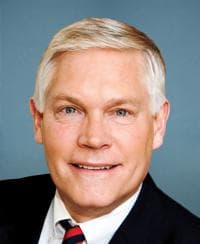
- Pete Sessions
- Cosponsors
- - 2 - 0
- Introduced
- In Committee
What this bill would do
The Electrodiagnostic Medicine Patient Protection and Fraud Elimination Act of 2025 changes how Medicare pays for nerve conduction studies and needle electromyography tests. It requires these services to be provided at a "qualified facility" to receive payment. To be qualified, a facility must be accredited by an organization chosen by the Secretary. These facilities must meet specific standards for equipment, quality control, and staff training. The bill also creates a National Electrodiagnostic Services Advisory Committee to help set these standards and regulations.
Yes· 3 of 10
Would people over 65 be better off under this?+5
As the primary Medicare population, seniors benefit from higher quality care and fraud prevention.
Would retired people be better off under this?+5
Retirees using Medicare benefit from enhanced quality of care and reduced diagnostic errors.
Does this give people more protection from unfair business practices?+4
Patients are protected from fraud and low-quality diagnostic services.
The opposite· 3 of 5
Would people in rural areas be better off under this?-4
Rural patients may face significantly longer travel distances if local clinics cannot meet accreditation standards.
Does this make health care easier to get in general?-3
Requiring services to be provided at 'qualified facilities' may reduce the number of available locations for patients.
Does this leave more decisions to the states?-3
Shifts control of facility standards from state-level or private discretion to federal requirements.
Who it would affect, and how
Potential Positive Impacts for People
-
Improved Quality of Care: The bill requires facilities to maintain a quality assurance and control program to ensure services are reliable, safe, and accurate (Section 2(aa)(4)(B)(i)).
-
Standardized Equipment: Facilities must use devices capable of real-time waveform display and analysis for needle electromyography and specific recording capabilities for nerve conduction studies (Section 2(aa)(4)(B)(ii)).
-
Qualified Staff: For needle electromyography tests, the person performing the test must have at least 3 months of specific training in a residency or fellowship program (Section 2(aa)(4)(B)(iii)).
-
Immediate Results: The bill requires that results be interpreted on-site and at the time of the procedure (Section 2(aa)(4)(B)(iv)).
-
Patient-Focused Goals: The new advisory committee is tasked with prioritizing the reduction of unnecessary surgeries and treatments, decreasing the need for retesting, and improving diagnostic reliability (Section 2(aa)(5)(B)(i)).
Potential Negative Impacts for People
- Limited Access to Services: Medicare will not pay for nerve conduction studies or needle electromyography tests unless they are furnished at a "qualified facility" (Section 2(aa)(1)). This could limit where people can receive these services.
Groups and Interests Ranking
Every group the model scored this bill for, from -10 to +10. Hover a score for the reason it gave.
- Demographic And Interest Groups
- Good For Retirees+5Good For Seniors+5Good For People With Disabilities+3Good For Middle Aged+2Good For Rural Residents-4Good For Business Owners-2
- Economy And Finance
- Improves Consumer Protection+4Improves Fiscal Responsibility+3Reduces Government Spending+2Reduces National Debt+1Improves Small Business Support-2
- Healthcare
- Improves Healthcare Access-3
- Social Issues And Justice
- Improves Social Security+1
- Governance And Ideology
- Increases Federal Power+3Increase States Rights-3
- 4/30/2025
- Referred to the Committee on Energy and Commerce, and in addition to the Committee on Ways and Means, for a period to be subsequently determined by the Speaker, in each case for consideration of such provisions as fall within the jurisdiction of the committee concerned.
- 2 Cosponsors added.
- Introduced in House
 Lloyd Smucker
Republican · Pennsylvania
 Randy Weber
Republican · Texas