Bill · H.R. 3077· House(119-HR-3077)
Agriculture Resilience Act of 2025
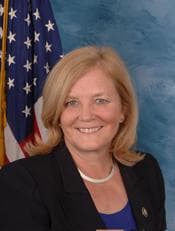
- Introduced
- 4/29/2025
- Last activity
- 4/29/2025 — Referred to the Committee on Agriculture, and in addition to the Committees on Education and Workforce, Energy and Commerce, House Administration, and Oversight and Government Reform, for a period to be subsequently determined by the Speaker, in each case for consideration of such provisions as fall within the jurisdiction of the committee concerned.
- Sponsored by
- Chellie Pingree
- Cosponsors
- - 21 - 0
- Introduced
- In Committee
What this bill would do
The Agriculture Resilience Act of 2025 aims to address climate change impacts on the agricultural sector by establishing national goals to achieve net-zero emissions by 2040. The bill mandates increased federal investment in agricultural research, focuses on soil health, and promotes farmland preservation. It includes provisions for pasture-based livestock management, on-farm renewable energy, and reducing food loss and waste. Additionally, the legislation establishes new research centers for agroforestry and grant programs for farm viability and climate resiliency. The act also implements new standards for animal raising claims and food date labeling to reduce waste. Finally, it outlines initiatives to support rural communities and increase the capacity of small meat and poultry processing.
Who it would affect, and how
Potential Positive Impacts for People
-
Increased Research Investment: The bill seeks to triple Federal investment in agriculture research by 2030 and quadruple it by 2040 to focus on climate change adaptation and mitigation (Sec. 101(c)(1)).
-
Expansion of Agroforestry Research: The establishment of a National Agroforestry Research, Development, and Demonstration Center and additional regional centers will provide specialized research and demonstration capabilities (Section (b)(1)).
-
Support for Soil Health and Carbon Sequestration: The bill aims to increase soil carbon stocks through practices like cover cropping and diverse crop rotations, and amends programs to prioritize production approaches that improve soil health (Sec. 101(c)(2) and Section 210A(1) and (2)).
-
Regional Information and Support: The establishment of regional hubs will provide farmers, ranchers, and forest landowners with science-based, practical information and assistance to manage climate risks (Sec. 202(a)).
-
Financial Support for Farm Viability: The creation of Farm Viability and Local Climate Resiliency Centers will provide grants to help entities develop business plans, marketing strategies, and enterprise development (Section 401(6)).
-
Increased Organic Certification Benefits: The bill increases the federal share for the National Organic Certification Cost-Share Program from $750 to $1,500 (Section s 402(a)).
-
Protection of Important Farmland: Updates to the Farmland Protection Policy Act include a new definition for "farmland of national significance" to help protect land suitable for intensive food production (Section 403(c)(3)).
-
Enhanced Resilience for Livestock and Crops: Provisions include advancing grazing management and integrating livestock and crop production to improve environmental management (Sec. 101(c)(4)).
-
Support for Managed Grazing: The bill provides assistance for producers transitioning from confinement or continuous grazing systems to managed grazing-based systems (Section 503(a)(1)(J)).
-
Economic Opportunities for Animal Producers: The establishment of standards for "animal raising claims" is intended to facilitate new economic opportunities for producers using specific practices, such as grass-fed or pasture-raised (Section 501(b)(2)).
-
Increased Resilience in Meat Processing: The Processing Resilience Grant Program provides funds to increase the capacity and diversification of the small meat and poultry processing sector (Section 502(b)(1)).
-
Renewable Energy Opportunities: The bill encourages expanding on-farm clean renewable energy production and implementing energy efficiency improvements (Sec. 101(c)(5)).
-
Reduction of Food Waste through Labeling: The implementation of uniform "quality date" and "discard date" phrases aims to provide clearer information to consumers, which can help reduce food waste (Section 702(a) and (b)).
-
Increased Food Donation: Federal contractors will be required to donate excess, apparently wholesome food to nonprofit organizations, helping to feed food-insecure people (Section 712(c)(1)).
-
Financial Incentives and Assistance: Various sections provide for risk-reduction based premium discounts for crop insurance (Sec. 301(b)) and various conservation assistance programs (Sec. 302).
-
State and Tribal Support: Grants are provided to States and Tribal governments to develop and implement plans to improve soil health (Sec. 304).
-
Efficiency and Accountability: The Liaison reviews annual reports to ensure that funds are being used efficiently according to the duties of the Program (Section 1(A)(B)(i)).
-
Public Access to Information: The Liaison must publish an annual report on the Program website (Section 1(2)), providing the public with access to information regarding activities, partnerships, and findings.
-
Valuable Research and Education: The review process ensures the Program is producing usable public research, data, education, and recommendations regarding food waste and food been reduction issues (Section 1(A)(B)(ii)).
Potential Negative Impacts for People
-
Strict Emission Reduction Goals: The bill mandates a 50-percent reduction in net greenhouse gas emissions by 2030 and net zero emissions by 2040, which sets rigorous targets for the agricultural sector (Sec. 101(b)).
-
Changes to Land Use Requirements: The bill encourages the conversion of a significant portion of annual grain crop acres to agroforestry, perennial grazing, or other perennial systems (Sec. 101(c)(2)(D)).
-
Restrictions on Livestock Management: The bill includes requirements to reduce greenhouse gas emissions related to feeding ruminants and calls for ceasing the building of new or expanded waste lagoons for certain operations (Sec. 101(c)(4)).
-
Mandatory Energy Audits: The act targets the implementation of energy audits on at least 50 percent of farms by 2030 and 100 percent by 2040 (Sec. 101(c)(5)(A)).
-
Compliance Burdens for Animal Producers: Producers wishing to use "animal raising claims" must follow mandatory standards and submit detailed documentation, such as written descriptions of production controls and product tracing mechanisms (Section 501(b)(1) and (d)).
-
Penalties for Mislabeling: There are civil penalties of up to $10,000 for those who knowingly use incorrect animal raising claims, and potential criminal penalties for making false statements to officials (Section 501(f)(1) and (2)).
-
Requirements for Landowners: Owners of land receiving assistance through the Agricultural Conservation Easement Program must agree to implement a conservation plan addressing specific resource concerns, such as soil health, within three years (Section 404(b)(6)).
-
New Requirements for Food Labelers: Entities responsible for food labels must follow specific uniform phrases for quality and discard dates, which may require changes to existing packaging and labeling systems (Section 702(a) and (b)).
- 10/8/2025
- 1 Cosponsor added.
- 8/15/2025
- 1 Cosponsor added.
- 7/2/2025
- 1 Cosponsor added.
- 5/20/2025
- 2 Cosponsors added.
- 4/29/2025
- Referred to the Committee on Agriculture, and in addition to the Committees on Education and Workforce, Energy and Commerce, House Administration, and Oversight and Government Reform, for a period to be subsequently determined by the Speaker, in each case for consideration of such provisions as fall within the jurisdiction of the committee concerned.
- 16 Cosponsors added.
- Introduced in House
One bill Congress.gov lists as related to this one — companions in the other chamber, earlier versions, and bills this one absorbed or was folded into.
 Julia Brownley
Democrat · California
 Gerald Connolly
Democrat · Virginia
 Maxwell Frost
Democrat · Florida
 Josh Gottheimer
Democrat · New Jersey
 Jared Huffman
Democrat · California
 Val Hoyle
Democrat · Oregon
 Pramila Jayapal
Democrat · Washington
 Ro Khanna
Democrat · California
 Raja Krishnamoorthi
Democrat · Illinois
 Mike Levin
Democrat · California
 Betty McCollum
Democrat · Minnesota
 Seth Moulton
Democrat · Massachusetts
 Mark Pocan
Democrat · Wisconsin
 Stacey Plaskett
Democrat · Virgin Islands
 Jimmy Panetta
Democrat · California
 Mike Quigley
Democrat · Illinois
 Marilyn Strickland
Democrat · Washington
 Kim Schrier
Democrat · Washington
 Paul Tonko
Democrat · New York
 Rashida Tlaib
Democrat · Michigan
 James Walkinshaw
Democrat · Virginia