Bill · H.R. 3042· House(119-HR-3042)
MMEDS Act of 2025
- Introduced
- 4/28/2025
- Last activity
- 4/28/2025 — Referred to the Committee on Ways and Means, and in addition to the Committee on Energy and Commerce, for a period to be subsequently determined by the Speaker, in each case for consideration of such provisions as fall within the jurisdiction of the committee concerned.
- Sponsored by
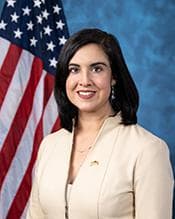
- Nicole Malliotakis
- Cosponsors
- - 6 - 4
- Introduced
- In Committee
What this bill would do
The MMEDS Act of 2025 aims to increase domestic medical manufacturing by providing tax incentives for companies that operate in economically distressed areas of the United States and its possessions. It establishes tax credits for wages, fringe benefits, and property depreciation for qualified medical manufacturing facilities. Higher incentives are available for facilities that repatriate production from high-risk foreign countries or produce specific population health products. The bill also expands definitions for qualified countermeasures and population health products to better protect vulnerable populations during pandemics. Finally, it requires the Secretary of Health and Human Services to report on the need for further innovation in population health products.
Yes· 3 of 37
Does this make the country readier for the next outbreak?+9
Focuses on securing the national supply chain and developing countermeasures for pandemics.
Would households on low incomes be better off under this?+8
Directly targets job creation and investment in areas with high poverty rates.
Is this likely to create jobs?+8
Provides strong tax incentives for companies to create medical manufacturing jobs in economically distressed areas.
The opposite· 3 of 4
Does this raise the taxes companies pay?-5
The bill provides significant tax credits to corporations, reducing their overall tax burden.
Does this reduce what the federal government owes?-3
Tax credits typically reduce federal revenue, which may increase the national debt.
Does this make the government pay for what it commits to?-2
Creates new tax expenditures without an explicit funding offset.
Who it would affect, and how
Potential Positive Impacts for People
-
Job Creation in Poor Areas: The bill provides a tax credit for "economically distressed zone wages," which encourages companies to hire employees in areas with poverty rates of at least 25 to 30 percent (SEC. 1400AA-1, SEC. 1400AA-4).
-
Better Employee Benefits: Companies can receive tax credits for "allocable employee fringe benefit expenses," including health plans, pensions, and life or disability insurance for workers in these zones (SEC. 1400AA-1).
-
Securing Medical Supplies: The bill provides increased incentives for "qualified repatriated medical manufacturing facilities" that move production from foreign countries that pose a risk to the national supply chain (SEC. 1400AA-3).
-
Protection for Vulnerable Groups: The bill prioritizes the development of products specifically designed to protect "vulnerable American populations," including children, pregnant women, older adults, and minority populations, during epidemics and pandemics (SEC. 3(c)).
-
Faster Access to Health Products: The Secretary is required to collaborate with other federal agencies to ensure population health products are distributed "as promptly and effectively as possible" to at-risk individuals (SEC. 3(d)(8)).
Potential Negative Impacts for People
-
Limited Benefit for Certain Workers: The tax credit for wages does not apply to employees assigned to perform services for another person, unless the employer's main business is providing temporary employees (SEC. 1400AA-1(c)(1)).
-
Restriction on Business Relocation: State or local governments applying for zone designation cannot use the plan to help a business relocate from outside the nominated area into the zone, unless it is an expansion that does not decrease employment at the original location (SEC. 1400AA-4(b)(2)(F)).
Groups and Interests Ranking
Every group the model scored this bill for, from -10 to +10. Hover a score for the reason it gave.
- Demographic And Interest Groups
- Good For Low Income Households+8Good For Business Owners+7Good For African Americans+6Good For Asian Americans+6Good For Children+6Good For Hispanic Americans+6Good For Native Americans+6Good For Retirees+6Good For Seniors+6Good For Veterans+6Good For Women+6Good For Rural Residents+5Good For Urban Residents+5Good For Middle Aged+4Good For People With Disabilities+4Good For Young Adults+4Good For Men+3Good For Middle Class Households+3Good For White Americans+3
- Healthcare
- Improves Pandemic Preparedness+9Increases Research Funding+6Improves Healthcare Access+5Improves Veterans Healthcare+4Reduces Prescription Drug Costs+2
- Economy And Finance
- Increases Job Creation+8Improves Economic Growth+6Improves Small Business Support+5Reduces Small Business Taxes+5Increases Corporate Taxes-5Reduces National Debt-3Improves Fiscal Responsibility-2
- Social Issues And Justice
- Improves Poverty Reduction+7Improves Racial Equity+5Reduces Homelessness+2
- Governance And Ideology
- Increases Federal Power+3Improves Interstate Commerce+2Increase States Rights+2
- Education And Technology
- Increases Scientific Research Funding+6
- Environment Energy And Infrastructure
- Improves Rural Development+5
- National Security And Foreign Policy
- Improves Veterans Benefits+3Improves International Trade-2
- 6/24/2025
- 1 Cosponsor added.
- 6/3/2025
- 1 Cosponsor added.
- 5/15/2025
- 1 Cosponsor added.
- 5/8/2025
- 2 Cosponsors added.
- 5/5/2025
- 1 Cosponsor added.
- 4/28/2025
- Referred to the Committee on Ways and Means, and in addition to the Committee on Energy and Commerce, for a period to be subsequently determined by the Speaker, in each case for consideration of such provisions as fall within the jurisdiction of the committee concerned.
- 4 Cosponsors added.
- Introduced in House
 Vern Buchanan
Republican · Florida
 Lance Gooden
Republican · Texas
 Carlos Gimenez
Republican · Florida
 Jeff Hurd
Republican · Colorado
 Pablo Hernández
Democrat · Puerto Rico
 Mike Quigley
Democrat · Illinois
 Maria Salazar
Republican · Florida
 Darren Soto
Democrat · Florida
 Claudia Tenney
Republican · New York
 Ritchie Torres
Democrat · New York