Bill · H.R. 2996· House(119-HR-2996)
CAP Act of 2025
- Introduced
- 4/24/2025
- Last activity
- 4/24/2025 — Referred to the House Committee on Energy and Commerce.
- Sponsored by
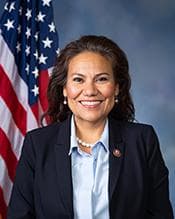
- Veronica Escobar
- Cosponsors
- None
- Introduced
- In Committee
What this bill would do
This bill, the Climate Adaptation Plan Act of 2025, directs the Environmental Protection Agency (EPA) Administrator to establish a grant program. The program aims to help eligible entities develop climate adaptation plans. The grants are awarded competitively to facilitate the development of these plans.
Potential Positive Impacts for People:
-
Climate Adaptation Planning (Sec. 2): Facilitates the development of climate adaptation plans by eligible entities, potentially benefiting communities by preparing them for climate change impacts.
-
Stakeholder Consultation (Sec. 2(b)): Requires the Administrator to consult with stakeholders, including youth, farmers, and Indigenous communities, in implementing the grant program, which can lead to more inclusive and effective adaptation plans.
-
Environmental Justice Priority (Sec. 2(f)): Prioritizes applications from eligible entities that include an environmental justice community, aiming to address disproportionate climate change impacts on vulnerable populations.
-
No Matching Requirement (Sec. 2(g)): Eliminates the need for matching funds, making it easier for eligible entities, particularly those with limited resources, to access grant funding.
-
Consideration of Demographic and Social Factors (Sec. 2(e)(1)): Requires climate adaptation plans to consider demographic and social factors, including race, ethnicity, socioeconomic status, health, and historic/ongoing systemic racism when assessing climate change risks, leading to more equitable and targeted solutions.
Potential Negative Impacts for People:
-
Application Burden (Sec. 2(c)): The application process requires eligible entities to provide detailed information, including demographic data and experience with risk assessments, which could be burdensome for smaller entities with limited administrative capacity.
-
Broad Definition of Eligible Entity: The definition of an "eligible entity" is very broad, this may make it more difficult for an entity to be awarded a grant due to increased competition. (Sec. 2(h)(3))
Yes· 3 of 46
Would households on low incomes be better off under this?+8
Prioritizes environmental justice and low-income communities for funding.
Would Native Americans be better off under this?+8
Explicitly includes Tribal governments and Indigenous communities as eligible entities.
Would Black Americans be better off under this?+7
Directly addresses systemic racism and prioritizes communities of color.
The opposite
Does this reduce what the federal government spends?-2
Directs the EPA to spend funds on a new competitive grant program.
Does this reduce what the federal government owes?-1
The establishment of a new federal grant program increases government spending.
Groups and Interests Ranking
Every group the model scored this bill for, from -10 to +10. Hover a score for the reason it gave.
- Demographic And Interest Groups
- Good For Low Income Households+8Good For Native Americans+8Good For African Americans+7Good For Asian Americans+7Good For Hispanic Americans+7Good For Farmers+6Good For Rural Residents+5Good For Urban Residents+5Good For Union Workers+4Good For Young Adults+4Good For Business Owners+3Good For Children+3Good For Immigrants+3Good For L G B T Q Community+3Good For Men+3Good For Middle Aged+3Good For Middle Class Households+3Good For People With Disabilities+3Good For Retirees+3Good For Seniors+3Good For Students+3Good For White Americans+3Good For Women+3Good For Billionaires+2Good For High Income Households+2Good For High Net Worth Individuals+2Good For Ultra High Net Worth Individuals+2
- Environment Energy And Infrastructure
- Improves Disaster Relief And F E M A+6Improves Environmental Protections+6Improves Public Land Management+5Reduces Carbon Emissions+5Improves Roads And Bridges+4Improves Rural Development+4Improves Public Transit+3Increases Renewable Energy Investment+2Reduces Fossil Fuel Production+2
- Social Issues And Justice
- Improves Racial Equity+7Improves Poverty Reduction+4Improves Affordable Housing+3Reduces Homelessness+1
- Education And Technology
- Increases Scientific Research Funding+3
- Governance And Ideology
- Increases Federal Power+2Improves Government Transparency+1
- Economy And Finance
- Improves Economic Growth+2Increases Job Creation+2Reduces Government Spending-2Reduces National Debt-1
- Healthcare
- Improves Healthcare Access+1
- 4/24/2025
- Referred to the House Committee on Energy and Commerce.
- Introduced in House