Bill · H.R. 2975· House(119-HR-2975)
Broadband Incentives for Communities Act
- Introduced
- 4/21/2025
- Last activity
- 4/21/2025 — Referred to the House Committee on Energy and Commerce.
- Sponsored by
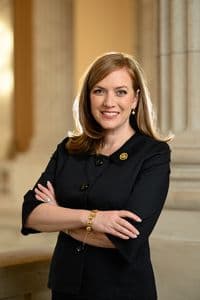
- Lizzie Fletcher
- Cosponsors
- - 1 - 0
- Introduced
- In Committee
What this bill would do
The "Broadband Incentives for Communities Act" directs the Assistant Secretary of Commerce for Communications and Information to create a competitive grant program for local governments. These grants aim to help local governments efficiently review and approve zoning and permitting applications for broadband infrastructure. Eligible entities must implement efficient processes and reasonable fee structures to qualify. Funds can be used for hiring, training, and purchasing technology. Additionally, the bill establishes a Local Broadband Advisory Council to find solutions for deployment challenges.
Yes· 3 of 32
Would people in rural areas be better off under this?+8
Directly addresses the digital divide in underserved rural communities.
Does this get reliable internet to more people?+8
The core purpose of the bill is to facilitate the deployment of broadband infrastructure.
Would households on low incomes be better off under this?+6
Explicitly aims to expand connections to underserved low-income communities.
The opposite
Does this leave more decisions to the states?-2
Local governments must adopt specific federal-incentivized policies to qualify for funding.
Does this reduce what the federal government owes?-1
The bill authorizes appropriations for a new grant program, which may increase government spending.
Does this reduce what the federal government spends?-1
The bill creates a new expenditure for competitive grants to local governments.
Who it would affect, and how
Potential Positive Impacts for People
-
Faster Broadband Deployment: By providing grants to help local governments with "efficient review and approval of zoning and permitting applications," the bill seeks to facilitate the deployment of broadband infrastructure (Section 3(a)).
-
Support for Underserved Areas: The bill references the need to expand broadband connections to "underserved rural communities and underserved low-income communities" (Section 2(1)) and focuses on finding solutions for "unserved and underserved communities" (Section 4(a)).
-
Lowering Costs for Infrastructure: Eligible local governments must limit certain application fees to the "actual, objectively reasonable costs" incurred to process the application (Section 3(b)(2)(C)(i)).
-
Improved Local Government Capacity: Grants can be used for "employee training and hiring" and the "purchase of technology, software, and equipment" to better handle application processing (Section 3(c)).
Potential Negative Impacts for People
-
Competitive Nature of Funding: Because the grant program is established on a "competitive basis," some local governments may not receive the funding they need to improve their broadband permitting processes (Section 3(a)).
-
Requirements for Grant Eligibility: Local governments must adopt specific "written policies, ordinances, or guidance," such as those allowing "micro-trenching," to be eligible for funds (Section 3(b)(2)(B)).
Groups and Interests Ranking
Every group the model scored this bill for, from -10 to +10. Hover a score for the reason it gave.
- Demographic And Interest Groups
- Good For Rural Residents+8Good For Farmers+6Good For Low Income Households+6Good For Native Americans+6Good For Students+6Good For Business Owners+5Good For African Americans+4Good For Children+4Good For Hispanic Americans+4Good For Middle Aged+4Good For People With Disabilities+4Good For Retirees+4Good For Seniors+4Good For Young Adults+4Good For Asian Americans+3Good For Middle Class Households+3Good For Union Workers+3Good For Urban Residents+3Good For White Americans+3Good For High Income Households+2
- Education And Technology
- Improves Internet Access+8
- Economy And Finance
- Improves Economic Growth+4Increases Job Creation+3Improves Small Business Support+2Reduces Government Spending-1Reduces National Debt-1
- Environment Energy And Infrastructure
- Improves Rural Development+6
- Social Issues And Justice
- Improves Poverty Reduction+3Improves Racial Equity+3
- Governance And Ideology
- Improves Government Transparency+3Improves Interstate Commerce+2Increases Federal Power+2Increase States Rights-2
- Healthcare
- Improves Healthcare Access+2Improves Mental Health Access+2
- 3/26/2026
- 1 Cosponsor added.
- 4/21/2025
- Referred to the House Committee on Energy and Commerce.
- Introduced in House
 Ed Case
Democrat · Hawaii