Bill · H.R. 2971· House(119-HR-2971)
YOUNG Act of 2025
- Introduced
- 4/21/2025
- Last activity
- 4/21/2025 — Referred to the House Committee on Natural Resources.
- Sponsored by
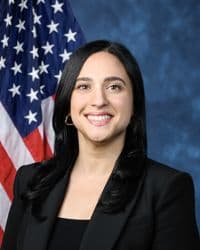
- Yassamin Ansari
- Cosponsors
- - 4 - 0
- Introduced
- In Committee
What this bill would do
The "Youth Outdoors Using Nature's Genetics Act of 2025" directs the Secretary of Commerce to create a grant program for youth biodiversity monitoring projects. These projects aim to educate students using advanced technologies while collecting biological data on wildlife and ecosystems. Grants are available to nonprofits, schools, higher education institutions, and government entities. The program prioritizes projects that focus on underserved communities. Funding is authorized at $1,000,000 per year from 2026 through 2032.
Yes· 3 of 22
Would students be better off under this?+9
Directly targets students with funding for advanced technology and science education.
Would children be better off under this?+8
Directly provides educational opportunities and hands-on experience for youth.
Would people in their twenties and thirties be better off under this?+7
Benefits students in higher education through grant-funded monitoring projects.
The opposite
No question was scored the opposite.
Who it would affect, and how
Potential Positive Impacts for People
-
Education and Experience: Students gain hands-on experience with biological data and education in marine science, wildlife science, conservation, and biodiversity (Section 2(g)(9)).
-
Access to Technology: The program provides students with education on advanced technologies such as drones, AI, machine learning, and remote sensing (Section 2(a) and Section 2(g)(1)).
-
Support for Underserved Communities: The Secretary must give priority to grant applications that focus on populations systematically denied full opportunity to participate in economic, social, or civic life, including racial and ethnic minorities and those affected by persistent poverty (Section 2(d) and Section 2(g)(8)).
-
Financial Assistance for Projects: Grants can cover the cost of supplies, transportation for participants, outreach to promote participation, and required scientific licenses and permits (Section 2(c)).
Potential Negative Impacts for People
- No negative impacts for individuals or groups are explicitly mentioned in the provided text.
Groups and Interests Ranking
Every group the model scored this bill for, from -10 to +10. Hover a score for the reason it gave.
- Demographic And Interest Groups
- Good For Students+9Good For Children+8Good For Young Adults+7Good For Low Income Households+6Good For Native Americans+6Good For African Americans+5Good For Asian Americans+5Good For Hispanic Americans+5Good For People With Disabilities+5Good For Rural Residents+3Good For Urban Residents+3Good For Middle Class Households+2Good For White Americans+2
- Education And Technology
- Increases Scientific Research Funding+5Increases Public School Funding+3
- Social Issues And Justice
- Improves Racial Equity+3Improves Disability Rights+2Improves Poverty Reduction+2
- Environment Energy And Infrastructure
- Improves Environmental Protections+4Improves Public Land Management+2
- Governance And Ideology
- Improves Government Transparency+2Increases Federal Power+1
- 6/23/2025
- 1 Cosponsor added.
- 4/28/2025
- 1 Cosponsor added.
- 4/21/2025
- Referred to the House Committee on Natural Resources.
- 2 Cosponsors added.
- Introduced in House
 Jared Huffman
Democrat · California
 Doris Matsui
Democrat · California
 Scott Peters
Democrat · California
 Melanie Stansbury
Democrat · New Mexico