Bill · H.R. 2965· House(119-HR-2965)
Small Business Regulatory Reduction Act of 2025
- Introduced
- 4/17/2025
- Last activity
- 12/4/2025 — Received in the Senate and Read twice and referred to the Committee on Small Business and Entrepreneurship.
- Sponsored by
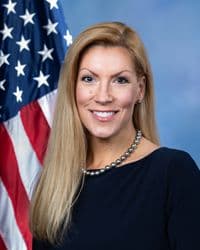
- Beth Van Duyne
- Cosponsors
- - 5 - 0
- Introduced
- Passed House
- In Senate committee
What this bill would do
This act, known as the "Small Business Regulatory Reduction Act of 2025," directs the Administrator of the Small Business Administration to manage costs. It requires that the small business regulatory budget for the Small Business Administration is not greater than zero for fiscal year 2026 and all years following. The bill defines the regulatory budget as the cost to a small business resulting from new, modified, or repealed federal rules. Additionally, the Chief Counsel for the Office of Advocacy must submit an annual report to Congress regarding rules issued by other Federal agencies. This report must include total regulatory budgets and specific rules issued by each agency. No additional funds are authorized to carry out this Act.
Yes
Would business owners be better off under this?+7
The mandate to keep the regulatory budget at or below zero provides significant relief for business owners.
Does this make it easier to run a small business?+6
The bill mandates a zero or negative regulatory budget to reduce the costs imposed on small businesses by federal rulemaking.
Does this make what the government does easier for the public to see?+5
The bill requires annual reports to Congress regarding the regulatory costs imposed by different agencies.
The opposite
Does this give people more protection from unfair business practices?-3
Reducing the regulatory budget may limit the ability of agencies to implement new consumer protection rules.
Does this give the federal government more power?-2
The bill limits the power of federal agencies to implement new rules through economic constraints.
Does this better protect air, water and wildlife?-2
By capping the regulatory budget, the bill may hinder the creation of new environmental protection regulations.
What Congress actually voted on
One recorded vote has been taken on this bill.
- The House: the vote on whether to pass the billPassed 223–190
This is the real decision in this chamber. Passing here sends the bill to the other chamber, which must pass it too before it can go to the President.
12/03/2025 · Roll call 310 · recorded as “On Passage”
Who it would affect, and how
Potential Positive Impacts for People
-
Cost Reduction for Small Businesses: The Administrator is required to ensure that the small business regulatory budget for the Small Business Administration is not greater than zero in fiscal year 2026 and each year thereafter (Section 2(b)). This could prevent costs resulting from the issuance of new rules or the modification or repeal of existing rules (Section 2(a)(4)).
-
Increased Oversight and Transparency: The Chief Counsel for the Office of Advocacy must submit an annual report to Congress (Section 2(c)). This report includes the total small business regulatory budgets for each Federal agency and each rule issued during the preceding fiscal year, disaggregated by the agency that issued it (Section 2(c)(1)-(3)).
Potential Negative Impacts for People
- Funding Restrictions: The act explicitly states that no additional funds are authorized to be appropriated to carry out the requirements of the bill (Section 3).
Groups and Interests Ranking
Every group the model scored this bill for, from -10 to +10. Hover a score for the reason it gave.
- Demographic And Interest Groups
- Good For Business Owners+7
- Economy And Finance
- Improves Small Business Support+6Improves Consumer Protection-3
- Governance And Ideology
- Improves Government Transparency+5Increases Federal Power-2
- Environment Energy And Infrastructure
- Improves Environmental Protections-2
| Updated | Bill | Title | Policy Area |
|---|---|---|---|
| 10 months ago | On agreeing to the Rules amendment (A001) Agreed to without objection. |
- 12/4/2025
- Received in the Senate and Read twice and referred to the Committee on Small Business and Entrepreneurship.
- 12/3/2025
- Motion to reconsider laid on the table Agreed to without objection.
- Passed/agreed to in House: On passage Passed by the Yeas and Nays: 223 - 190 (Roll no. 310). (text of amendment in the nature of a substitute: CR 12/02/2025 H4987)
- On passage Passed by the Yeas and Nays: 223 - 190 (Roll no. 310). (text of amendment in the nature of a substitute: CR 12/02/2025 H4987)
- Considered as unfinished business. (consideration: CR H5011)
- 12/2/2025
- POSTPONED PROCEEDINGS - At the conclusion of debate on H.R. 2965, the Chair put the question on passage of the bill and by voice vote announced the ayes had prevailed. Ms. Velazquez demanded the yeas and nays and the Chair postponed further proceedings until a time to be announced.
- DEBATE - The House proceeded with one hour of debate on H.R. 2965.
- Rule provides for consideration of H.R. 4312, H.R. 1005, H.R. 1049, H.R. 1069, H.R. 2965 and H.R. 4305. The resolution provides for consideration of H.R. 4312, H.R. 1005, H.R. 1049, H.R. 1069, H.R. 2965, and H.R. 4305 under a closed rule with one hour of general debate and one motion to recommit on each bill.
- Considered under the provisions of rule H. Res. 916. (consideration: CR H4987-4989)
- 12/1/2025
- Rules Committee Resolution H. Res. 916 Reported to House. Rule provides for consideration of H.R. 4312, H.R. 1005, H.R. 1049, H.R. 1069, H.R. 2965 and H.R. 4305. The resolution provides for consideration of H.R. 4312, H.R. 1005, H.R. 1049, H.R. 1069, H.R. 2965, and H.R. 4305 under a closed rule with one hour of general debate and one motion to recommit on each bill.
- 5/21/2025
- Reported (Amended) by the Committee on Small Business. H. Rept. 119-111.
- Placed on the Union Calendar, Calendar No. 82.
- 4/30/2025
- Committee Consideration and Mark-up Session Held
- Ordered to be Reported (Amended) by the Yeas and Nays: 15 - 11.
- 4/28/2025
- 4 Cosponsors added.
- 4/17/2025
- Referred to the House Committee on Small Business.
- 1 Cosponsor added.
- Introduced in House
 Aaron Bean
Republican · Florida
 Brad Finstad
Republican · Minnesota
 Kimberlyn King-Hinds
Republican · Northern Mariana Islands
 Daniel Meuser
Republican · Pennsylvania
 Derek Schmidt
Republican · Kansas