Bill · H.R. 2926· House(119-HR-2926)
National Energy Dominance Council Act of 2025
- Introduced
- 4/17/2025
- Last activity
- 4/17/2025 — Referred to the Committee on Energy and Commerce, and in addition to the Committees on Armed Services, Foreign Affairs, and Intelligence (Permanent Select), for a period to be subsequently determined by the Speaker, in each case for consideration of such provisions as fall within the jurisdiction of the committee concerned.
- Sponsored by
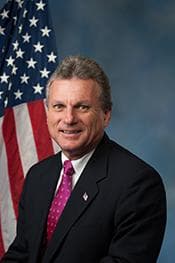
- Earl Carter
- Cosponsors
- - 1 - 0
- Introduced
- In Committee
What this bill would do
The National Energy Dominance Council Act of 2025 proposes the creation of the National Energy Dominance Council within the Executive Office of the President. This Council would be led by the Secretary of the Interior and includes a wide range of high-ranking cabinet members and White House officials. The Council is tasked with advising the President on methods to increase energy production and achieve energy dominance. This includes developing a National Energy Dominance Strategy focused on cutting red tape and enhancing private-sector investments. Additionally, the Council will review markets critical to powering homes, cars, and factories.
Yes· 3 of 12
Would business owners be better off under this?+6
The focus on private-sector investment and reduced regulation benefits businesses in the energy sector.
Does this give the federal government more power?+6
The bill creates a central Council within the Executive Office of the President to coordinate various federal agencies.
Is this likely to create jobs?+5
The bill aims to expand the energy sector, which is intended to support more jobs.
The opposite· 3 of 6
Does this reduce how much oil, gas and coal is produced?-6
The bill is explicitly aimed at increasing energy production, which includes traditional fossil fuel sources.
Does this better protect air, water and wildlife?-5
The goal to cut red tape and eliminate regulations may weaken existing environmental protections.
Does this cut the pollution that drives climate change?-4
The bill's focus on fossil fuels and reducing regulations may lead to higher carbon emissions.
Who it would affect, and how
Potential Positive Impacts for People
-
Energy Reliability and Affordability: The Council is tasked with reviewing markets to ensure homes, cars, and factories have access to reliable, abundant, and affordable energy (Section 2(c)(3)(A)).
-
Increased Energy Production: The Council aims to advise the President on ways to produce more energy to achieve national dominance (Section 2(c)(1)(A)).
-
Infrastructure and Capacity Improvements: The Council will advise on actions to rapidly increase electricity capacity, bring Small Modular Nuclear Reactors online, and facilitate the reopening of closed power plants (Section 2(c)(3)(C)(i-ii)).
-
Improved Infrastructure Access: The Council will look into facilitating approvals for energy infrastructure, such as natural gas pipelines, specifically for underserved areas like New England, California, and Alaska (Section 2(c)(3)(C)(iv)).
-
Job Support: The Council's awareness plan includes highlighting the jobs supported by the energy sector (Section 2(c)(3)(F)(ii)).
Potential Negative Impacts for People
- Regulatory Reduction: The Council's strategy includes cutting red tape and seeking to eliminate longstanding regulations (Section 2(c)(2)(A-B)), which may impact existing regulatory frameworks.
Groups and Interests Ranking
Every group the model scored this bill for, from -10 to +10. Hover a score for the reason it gave.
- Economy And Finance
- Improves Economic Growth+5Increases Job Creation+5Improves Consumer Protection+3Reduces Inflation+3
- Demographic And Interest Groups
- Good For Business Owners+6Good For Low Income Households+3Good For Middle Class Households+3Good For Rural Residents+2Good For Native Americans-2
- Environment Energy And Infrastructure
- Reduces Gas Prices+5Increases Renewable Energy Investment+2Reduces Fossil Fuel Production-6Improves Environmental Protections-5Reduces Carbon Emissions-4Improves Public Land Management-3
- Education And Technology
- Increases Scientific Research Funding+3
- Governance And Ideology
- Increases Federal Power+6Increase States Rights-3
- 6/6/2025
- 1 Cosponsor added.
- 4/17/2025
- Referred to the Committee on Energy and Commerce, and in addition to the Committees on Armed Services, Foreign Affairs, and Intelligence (Permanent Select), for a period to be subsequently determined by the Speaker, in each case for consideration of such provisions as fall within the jurisdiction of the committee concerned.
- Introduced in House
 Brad Finstad
Republican · Minnesota