Bill · H.R. 2842· House(119-HR-2842)
Stop Raising Prices on Food Act
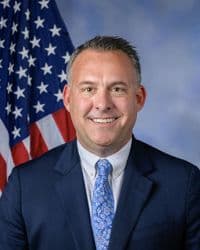
- Introduced
- 4/10/2025
- Last activity
- 4/10/2025 — Referred to the Committee on Ways and Means, and in addition to the Committee on Rules, for a period to be subsequently determined by the Speaker, in each case for consideration of such provisions as fall within the jurisdiction of the committee concerned.
- Sponsored by
- Adam Gray
- Cosponsors
- - 1 - 0
- Introduced
- In Committee
What this bill would do
The "Stop Raising Prices on Food Act" aims to restrict the President's power to impose new or additional duties on articles imported from major agricultural trade partners. A "covered country" is defined as one of the five countries with the highest volume of U.S. agricultural goods imported into it during the previous fiscal year, with the European Union treated as a single country. To increase these duties, the President must first submit a formal request to Congress containing specific objectives, explanations, and economic assessments. Finally, the President can only proceed if a joint resolution of approval is enacted into law.
Yes· 3 of 9
Would households on low incomes be better off under this?+1
By limiting potential food price increases, the bill provides indirect relief to low-income households.
Would middle-income households be better off under this?+1
The bill aims to prevent price hikes on essential food items, benefiting middle-class budgets.
Would farmers be better off under this?+1
The bill protects agricultural trade partners and provides more stability for the agricultural economy through oversight.
The opposite
Does this give the federal government more power?-2
The bill reduces presidential authority by transferring trade-related decision-making power toward Congress.
Who it would affect, and how
Potential Positive Impacts for People
-
Increased Congressional Oversight: Under Section 2(b), the President can no longer act alone to increase duties on covered countries; they must first submit a detailed request to Congress including the objective, an explanation of why diplomacy failed, and an assessment of the impact on the U ability to act without congressional approval via a joint resolution.
-
Economic Impact Assessments: Section 2(b)(1)(C) requires the President to provide an assessment of the likely impact of a proposed duty on the United States agricultural economy before the duty can be increased.
Potential Negative Impacts for People
- No specific negative impacts are explicitly stated in the provided text.
Groups and Interests Ranking
Every group the model scored this bill for, from -10 to +10. Hover a score for the reason it gave.
- Demographic And Interest Groups
- Good For Farmers+1Good For Low Income Households+1Good For Middle Class Households+1
- National Security And Foreign Policy
- Improves Diplomatic Engagement+1Improves International Alliances+1Improves International Trade+1
- Economy And Finance
- Improves Consumer Protection+1Reduces Inflation+1
- Governance And Ideology
- Improves Government Transparency+1Increases Federal Power-2
- 5/8/2025
- 1 Cosponsor added.
- 4/10/2025
- Referred to the Committee on Ways and Means, and in addition to the Committee on Rules, for a period to be subsequently determined by the Speaker, in each case for consideration of such provisions as fall within the jurisdiction of the committee concerned.
- Introduced in House
 Jim Costa
Democrat · California