Bill · H.R. 2796· House(119-HR-2796)
Frederick Douglass Trafficking Victims Prevention and Protection Reauthorization Act of 2025

- Introduced
- 4/9/2025
- Last activity
- 4/9/2025 — Referred to the Committee on the Judiciary, and in addition to the Committees on Foreign Affairs, and Education and Workforce, for a period to be subsequently determined by the Speaker, in each case for consideration of such provisions as fall within the jurisdiction of the committee concerned.
- Sponsored by
- Christopher Smith
- Cosponsors
- - 5 - 3
- Introduced
- In Committee
What this bill would do
This bill, known as the Frederick Douglass Trafficking Victims Prevention and Protection Reauthorization Act of 2025, aims to reauthorize the Trafficking Victims Protection Act of 2000. It modifies grant structures to establish Frederick Douglass Human Trafficking Prevention Education Grants focused on protecting children from labor and sexual exploitation. The legislation also creates the Frederick Douglass Human Trafficking Survivors Employment and Education Program to assist adult survivors in achieving self-sufficiency through social services and job training. Additionally, the bill extends various authorizations for years 2025 through 2029. It increases funding levels for specific purposes related to the National Human Trafficking Hotline and victim housing assistance.
Yes· 3 of 13
Would children be better off under this?+7
The bill prioritizes grants for preventing child labor and sexual exploitation through educational agencies.
Is this likely to lift people out of poverty?+6
The bill provides education, job training, and life-skills support to help survivors achieve self-sufficiency.
Would people in their twenties and thirties be better off under this?+5
The bill creates a dedicated employment and education program for adults aged 18 and up who are trafficking victims.
The opposite
No question was scored the opposite.
Who it would affect, and how
Potential Positive Impacts for People
-
Enhanced protection for children in high-risk areas: The bill gives priority to local educational agencies serving areas with high-intensity child sex trafficking or significant child labor trafficking (Section 101(a)(D)(i)).
-
Improved training through partnerships: Priority is given to agencies that partner with non-profit organizations, law enforcement, and technology or social media companies to protect children from exploitation and grooming (Section 101(a)(D)(ii)).
-
Targeted support for vulnerable youth: The bill directs the Secretary to identify and assist at-risk populations, including homeless youth, foster youth, and those involved in the child welfare system (Section 101(a)(D)(iii) and Section 101(a)(G)).
-
Pathways to self-sufficiency for survivors: The new employment and education program assists adult victims of trafficking with life-skills, education, and job training to help them reintegrate into society (Section 102(a)).
-
Comprehensive reintegration services: Survivors can access specific help such as literacy education, vocational training, resume creation, and assistance with the expungement of certain criminal records (Section 102(b)).
-
Increased funding for victims: The bill authorizes increased funding for the National Human Trafficking Hotline, cybersecurity, and public education campaigns (Section 201(a)(1)(B)).
-
Housing assistance support: The bill extends and authorizes $35,000,000 each fiscal year for the Office of Victims of Crime Housing Assistance Grants for Victims of Human Trafficking (Section 201(a)(2)).
Potential Negative Impacts for People
-
Limited assistance window for survivors: Under the proposed employment and education program, eligible individuals may only receive services for a cumulative period of 5 years (Section 102(c)).
-
Age restrictions on program eligibility: The Frederick Douglass Human Trafficking Survivors Employment and Education Program is limited to victims who have attained the age of 18 years (Section 102(e)(1)(A)).
Groups and Interests Ranking
Every group the model scored this bill for, from -10 to +10. Hover a score for the reason it gave.
- Demographic And Interest Groups
- Good For Children+7Good For Low Income Households+5Good For Young Adults+5Good For People With Disabilities+3Good For Urban Residents+3
- Social Issues And Justice
- Improves Poverty Reduction+6Improves Affordable Housing+5
- Economy And Finance
- Increases Job Creation+4Improves Fiscal Responsibility+3
- Education And Technology
- Improves College Affordability+4Improves Internet Access+2
- Healthcare
- Improves Mental Health Access+5
- National Security And Foreign Policy
- Improves Cybersecurity Defense+3
- 4/9/2025
- Referred to the Committee on the Judiciary, and in addition to the Committees on Foreign Affairs, and Education and Workforce, for a period to be subsequently determined by the Speaker, in each case for consideration of such provisions as fall within the jurisdiction of the committee concerned.
- 8 Cosponsors added.
- Introduced in House
2 bills Congress.gov lists as related to this one — companions in the other chamber, earlier versions, and bills this one absorbed or was folded into.
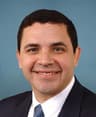 Henry Cuellar
Democrat · Texas
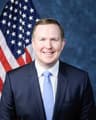 Brian Jack
Republican · Georgia
 Raja Krishnamoorthi
Democrat · Illinois
 Kweisi Mfume
Democrat · Maryland
 Michael McCaul
Republican · Texas
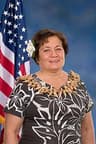 Aumua Amata Radewagen
Republican · American Samoa
 Maria Salazar
Republican · Florida
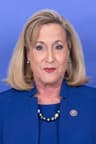 Ann Wagner
Republican · Missouri