Bill · H.R. 2788· House(119-HR-2788)
End DWI Act of 2025
- Introduced
- 4/9/2025
- Last activity
- 4/9/2025 — Referred to the Subcommittee on Highways and Transit.
- Sponsored by
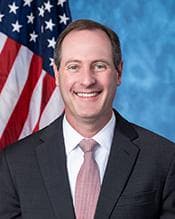
- Tracey Mann
- Cosponsors
- - 4 - 10
- Introduced
- In Committee
What this bill would do
The "End DWI Act of 2025" seeks to establish a national standard to prevent driving while intoxicated. It requires states to enact and enforce laws mandating that DWI offenders operate only motor vehicles equipped with ignition interlock devices for at least 180 days, unless a special exception applies. To ensure compliance, the Secretary will withhold a percentage of certain funds from states that do not meet these requirements. For fiscal year 2027, the withholding rate is 3 percent, increasing to 5 percent in subsequent years. The bill aims to reduce recidivism and address the rise in alcohol-impaired and polysubstance driving fatalities.
Yes
Does this repair or build roads and bridges?+5
The bill promotes road safety through mandated ignition interlock use.
Would children be better off under this?+5
Increased road safety from reduced DWI incidents benefits all pedestrians, including children.
Does this give the federal government more power?+5
The bill increases federal oversight by withholding highway funds from states that do not comply with the national standard.
The opposite
Does this leave more decisions to the states?-5
The bill reduces state autonomy by mandating a specific national standard and penalizing non-compliance through fund withholding.
Would households on low incomes be better off under this?-2
The cost of ignition interlock devices may disproportionately impact low-income individuals facing driving restrictions.
Who it would affect, and how
Potential Positive Impacts for People
-
Reduced Recidivism: The bill notes that studies show ignition interlocks can reduce recidivism by up to 70 percent among various types of DWI offenders while they are installed (Section 2, paragraph 3).
-
Increased Road Safety: By mandating ignition interlocks, the bill addresses the historic increase in alcohol-impaired driving fatalities and the increased crash risk associated with polysubstance impaired driving (Section 2, paragraphs 1, 5, and 6).
-
Financial Recovery for Compliant States: If a state meets the requirements after funds have been withheld, the Secretary shall apportion the withheld funds back to that state (Section 3, subsection (a)(3) and subsection (b)(2)).
Potential Negative Impacts for People
-
Financial Burden on Non-Compliant States: States that fail to meet the requirements will face a withholding of 3 percent of specific funds in fiscal year 2027, and 5 percent in subsequent years (Section 3, subsection (a)(1) and (a)(2)).
-
Loss of Federal Funds: If a state does not meet the requirements within the specified period, the withheld funds will lapse rather than being returned to the state (Section 3, subsection (b)(1)(A) and (b)(4)).
-
Restrictions on Driving Privileges: DWI offenders will be required to operate only motor vehicles with an ignition interlock device installed for a minimum of 180 days, unless they qualify for a state-determined special exception (Section 3, subsection (a)(3)(A)).
Groups and Interests Ranking
Every group the model scored this bill for, from -10 to +10. Hover a score for the reason it gave.
- Environment Energy And Infrastructure
- Improves Roads And Bridges+5
- Demographic And Interest Groups
- Good For Children+5Good For Low Income Households-2
- Governance And Ideology
- Increases Federal Power+5Increase States Rights-5
- 6/2/2026
- 1 Cosponsor added.
- 10/28/2025
- 1 Cosponsor added.
- 10/8/2025
- 1 Cosponsor added.
- 9/9/2025
- 1 Cosponsor added.
- 5/13/2025
- 1 Cosponsor added.
- 5/6/2025
- 1 Cosponsor added.
- 5/5/2025
- 1 Cosponsor added.
- 4/29/2025
- 1 Cosponsor added.
- 4/28/2025
- 1 Cosponsor added.
- 4/24/2025
- 2 Cosponsors added.
- 4/9/2025
- Referred to the House Committee on Transportation and Infrastructure.
- Referred to the Subcommittee on Highways and Transit.
- 3 Cosponsors added.
- Introduced in House
 Nikki Budzinski
Democrat · Illinois
 Steve Cohen
Democrat · Tennessee
 Sean Casten
Democrat · Illinois
 Craig Goldman
Republican · Texas
 Laura Gillen
Democrat · New York
 Jeff Hurd
Republican · Colorado
 Nathaniel Moran
Republican · Texas
 April McClain Delaney
Democrat · Maryland
 Chris Pappas
Democrat · New Hampshire
 Jamie Raskin
Democrat · Maryland
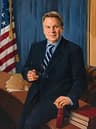 Christopher Smith
Republican · New Jersey
 Dina Titus
Democrat · Nevada
 Jill Tokuda
Democrat · Hawaii
 Eugene Vindman
Democrat · Virginia