Bill · H.R. 2776· House(119-HR-2776)
Imported Seafood Quality Enforcement Act
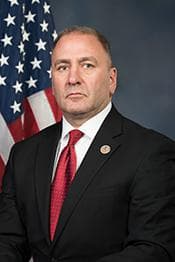
- Introduced
- 4/9/2025
- Last activity
- 4/9/2025 — Referred to the House Committee on Energy and Commerce.
- Sponsored by
- Clay Higgins
- Cosponsors
- - 1 - 0
- Introduced
- In Committee
What this bill would do
The Imported Seafood Quality Enforcement Act aims to amend the Federal Food, Drug, and Cosmetic Act to improve the safety of seafood imported into the United States. It requires the Secretary to certify that foreign countries maintain reliable analytical methods that meet U.S. standards. The bill mandates annual inspections of foreign facilities and requires the Secretary to inspect and test at least 20 percent of all imported seafood annually. It establishes strict protocols for new exporters and penalties for exporters whose shipments fail inspections. Additionally, the Act allows for the creation of a cooperative program where States can conduct inspections through federal grants.
Yes· 3 of 5
Does this give people more protection from unfair business practices?+8
The bill implements rigorous testing and inspection requirements to ensure imported seafood meets safety standards.
Does this make the government pay for what it commits to?+5
The bill allows the Secretary to recover inspection service costs through fees imposed on exporters.
Does this leave more decisions to the states?+5
The bill allows states to participate in seafood inspection and certification through a cooperative grant program.
The opposite
Would business owners be better off under this?-6
Exporters face new financial burdens through mandatory fees, increased inspection requirements, and high civil penalties.
Who it would affect, and how
Potential Positive Impacts for People
-
Increased Food Safety Standards: The bill requires that seafood from a foreign country can only be imported if the Secretary certifies that the country uses reliable analytical methods to meet United States standards for manufacturing, processing, and holding (Section 2(a)(1)).
-
Rigorous Oversight of Foreign Facilities: Foreign facilities that export seafood to the U.S. must undergo at least one inspection annually, with additional follow-up inspections as needed, to ensure they are meeting U.S. standards (Section 2(a)(2)).
-
Strict Testing for New Entrants: To ensure quality from the start, the first 15 shipments from a new exporter must be inspected and tested by the Secretary (Section 2(b)(2)).
-
Protection Against Health Risks: If a shipment is found to pose significant health risks to humans, the bill requires that the shipment be destroyed (Section 2(c)(4)).
-
State-Level Cooperation: The Secretary can establish a program to provide training and grants to States, allowing them to assist in the inspection, testing, and certification of imported seafood (Section 3(a) and (c)).
Potential Negative Impacts for People
-
Financial Burdens on Exporters: The Secretary is authorized to impose fees on exporters to cover the costs of maintaining the inspection service (Section 2(b)(4)).
-
Strict Penalties for Failed Shipments: Exporters that fail inspections may face increased scrutiny, such as having every subsequent shipment inspected until 15 consecutive shipments pass (Section 2(b)(3)(A)).
-
Suspension of Import Privileges: If an exporter has more than three failed shipments in a single year, they may be prohibited from importing seafood into the United States for the following year (Section 2(b)(3)(B)(i)).
-
Significant Civil Penalties: Making false statements regarding tests or inspections can result in civil penalties of up to $250,000 per violation, and up to $1,100,000 for subsequent violations within a 3-year period (Section 2(b)).
-
Shipment Destruction or Rejection: Shipments that fail to meet safety standards may be detained or destroyed (Section 2(c)(1)), and those refused admission must be labeled "UNITED STATES: REFUSED ENTRY" (Section 2(c)(2)).
Groups and Interests Ranking
Every group the model scored this bill for, from -10 to +10. Hover a score for the reason it gave.
- Economy And Finance
- Improves Consumer Protection+8Improves Fiscal Responsibility+5
- Governance And Ideology
- Increase States Rights+5Improves Government Transparency+4
- Demographic And Interest Groups
- Good For Business Owners-6
- Healthcare
- Improves Healthcare Access+3
- 6/3/2025
- 1 Cosponsor added.
- 4/9/2025
- Referred to the House Committee on Energy and Commerce.
- Introduced in House
 Randy Weber
Republican · Texas