Bill · H.R. 2712· House(119-HR-2712)
Reclaiming Congressional Trade Authority Act of 2025
- Introduced
- 4/8/2025
- Last activity
- 4/8/2025 — Referred to the Committee on Ways and Means, and in addition to the Committee on Rules, for a period to be subsequently determined by the Speaker, in each case for consideration of such provisions as fall within the jurisdiction of the committee concerned.
- Sponsored by
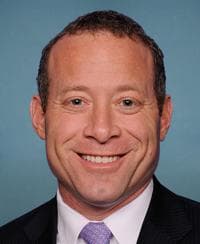
- Josh Gottheimer
- Cosponsors
- None
- Introduced
- In Committee
What this bill would do
The ``Reclaiming Congressional Trade Authority Act of 2025'' aims to limit the authority of the President and the United States Trade Representative regarding import duties and restrictions. For the President, it requires submitting specific duty proposals to the International Trade Commission and seeking congressional approval through a joint resolution. The President may only bypass these requirements for a 120-day period in cases of urgent action, such as a national emergency or threat to safety. Regarding the United States Trade Representative, the bill mandates a specific process of notification, reporting, and consultation with congressional committees. It also establishes a mechanism for Congress to pass disapproval resolutions to prevent the imposition of duties or restrictions.
Yes· 3 of 5
Does this make what the government does easier for the public to see?+6
The bill mandates economic impact reports and congressional consultation, increasing transparency.
Would farmers be better off under this?+4
The bill mandates consultation with agricultural committees when duty proposals affect agricultural products.
Does this make trade with other countries easier?+4
The bill introduces oversight that may stabilize trade policy by preventing unilateral duty changes.
The opposite
Does this give the federal government more power?-5
The bill reduces the unilateral power of the President, thereby shifting power toward Congress.
Who it would affect, and how
Potential Positive Impacts for People
-
Increased Congressional Oversight: The bill requires the President to submit duty proposals to the International Trade Commission and obtain approval through a joint resolution of approval (Section 2(a)). This ensures that Congress has a direct role in deciding on new national security duties.
-
Economic Impact Transparency: The President must submit a report from the International Trade Commission that assesses the likely impact of a proposed duty on the U.S. economy and specific industry sectors (Section 2(a)(2)(B)).
-
Security and Defense Input: The President is required to provide a report from the Secretary of Defense explaining why a proposal is in the interest of national security (Section 2(a)(2)(A)).
-
Mandatory Consultations: The President must consult with specific Senate and House committees regarding duty proposals, including their goals and action plans (Section 2(a)(3)).
-
Protection for Agricultural Sectors: The United States Trade Representative must consult with the Committee on Agriculture, Nutrition, and Forestry of the Senate and the Committee on Agriculture of the House if a proposal affects agricultural products (Section 3(a)(7)(A)(iii)).
-
Legislative Veto Power: The United States Trade Representative is subject to a process where no duties or restrictions can be imposed if a disapproval resolution is passed (Section 3(a)(7)(A)(v)).
Potential Negative Impacts for People
-
Delays in National Security Actions: While there is an exception for urgent action, the standard process requires submitting proposals to the International Trade Commission, seeking congressional authorization, and waiting for a joint resolution of approval (Section 2(a)).
-
Administrative Burdens on the President: The President is required to follow a strict timeline for submitting duty proposals, including providing specific descriptions, rates, and durations within 30 calendar days of a determination (Section 2(a)(1)).
-
Trade Representative Constraints: The United States Trade Representative's ability to impose duties is limited by requirements to submit proposals, notify Congress, undergo consultations, and wait for a 60-day period to pass without a disapproval resolution (Section 3(a)(7)(A)).
Groups and Interests Ranking
Every group the model scored this bill for, from -10 to +10. Hover a score for the reason it gave.
- Demographic And Interest Groups
- Good For Farmers+4Good For Business Owners+2
- National Security And Foreign Policy
- Improves International Trade+4
- Economy And Finance
- Improves Consumer Protection+3
- Governance And Ideology
- Improves Government Transparency+6Increases Federal Power-5
- 4/8/2025
- Referred to the Committee on Ways and Means, and in addition to the Committee on Rules, for a period to be subsequently determined by the Speaker, in each case for consideration of such provisions as fall within the jurisdiction of the committee concerned.
- Introduced in House