Bill · H.R. 266· House(119-HR-266)
Educational Opportunity and Success Act of 2025
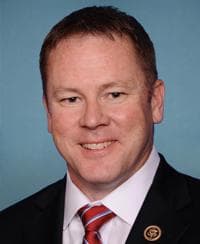
- Introduced
- 1/9/2025
- Last activity
- 1/9/2025 — Referred to the House Committee on Education and Workforce.
- Sponsored by
- Warren Davidson
- Cosponsors
- None
- Introduced
- In Committee
What this bill would do
This bill, known as the "Educational Opportunity and Success Act of 2025," aims to modify the Federal TRIO programs. It increases minimum grant amounts and adjusts several program requirements and outcome criteria. The legislation also updates the definition of a "low-income individual" to include Federal Pell Grant eligibility or specific school enrollment thresholds. Additionally, it establishes new procedures for the Secretary to review and correct grant application errors. Finally, it modifies provisions for Upward Bound and Postbaccalaureate Achievement Programs.
Yes· 3 of 10
Would households on low incomes be better off under this?+6
The bill expands the definition of low-income individuals to include those eligible for Federal Pell Grants.
Would students be better off under this?+6
The bill increases grant minimums and expands research and internship opportunities for postbaccalaureate students.
Would people in their twenties and thirties be better off under this?+5
The bill increases funding and expands opportunities for postbaccalaureate research experiences and internships.
The opposite
No question was scored the opposite.
Who it would affect, and how
Potential Positive Impacts for People
-
Increased Grant Funding: The bill increases minimum grant amounts, raising them from $200,000 to $220,000 and $170,000 to $190,000 (Section 2(a)).
-
Fairer Application Process: The bill changes the criteria for awarding grants from "prior experience" to "prior success in achieving high quality service delivery" (Section 2(b)(1)).
-
Protection Against Technical Rejections: The Secretary is prohibited from rejecting applications based on noncompliance with voluntary page limits or formatting standards (Section 2(b)(2)(B)(i)).
-
Opportunity to Fix Budget Errors: Applicants can now correct typographical or rounding errors in proposed budgets after receiving notice via email or phone (Section 2(b)(2)(B)(ii)).
-
Establishment of a Review Process: Applicants can request a review if they have evidence of a technical, administrative, or scoring error made by the Department or a peer reviewer (Section 2(b)(2)(C)).
-
Access to Technical Assistance: The Secretary is required to host at least one virtual, interactive training session to provide technical assistance to interested applicants (Section 2(c)).
-
Expanded Definition of Low-Income: The definition of a "low-income individual" is expanded to include students determined to be eligible for a Federal Pell Grant or those attending specific schools (Section 2(d) and Section 2(g)).
-
Increased Support for Veterans: For Upward Bound projects specifically designed for veterans, adults may be paid stipends up to $100 per month (Section 3).
-
Expanded Opportunities for Postbaccalaureate Students: The bill expands opportunities by allowing for faculty-led research experiences alongside internships (Section 4).
Potential Negative Impacts for People
-
Increased Criteria for Success: By changing "prior experience" to "prior success in achieving high quality service delivery," the standards for receiving grants are modified (Section 2(b)(1)).
-
Mandatory Adjustments to Outcome Criteria: The bill introduces specific new requirements for what must be included in outcome criteria, such as specific years of mathematics, science, and foreign language (Section 2(e)).
Groups and Interests Ranking
Every group the model scored this bill for, from -10 to +10. Hover a score for the reason it gave.
- Demographic And Interest Groups
- Good For Low Income Households+6Good For Students+6Good For Veterans+5Good For Young Adults+5Good For Middle Class Households+1Good For Seniors+1
- Education And Technology
- Improves College Affordability+5
- Social Issues And Justice
- Improves Poverty Reduction+4
- Governance And Ideology
- Improves Government Transparency+3
- Economy And Finance
- Improves Fiscal Responsibility+1
- 1/9/2025
- Referred to the House Committee on Education and Workforce.
- Introduced in House