Bill · H.R. 2659· House(119-HR-2659)
Strengthening Cyber Resilience Against State-Sponsored Threats Act

- Introduced
- 4/7/2025
- Last activity
- 11/18/2025 — Received in the Senate and Read twice and referred to the Committee on Homeland Security and Governmental Affairs.
- Sponsored by
- Andrew Ogles
- Cosponsors
- - 4 - 0
- Introduced
- Passed House
- In Senate committee
What this bill would do
This Act establishes an interagency task force to protect United States critical infrastructure from cyber threats. The task force focuses on state-sponsored actors from the People's Republic of China, specifically mentioning Volt Typhoon. Led by the Director of CISA and the Director of the FBI, the group will facilitate coordination among various federal agencies. The task force is required to submit an initial report and then annual reports for five years to congressional committees. These reports will assess risks, potential disruptions, and the ability of the U.S. to counter these threats. The goal is to ensure the security and integrity of vital national systems.
Yes· 3 of 7
Does this better protect the country from computer attacks?+8
The act establishes a dedicated interagency task force specifically to detect and respond to state-sponsored cyber threats against critical infrastructure.
Does this repair or build roads and bridges?+3
The bill specifically assesses how cyber threats could disrupt mobility across critical infrastructure such as rail and ports.
Does this make what the government does easier for the public to see?+3
The bill requires the publication of an unclassified executive summary of the task force findings on a public website.
The opposite
No question was scored the opposite.
What Congress actually voted on
One recorded vote has been taken on this bill.
- The House: a fast-track vote, needing two-thirds to passPassed 402–8
The House sets aside its normal procedure to move quickly: no amendments, little debate, and a two-thirds bar instead of a simple majority. It is used for measures expected to be uncontroversial, so a bill that fails here failed despite broad expectations that it would not.
11/17/2025 · Roll call 287 · recorded as “On Motion to Suspend the Rules and Pass”
Who it would affect, and how
Potential Positive Impacts for People
-
Improved Security Coordination: The creation of a joint interagency task force aims to ensure that federal agencies' actions are aligned and mutually reinforcing to detect and respond to cyber threats. (Section 2(a))
-
Enhanced Protection of Critical Infrastructure: By analyzing risks and tactics used by state-sponsored actors, the task force works to protect assets that enable essential services like national defense, public health, and economic security. (Section 2(f)(3)(A) and Section 2(k)(10))
-
Increased Awareness for Operators: The bill requires a plan for an awareness campaign to help critical infrastructure owners and operators understand the security resources and support available from federal agencies. (Section 2(f)(3)(H))
-
Public Transparency: While much of the report is classified, an unclassified executive summary of the task force's findings must be published on a public Department of Homeland Security website. (Section 2(f)(6))
Potential Negative Impacts for People
-
Potential for Economic and Social Disruption: The bill acknowledges that state-sponsored cyber actors could cause disruptions to critical infrastructure that result in economic and social ramifications. (Section 2(f)(3)(F))
-
Threat to Military Mobility: The text notes that cyber actors could potentially disrupt the operations of the United States Armed Forces by hindering movement across critical infrastructure like rail, aviation, and ports. (Section 2(f)(3)(E))
Groups and Interests Ranking
Every group the model scored this bill for, from -10 to +10. Hover a score for the reason it gave.
- National Security And Foreign Policy
- Improves Cybersecurity Defense+8Improves Veterans Benefits+1
- Environment Energy And Infrastructure
- Improves Roads And Bridges+3
- Governance And Ideology
- Improves Government Transparency+3
- Demographic And Interest Groups
- Good For Middle Class Households+2
- Economy And Finance
- Improves Consumer Protection+2
- Social Issues And Justice
- Improves Poverty Reduction+1
- 11/18/2025
- Received in the Senate and Read twice and referred to the Committee on Homeland Security and Governmental Affairs.
- 11/17/2025
- Motion to reconsider laid on the table Agreed to without objection.
- Passed/agreed to in House: On motion to suspend the rules and pass the bill Agreed to by the Yeas and Nays: (2/3 required): 402 - 8 (Roll no. 287). (text: CR H4682-4684)
- On motion to suspend the rules and pass the bill Agreed to by the Yeas and Nays: (2/3 required): 402 - 8 (Roll no. 287). (text: CR H4682-4684)
- Considered as unfinished business. (consideration: CR H4692)
- At the conclusion of debate, the Yeas and Nays were demanded and ordered. Pursuant to the provisions of clause 8, rule XX, the Chair announced that further proceedings on the motion would be postponed.
- DEBATE - The House proceeded with forty minutes of debate on H.R. 2659.
- Considered under suspension of the rules. (consideration: CR H4682-4685)
- Mr. Garbarino moved to suspend the rules and pass the bill.
- 8/15/2025
- Reported by the Committee on Homeland Security. H. Rept. 119-230.
- Placed on the Union Calendar, Calendar No. 188.
- 4/9/2025
- Subcommittee on Cybersecurity and Infrastructure Protection Discharged
- Committee Consideration and Mark-up Session Held
- Ordered to be Reported by Voice Vote.
- 4/7/2025
- Referred to the House Committee on Homeland Security.
- Referred to the Subcommittee on Cybersecurity and Infrastructure Protection.
- 4 Cosponsors added.
- Introduced in House
One bill Congress.gov lists as related to this one — companions in the other chamber, earlier versions, and bills this one absorbed or was folded into.
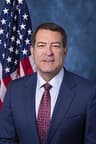 Mark Green
Republican · Tennessee
 Andrew Garbarino
Republican · New York
 Laurel Lee
Republican · Florida
 John Moolenaar
Republican · Michigan