Bill · H.R. 2523· House(119-HR-2523)
State-Level DOGE Establishment Act
- Introduced
- 3/31/2025
- Last activity
- 3/31/2025 — Referred to the House Committee on Oversight and Government Reform.
- Sponsored by
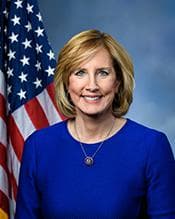
- Claudia Tenney
- Cosponsors
- None
- Introduced
- In Committee
What this bill would do
This bill, titled the "State-Level DOGE Establishment Act," aims to condition the disbursement of Federal funds to states. Starting in fiscal year 2026, no discretionary appropriations may be given to a state unless it establishes a specific entity focused on government efficiency. This entity must be a department, agency, or commission. The purpose of this group is to review how a state administers Federal funding and to eliminate waste, fraud, and abuse. States must also submit annual reports regarding their work and suggestions for improvement.
Yes· 3 of 5
Does this give the federal government more power?+6
The bill uses federal funding as leverage to mandate specific administrative structures within state governments.
Does this make the government pay for what it commits to?+5
The bill enforces stricter oversight of how federal funds are administered at the state level.
Does this make what the government does easier for the public to see?+5
The bill requires states to publish annual reports regarding federal fund administration on their public websites.
The opposite
Does this leave more decisions to the states?-5
The bill reduces state autonomy by conditioning discretionary funds on the creation of specific state agencies.
Who it would affect, and how
Potential Positive Impacts for People
-
Elimination of waste, fraud, and abuse: The bill requires states to establish an entity specifically to review the efficacy of Federal funding administration and to eliminate waste, fraud, and abuse of taxpayer funds (Section 2(b)).
-
Increased transparency through reporting: The required entity must publish an annual report on the State's public website detailing its work and providing suggestions to improve how Federal funds are spent (Section 2(b)(3)).
-
Bipartisan oversight: The efficiency entity must consist of at least 10 but no more than 20 members, with an equal number of members from the majority and minority parties in the State's Legislature (Section 2(b)(1) and (2)).
Potential Negative Impacts for People
- Risk to state funding: No discretionary appropriations may be disbursed to any State unless they establish the required efficiency entity, which excludes security category appropriations (Section 2(a)(1) and (2)).
Groups and Interests Ranking
Every group the model scored this bill for, from -10 to +10. Hover a score for the reason it gave.
- Economy And Finance
- Improves Fiscal Responsibility+5Reduces Government Spending+4Reduces National Debt+3
- Governance And Ideology
- Increases Federal Power+6Improves Government Transparency+5Increase States Rights-5
- 3/31/2025
- Referred to the House Committee on Oversight and Government Reform.
- Introduced in House