Bill · H.R. 2515· House(119-HR-2515)
American Tank Car Modernization Act of 2025
- Introduced
- 3/31/2025
- Last activity
- 3/31/2025 — Referred to the Subcommittee on Railroads, Pipelines, and Hazardous Materials.
- Sponsored by
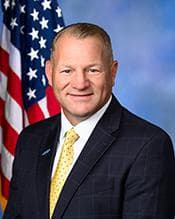
- Troy Nehls
- Cosponsors
- - 0 - 2
- Introduced
- In Committee
What this bill would do
The American Tank Car Modernization Act of 2025 establishes grant and pilot programs to upgrade freight railcar technology. The Federal Railroad Administration will manage a grant program to help railcar owners install telematics systems or gateway devices. These tools are intended to provide real-time visibility into the location and health of railcars. Additionally, a pilot program will assist in developing new onboard sensor technologies. The goal is to increase safety by monitoring issues like temperature, impacts, and brake status. This legislation authorizes significant funding to modernize the North American freight railcar fleet.
Yes· 3 of 11
Does this put more money into scientific research?+3
The bill funds a pilot program for the development of new sensor technologies.
Does this better protect air, water and wildlife?+3
Increased visibility of hazardous materials reduces risk of environmental disasters.
Would business owners be better off under this?+2
Railcar owners benefit from modernized technology and potential efficiency gains.
The opposite
No question was scored the opposite.
Who it would affect, and how
Potential Positive Impacts for People
-
Improved Safety Visibility: The bill aims to increase visibility into the safety of assets and the commodities they carry by providing near real-time location and health data (Section 2(c)(1)-(2)).
-
Hazard Identification: New sensor technology could help owners, operators, and shippers identify railcars that might become a hazard by monitoring things like wheel temperature, railcar impact, and whether a hatch is open or closed (Section 2(c)(3)).
-
Increased Operational Efficiency: The use of telematics is intended to increase the efficiency of how railcars are used within the North American fleet (Section 2(c)(4)).
-
Reduction of Human Error: By relying less on human and manual data capture, the bill aims to reduce risks associated with data delays and mistakes (Section 2(c)(5)).
-
Rapid Issue Response: The technology offers the development of alerts and triggers that can send mechanical issue information directly to railroad operators so they can take action (Section 2(c)(6)).
Potential Negative Impacts for People
- No specific negative impacts are explicitly stated in the provided text.
Groups and Interests Ranking
Every group the model scored this bill for, from -10 to +10. Hover a score for the reason it gave.
- Demographic And Interest Groups
- Good For Business Owners+2Good For Farmers+1Good For Rural Residents+1Good For Urban Residents+1
- Governance And Ideology
- Improves Interstate Commerce+2Improves Government Transparency+1Increases Federal Power+1
- Education And Technology
- Increases Scientific Research Funding+3
- Environment Energy And Infrastructure
- Improves Environmental Protections+3
- Economy And Finance
- Improves Consumer Protection+1Improves Economic Growth+1
- 6/23/2025
- 1 Cosponsor added.
- 3/31/2025
- Referred to the Committee on Transportation and Infrastructure, and in addition to the Committee on Science, Space, and Technology, for a period to be subsequently determined by the Speaker, in each case for consideration of such provisions as fall within the jurisdiction of the committee concerned.
- Referred to the Subcommittee on Railroads, Pipelines, and Hazardous Materials.
- 1 Cosponsor added.
- Introduced in House
 Jim Costa
Democrat · California
 Seth Moulton
Democrat · Massachusetts