Bill · H.R. 2502· House(119-HR-2502)
Law Enforcement Training for Mental Health Crisis Response Act of 2025
- Introduced
- 3/31/2025
- Last activity
- 3/31/2025 — Referred to the House Committee on the Judiciary.
- Sponsored by
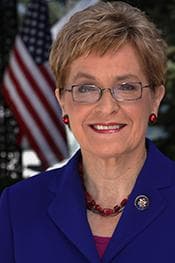
- Marcy Kaptur
- Cosponsors
- - 8 - 2
- Introduced
- In Committee
What this bill would do
This bill, titled the "Law Enforcement Training for Mental Health Crisis Response Act of 2025," aims to amend the Omnibus Crime Control and Safe Streets Act of 1968. It seeks to establish a grant program for State, local, and Tribal law enforcement and corrections agencies. The funding will allow these agencies to obtain behavioral health crisis response training for their officers. This training is intended to help officers resolve behavioral health crises more effectively and safely. Additionally, the bill aims to reduce injuries and deaths involving both officers and individuals during these crises.
Yes· 3 of 8
Does this change how police departments operate?+6
The bill provides training aimed at reducing violence and injuries during mental health crisis responses.
Does this make mental health care easier to get?+5
The bill enhances the response to mental health crises through specialized officer training.
Does this do more about addiction and overdose deaths?+4
The training includes response to those suspected to be under the influence of substances during the opioid epidemic.
The opposite
No question was scored the opposite.
Who it would affect, and how
Potential Positive Impacts for People
-
Increased Safety for Officers and the Public: The bill states that providing proper training for mental health crisis responses can better protect the safety of the general public and law enforcement officers (Section 2(a)(5)).
-
Reduction in Injuries and Deaths: The purpose of the act is to reduce the number of law enforcement and corrections officers killed or injured while responding to a behavioral health crisis, as well as reducing the number of individuals killed or injured during these responses (Section 2(b)).
-
Improved Crisis Resolution: Grants will help train officers to better resolve behavioral health crisis situations (Section 2(b)(1)).
-
Comprehensive Training Coverage: The authorized grants cover not just the training itself, but also the costs of transportation and lodging for officers attending these programs (Section 3(b)(a)).
Potential Negative Impacts for People
-
Funding Restrictions: Grant funds are intended to supplement, rather than replace, existing State, local, and Tribal funds, which means agencies cannot use these grants to take the place of their own money (Section 3(b)(d)(1)).
-
Administrative Limits: There is a cap on how much grant money can be used for administrative costs, which is limited to no more than 3 percent of any grant (Section 3(b)(d)(2)).
Groups and Interests Ranking
Every group the model scored this bill for, from -10 to +10. Hover a score for the reason it gave.
- Healthcare
- Improves Mental Health Access+5Improves Opioid Crisis Response+4
- Social Issues And Justice
- Improves Policing Reform+6Improves Disability Rights+3
- Demographic And Interest Groups
- Good For People With Disabilities+4Good For Native Americans+1
- Governance And Ideology
- Increases Federal Power+2Improves Government Transparency+1
- 6/5/2025
- 1 Cosponsor added.
- 5/13/2025
- 1 Cosponsor added.
- 4/1/2025
- 3 Cosponsors added.
- 3/31/2025
- Sponsor introductory remarks on measure. (CR H1359)
- Referred to the House Committee on the Judiciary.
- 5 Cosponsors added.
- Introduced in House
 Sanford Bishop
Democrat · Georgia
 Stephanie Bice
Republican · Oklahoma
 Julia Brownley
Democrat · California
 Sean Casten
Democrat · Illinois
 Troy Carter
Democrat · Louisiana
 Dwight Evans
Democrat · Pennsylvania
 Jennifer Kiggans
Republican · Virginia
 Greg Landsman
Democrat · Ohio
 Dina Titus
Democrat · Nevada
 Gabe Vasquez
Democrat · New Mexico