Bill · H.R. 2393· House(119-HR-2393)
Protect American Beef Act.
- Introduced
- 3/26/2025
- Last activity
- 3/26/2025 — Referred to the House Committee on Ways and Means.
- Sponsored by
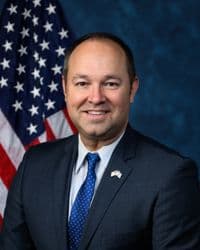
- Marlin Stutzman
- Cosponsors
- None
- Introduced
- In Committee
What this bill would do
The "Protect American Beef Act" aims to establish a reciprocal trade agreement between the United States and Australia regarding wagyu beef. The bill proposes placing a duty on imported Australian wagyu beef to address what is described as an unfair competitive advantage. It seeks to create a competitive balance by targeting wagyu meat, semen, and conventional embryos. The President is granted authority to take actions, including negotiating agreements or imposing specific rates of duty, if certain trade conditions are met. This authority is intended to respond to higher duties or nontariff barriers imposed by Australia.
Yes· 3 of 8
Would farmers be better off under this?+6
The bill provides direct protection and competitive advantages to domestic cattle and Wagyu producers.
Would business owners be better off under this?+5
Domestic meat producers and food service businesses focused on American beef will benefit from reduced competition.
Would people in rural areas be better off under this?+4
The bill supports the agricultural economy which is central to rural communities.
The opposite· 3 of 6
Does this make trade with other countries easier?-3
The bill promotes protectionism, which may lead to trade disputes and retaliatory measures.
Would households on low incomes be better off under this?-2
Increased costs for premium beef products may negatively impact consumer purchasing power.
Is this likely to slow the rise in prices?-2
The imposition of tariffs on imported beef may lead to higher prices for consumers.
Who it would affect, and how
Potential Positive Impacts for People
-
Support for American Wagyu Producers: The bill seeks to create a competitive balance for domestic producers who currently face a financial disadvantage due to the Australian dollar's value and existing trade agreements (Section 2).
-
Addressing Trade Imbalances: By allowing the President to negotiate agreements that reduce duties or eliminate nontariff barriers, the bill aims to address one-sided trade conditions (Section 3(a) and 3(b)(1)).
-
Leveling the Playing Field: The implementation of a duty on imported wagyu meat, semen, and conventional embryos is intended to counter the significant financial advantage currently held by Australia (Section 2).
Potential Negative Impacts for People
-
Increased Costs for Consumers or Businesses: The bill proposes a 70 percent tariff on wagyu meat, semen, and conventional embryos imported from Australia (Section 2).
-
Potential for Trade Escalation: If the President imposes a rate of duty and Australia responds by increasing its own duties on United States wagyu, the President has the authority to further increase the duty on Australian imports (Section 3(f)).
Groups and Interests Ranking
Every group the model scored this bill for, from -10 to +10. Hover a score for the reason it gave.
- Demographic And Interest Groups
- Good For Farmers+6Good For Business Owners+5Good For Rural Residents+4Good For Low Income Households-2Good For Middle Class Households-1Good For Urban Residents-1
- Economy And Finance
- Improves Small Business Support+4Increases Job Creation+3Improves Economic Growth+1Reduces Inflation-2
- National Security And Foreign Policy
- Improves International Trade-3Improves International Alliances-2
- Environment Energy And Infrastructure
- Improves Rural Development+2
- Governance And Ideology
- Increases Federal Power+2
- 3/26/2025
- Referred to the House Committee on Ways and Means.
- Introduced in House