Bill · H.R. 2342· House(119-HR-2342)
State-Managed Disaster Relief Act
- Introduced
- 3/25/2025
- Last activity
- 3/25/2025 — Referred to the Subcommittee on Economic Development, Public Buildings, and Emergency Management.
- Sponsored by
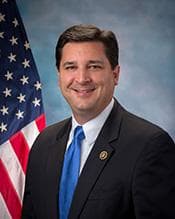
- David Rouzer
- Cosponsors
- - 0 - 1
- Introduced
- In Committee
What this bill would do
The State-Managed Disaster Relief Act establishes a process for lump sum payments for certain covered small disasters. A State Governor or Indian tribal government may request a lump sum payment instead of receiving assistance through the Public Assistance Program. This payment is calculated as 80 percent of the total estimated cost of assistance for the specific disaster. Once a payment is accepted, the State or tribal government cannot receive further assistance under the Public Assistance Program for that disaster. These payments are intended for recovery needs and must comply with various environmental, historic preservation, and civil rights laws.
Yes
Does this leave more decisions to the states?+5
The act empowers state governors and tribal governments with more autonomy to manage their own recovery funds.
Would Native Americans be better off under this?+3
The bill specifically includes Indian tribal governments in the provision for local disaster management control.
Does this improve help for people hit by a disaster?+3
The bill provides greater local autonomy and faster decision-making for state and tribal governments during small disasters.
The opposite
Does this give the federal government more power?-2
The bill reduces federal oversight of specific disaster costs by allowing states to accept a fixed 80% lump sum.
Who it would affect, and how
Potential Positive Impacts for People
-
Increased Local Control over Recovery Funds: A Governor or the governing body of an Indian tribal government may use the lump sum payment for recovery in any manner they determine is appropriate, provided the funds address the impacts and needs of the disaster. (Section 2(d))
-
Streamlined Decision Making: The law allows for a specific agreement on the payment amount to be reached within 90 days of an incident, or the entity can proceed under standard Public Assistance Program procedures. (Section 2(c)(5))
Potential Negative Impacts for People
-
Reduced Total Funding Amount: The lump sum payment is set at 80 percent of the total estimated cost of assistance under the Public Assistance Program. (Section 2(b))
-
No Adjustments for Actual Costs: A payment received under this section cannot be increased or decreased based on the actual costs calculated for a covered small disaster, except in cases of unforeseen circumstances at no fault of the applicant. (Section 2(c)(2))
-
Loss of Access to Additional Assistance: A State or Indian tribal government that accepts a lump sum payment is prohibited from receiving any other assistance under the Public Assistance Program for that specific covered small disaster. (Section 2(c)(1))
Groups and Interests Ranking
Every group the model scored this bill for, from -10 to +10. Hover a score for the reason it gave.
- Demographic And Interest Groups
- Good For Native Americans+3
- Environment Energy And Infrastructure
- Improves Disaster Relief And F E M A+3
- Governance And Ideology
- Increase States Rights+5Increases Federal Power-2
- 3/25/2025
- Referred to the House Committee on Transportation and Infrastructure.
- Referred to the Subcommittee on Economic Development, Public Buildings, and Emergency Management.
- 1 Cosponsor added.
- Introduced in House
One bill Congress.gov lists as related to this one — companions in the other chamber, earlier versions, and bills this one absorbed or was folded into.
 Troy Carter
Democrat · Louisiana