Bill · H.R. 2341· House(119-HR-2341)
Duplications of Benefits Victims Relief Act
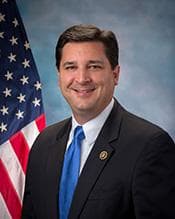
- Introduced
- 3/25/2025
- Last activity
- 3/25/2025 — Referred to the Subcommittee on Economic Development, Public Buildings, and Emergency Management.
- Sponsored by
- David Rouzer
- Cosponsors
- - 0 - 1
- Introduced
- In Committee
What this bill would do
This bill, known as the ``Duplications of Benefits Victims Relief Act'', seeks to amend the Robert T. Stafford Disaster Relief and Emergency Assistance Act. It allows the President to waive certain prohibitions on the duplication of benefits upon a request from a Governor. This waiver can be requested on behalf of a State or for specific people, businesses, or entities suffering losses from a major disaster or emergency. The President can grant these waivers if they are in the public interest and avoid waste, fraud, or abuse. Additionally, the bill requires FEMA to submit a report to Congress regarding the improvement of disaster assistance delivery.
Yes· 3 of 10
Does this improve help for people hit by a disaster?+7
The bill increases flexibility for disaster relief and requires a report to improve assistance delivery.
Would households on low incomes be better off under this?+6
The prohibition on income thresholds ensures low-income individuals can qualify for waivers.
Would business owners be better off under this?+5
The bill includes provisions to assist business concerns suffering from disaster losses.
The opposite
No question was scored the opposite.
Who it would affect, and how
Potential Positive Impacts for People
-
Waiver of Duplication Prohibitions: The President may waive the general prohibition on duplication of benefits for people, businesses, or entities suffering losses due to a major disaster or emergency (Section 2(a)(1)(A)). This could provide more flexibility for those seeking relief.
-
Loan Protection: The President is prohibited from determining that a loan is a duplication of assistance, as long as the federal assistance is used toward the loss suffered from the disaster or emergency (Section 2(a)(1)(C)).
-
No Income Limits for Waivers: No income threshold may be applied to limit a recipient's eligibility to qualify for a waiver (Section 2(a)(1)(D)). This ensures that assistance isn't restricted based on how much a person earns.
-
Improved Disaster Assistance Delivery: The bill requires a report aimed at improving the delivery of disaster assistance to individuals, including better coordination between agencies and clearer communication regarding available programs (Section 2(a)(1)(3)(B)).
Potential Negative Impacts for People
-
Presidential Discretion: The decision to grant a waiver rests on the President finding it in the public interest and ensuring it does not result in waste, fraud, or abuse (Section 2(a)(1)(A)). This means the relief is not guaranteed and depends on the President's findings.
-
Wait Times for Waivers: A request for a waiver must be granted or denied no later than 45 days after it is submitted (Section 2(a)(1)(B)). This establishes a specific window of time that applicants must wait for a decision.
Groups and Interests Ranking
Every group the model scored this bill for, from -10 to +10. Hover a score for the reason it gave.
- Demographic And Interest Groups
- Good For Low Income Households+6Good For Business Owners+5Good For Middle Class Households+3
- Governance And Ideology
- Improves Government Transparency+4Increases Federal Power+3Improves Due Process+2Increase States Rights+2
- Environment Energy And Infrastructure
- Improves Disaster Relief And F E M A+7
- Economy And Finance
- Improves Small Business Support+5
- Social Issues And Justice
- Improves Poverty Reduction+5
- 3/25/2025
- Referred to the House Committee on Transportation and Infrastructure.
- Referred to the Subcommittee on Economic Development, Public Buildings, and Emergency Management.
- 1 Cosponsor added.
- Introduced in House
 Troy Carter
Democrat · Louisiana