Bill · H.R. 2298· House(119-HR-2298)
Reducing Barriers for Broadband on Federal Lands Act of 2025
- Introduced
- 3/24/2025
- Last activity
- 3/24/2025 — Referred to the Committee on Energy and Commerce, and in addition to the Committee on Natural Resources, for a period to be subsequently determined by the Speaker, in each case for consideration of such provisions as fall within the jurisdiction of the committee concerned.
- Sponsored by
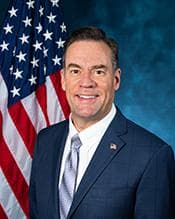
- Russ Fulcher
- Cosponsors
- None
- Introduced
- In Committee
What this bill would do
This bill, titled the "Reducing Barriers for Broadband on Federal Lands Act of 2025," aims to streamline broadband infrastructure development. It seeks to ensure that certain broadband projects are not required to undergo specific environmental or historical preservation reviews. Specifically, it removes the classification of certain broadband project authorizations as major Federal actions under the National Environmental Policy Act. It also exempts these projects from being considered undertakings under the National Historic Preservation Act. These exemptions apply to broadband projects carried out within a right-of-way on Federal land.
Yes· 3 of 14
Would people in rural areas be better off under this?+6
The bill specifically targets infrastructure that is highly beneficial for remote and rural connectivity.
Does this get reliable internet to more people?+6
The bill directly facilitates the installation of infrastructure intended to expand high-quality broadband access.
Does this invest in rural communities?+5
Expanding broadband access via federal land right-of-ways can significantly improve rural connectivity.
The opposite· 3 of 5
Does this better protect air, water and wildlife?-5
The bill exempts broadband projects from certain NEPA environmental reviews, potentially reducing oversight.
Does this better protect public land such as parks and forests?-3
Exempting projects from National Historic Preservation Act reviews may reduce the rigor of public land management.
Would Native Americans be better off under this?-2
Exemptions from historical preservation reviews could negatively impact lands of cultural or historical significance to Native Americans.
Who it would affect, and how
Potential Positive Impacts for People
-
Streamlined Infrastructure Deployment: By exempting broadband projects from certain environmental and historical reviews, the bill aims to ensure projects are not subject to those specific requirements (Section 2(a) and 2(b)).
-
Expanded Broadband Access: The bill defines broadband projects as installations of wireline or wireless infrastructure—including fiber optic lines and communications towers—to enable high-quality voice, data, graphics, and video telecommunications (Section 2(c)(1)).
Potential Negative Impacts for People
- Reduction in Environmental and Historical Oversight: The bill changes how broadband projects are treated under the National Environmental Policy Act of the 1969 (Section 2(a)) and the National Historic Preservation Act (Section 2(b)), which may impact how these specific reviews are conducted for projects in a right-of-way.
Groups and Interests Ranking
Every group the model scored this bill for, from -10 to +10. Hover a score for the reason it gave.
- Demographic And Interest Groups
- Good For Rural Residents+6Good For Business Owners+4Good For Farmers+3Good For Students+3Good For Low Income Households+2Good For Middle Class Households+1Good For People With Disabilities+1Good For Retirees+1Good For Urban Residents+1Good For Native Americans-2
- Education And Technology
- Improves Internet Access+6
- Economy And Finance
- Increases Job Creation+3Improves Economic Growth+2
- Environment Energy And Infrastructure
- Improves Rural Development+5Improves Environmental Protections-5Improves Public Land Management-3
- Governance And Ideology
- Increases Federal Power+2Improves Due Process-2Improves Government Transparency-2
- 3/24/2025
- Referred to the Committee on Energy and Commerce, and in addition to the Committee on Natural Resources, for a period to be subsequently determined by the Speaker, in each case for consideration of such provisions as fall within the jurisdiction of the committee concerned.
- Introduced in House