Bill · H.R. 2283· House(119-HR-2283)
Recognizing Community Organizations for Veteran Engagement and Recovery Act
- Introduced
- 3/24/2025
- Last activity
- 10/5/2026 — Placed on the Union Calendar, Calendar No. 736.
- Sponsored by
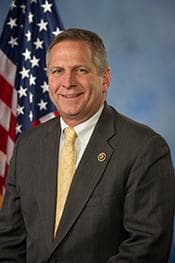
- Mike Bost
- Cosponsors
- - 5 - 0
- Introduced
- On Calendar
What this bill would do
This bill directs the Secretary of Veterans Affairs to establish a three-year pilot program providing grants to eligible outpatient mental health facilities. These grants are meant to deliver culturally competent, evidence-based mental health care to veterans and their families, both in person and via telehealth. The program prioritizes providers with a primary mission of serving veterans, especially those in medically underserved areas or locations with high suicide risks. Participating facilities are barred from charging veterans fees for care funded by the grant and cannot duplicate other federal payments. Additionally, the bill modifies certain housing loan fees by changing specific expiration dates in the law.
Yes
Would veterans be better off under this, taking everything together?+8
The bill establishes a dedicated pilot program to improve mental health access and care quality specifically for veterans.
Does this make mental health care easier to get?+8
The bill funds a pilot program to provide culturally competent, evidence-based mental health care for veterans through non-profit outpatient facilities.
Does this increase the pay, pensions or support veterans receive?+7
The bill increases veteran support by providing grants for specialized mental health services and encouraging enrollment in the VA medical system.
The opposite
No question was scored the opposite.
How the text last changed
Reported in House (10/5/2026), compared with Introduced in House. Each change is on the Text tab.
The newer version of the bill changes the three-year pilot program providing grants to mental health care providers for veterans by updating provider requirements, grant uses, and reporting rules, and extends funding through fiscal year 2029. It removes the requirement that providers be non-profit organizations while adding new licensing, certification, and accreditation standards. The funding authorization is extended from fiscal years 2025 through 2027 to fiscal years 2027 through 2029 at $20,000,000 for each fiscal year, and a housing loan fee expiration date is moved from June 9, 2034, to July 24, 2034.
Who it would affect, and how
Potential Positive Impacts for People
-
Grants for Veteran Mental Health Care: Under Section 2(a) and Section 2(c)(1), the Secretary of Veterans Affairs will provide grants to eligible mental health care providers to deliver evidence-based mental health care, operate or expand outpatient facilities, and support outreach and care coordination. This is positive because it directly increases veterans' access to necessary mental health services.
-
Care for Spouses and Dependents: According to Section 2(c)(4), grant recipients may use funds to provide family therapy, couples therapy, group therapy, and family psychoeducation to the spouses and dependent children of veterans when integral to a successful clinical outcome. This is a positive step for supporting the families who also bear the weight of military service.
-
Free Care for Veterans: Under Section 2(c)(2)(A), grant recipients are explicitly prohibited from charging an eligible veteran any fee associated with the receipt of mental health care funded by the grant. This protects veterans from out-of-pocket costs for these specific services.
-
Support for Uninsured and Ineligible Individuals: Per Section 2(c)(1)(G), grant funds can be used to provide services to individuals who are uninsured, ineligible for VA health care, or receiving care that is not otherwise reimbursable. This ensures that vulnerable individuals who might otherwise fall through the cracks can still receive care.
Potential Negative Impacts for People
- Funding Caps Based on Prior Federal Grants: Under Section 2(e)(1)(B), outpatient mental health facilities that received at least 50 percent of their operating budget from Federal grants in the preceding fiscal year face a strict funding cap, limiting their grant to the lesser of 50 percent of their operating budget or $1,500,000. This could place a heavy financial burden or restriction on clinics that rely heavily on federal funding to keep their doors open.
Groups and Interests Ranking
Every group the model scored this bill for, from -10 to +10. Hover a score for the reason it gave.
- Demographic And Interest Groups
- Good For Veterans+8
- Healthcare
- Improves Mental Health Access+8
- National Security And Foreign Policy
- Improves Veterans Benefits+7
A committee approved it and sent it to the floor
What changed from Introduced in House
The newer version of the bill changes the three-year pilot program providing grants to mental health care providers for veterans by updating provider requirements, grant uses, and reporting rules, and extends funding through fiscal year 2029. It removes the requirement that providers be non-profit organizations while adding new licensing, certification, and accreditation standards. The funding authorization is extended from fiscal years 2025 through 2027 to fiscal years 2027 through 2029 at $20,000,000 for each fiscal year, and a housing loan fee expiration date is moved from June 9, 2034, to July 24, 2034.
Each change
- Section 2 changes the grant recipients from medical facilities to eligible mental health care providers, and removes the requirement that care be culturally competent and evidence-based from the establishment provision.
- Section 2 adds requirements that providers have documented experience serving veterans and their families, and training in behavioral health conditions related to military service.
- Section 2 removes the requirement that a provider be a non-profit organization.
- Section 2 changes provider eligibility by removing the requirement to operate at least one outpatient mental health facility for three years from one subsection and instead requiring providers to have operated an outpatient mental health facility in the United States for a continuous period of at least three years, be licensed or certified under state law, and be accredited by the Joint Commission on Accreditation of Healthcare Organizations, the Commission on Accreditation of Rehabilitation Facilities, or another body the Secretary determines appropriate.
- Section 2 changes application requirements to specify that outpatient facilities where services will be provided must be identified, replaces the specific clinician training plan requirement with a plan for clinician training or continuing education in veteran-specific mental health conditions and military service effects, and removes the Secretary's duty to establish training requirements under subsection (f).
- Section 2 updates permitted grant uses by removing the direct reference to culturally competent care, allowing funds to operate or expand existing facilities or establish new ones, adding specific support activities such as outreach, care coordination, veteran engagement, clinician training, implementation support, program evaluation, and quality improvement, and allowing services to be provided to individuals who are uninsured, ineligible for Department of Veterans Affairs health care, or receiving non-reimbursable care.
- Section 2 changes restrictions on grant funds by prohibiting providers from charging an eligible veteran a fee for funded mental health care, prohibiting refusal of care based on another payer source, removing a provision allowing reimbursement from health plans or government programs, and adding prohibitions against duplicating payments or paying for clinical services otherwise billable to Federal payers or the Veterans Community Care Program.
- Section 2 adds rules of construction allowing reimbursement from non-Department payers while prohibiting supplanting or duplicating federal reimbursement or double billing.
- Section 2 adds provisions allowing grant funds to be used to provide care to spouses and dependent children of veterans when integral to clinical outcomes, including family, couples, and group therapy, family psychoeducation, and other clinically necessary counseling.
- Section 2 changes the selection of facilities by requiring grants to be distributed geographically and evenly among rural and urban areas, changing facility consideration based on historical service proportions to recipient proportions, and adding a requirement to prioritize providers with a primary mission of serving veterans or expanding access and improving patient outcomes.
- Section 2 changes regulations and accountability rules by requiring grant recipients to collect standardized outcome measures such as symptom improvement and program completion, and to adhere to the continuity of care model established for the Veterans Community Care Program.
- Section 2 changes the final report requirements by removing veteran demographics, adding a summary of clinical outcomes including pre- and post-client functioning metrics and the number of clinically improved veterans, and adding findings on program sustainability.
- Section 2 changes the authorization of appropriations of $20,000,000 from fiscal years 2025 through 2027 to fiscal years 2027 through 2029.
- Section 3 adds a modification to housing loan fees in section 3729(b)(2) of title 38, United States Code, striking June 9, 2034, and inserting July 24, 2034.
Written by an AI model from a comparison of this version’s text with the one before it, not by a person. .
- 10/5/2026
- Reported (Amended) by the Committee on Veterans' Affairs. H. Rept. 119-839.
- Placed on the Union Calendar, Calendar No. 736.
- 6/24/2026
- 1 Cosponsor added.
- 5/14/2026
- Committee Consideration and Mark-up Session Held
- Ordered to be Reported in the Nature of a Substitute by the Yeas and Nays: 14 - 8.
- 5/12/2026
- 1 Cosponsor added.
- 4/16/2026
- Subcommittee Consideration and Mark-up Session Held
- Forwarded by Subcommittee to Full Committee (Amended) by Voice Vote.
- 1/13/2026
- Subcommittee Hearings Held
- 7/14/2025
- 1 Cosponsor added.
- 6/6/2025
- 1 Cosponsor added.
- 4/29/2025
- 1 Cosponsor added.
- 3/26/2025
- Referred to the Subcommittee on Health.
- 3/24/2025
- Referred to the House Committee on Veterans' Affairs.
- Introduced in House
One bill Congress.gov lists as related to this one — companions in the other chamber, earlier versions, and bills this one absorbed or was folded into.
 Gus Bilirakis
Republican · Florida
 Jack Bergman
Republican · Michigan
 Earl Carter
Republican · Georgia
 Juan Ciscomani
Republican · Arizona
 Aumua Amata Radewagen
Republican · American Samoa