Bill · H.R. 2262· House(119-HR-2262)
Flexibility for Workers Education Act
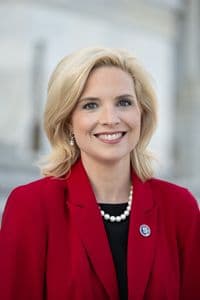
- Introduced
- 3/21/2025
- Last activity
- 1/13/2026 — Motion to reconsider laid on the table Agreed to without objection.
- Sponsored by
- Ashley Hinson
- Cosponsors
- - 2 - 0
- Introduced
- Failed
What this bill would do
The Flexibility for Workers Education Act amends the Fair Labor Standards Act of 1938. It excludes specific activities from the calculation of hours worked. This includes time spent changing clothes or washing if a collective-bargaining agreement already excludes it. It also excludes time spent in voluntary education or training programs that happen outside regular working hours. To be excluded, the employer cannot take adverse action against employees who do not participate. Additionally, the employee must not perform any work during these activities.
Yes· 3 of 4
Would people in their twenties and thirties be better off under this?+2
This bill could be slightly beneficial for young adults as it may encourage employers to offer more training opportunities that are not counted as work hours if they are voluntary and outside of regular hours.
Would people in middle age be better off under this?+2
This bill could be slightly beneficial for middle-aged individuals as it may encourage employers to offer more training opportunities that are not counted as work hours if they are voluntary and outside of regular hours.
Would business owners be better off under this?+2
Business owners could see this bill as slightly positive, as they would not be required to pay employees for voluntary training or educational programs outside of work hours.
The opposite
Would households on low incomes be better off under this?-3
This bill could negatively affect low-income households if it leads to fewer paid training opportunities or pressure to attend unpaid training.
Would union members be better off under this?-2
This bill might slightly negatively affect union workers, as it changes the calculation of hours worked and may impact collective bargaining agreements related to training.
Would middle-income households be better off under this?-1
This bill could slightly negatively affect middle-class households if it leads to a reduction in paid training.
What Congress actually voted on
2 recorded votes have been taken on this bill. One of them decided something; the rest moved it along.
- The House: the vote on whether to pass the billFailed 209–215
This is the real decision in this chamber. Passing here sends the bill to the other chamber, which must pass it too before it can go to the President.
01/13/2026 · Roll call 19 · recorded as “On Passage”
Who it would affect, and how
Potential Positive Impacts for People
- Education and Training Flexibility: Section 2(a)(2) allows for attendance in education, training programs, or lectures outside of regular working hours. This could benefit individuals seeking to further their knowledge or skills.
Potential Negative Impacts for People
- Loss of Paid Hours: Section 2(a)(1) and Section 2(a)(2) exclude certain activities from "hours worked." This means employees would not be counted as employed during time spent changing clothes, washing, or participating in voluntary training, which could result in less paid time.
Groups and Interests Ranking
Every group the model scored this bill for, from -10 to +10. Hover a score for the reason it gave.
- Demographic And Interest Groups
- Good For Business Owners+2Good For Middle Aged+2Good For Students+2Good For Young Adults+2Good For Low Income Households-3Good For Union Workers-2Good For Middle Class Households-1
| Updated | Bill | Title | Policy Area |
|---|---|---|---|
| 9 months ago | On agreeing to the Rules amendment (A001) Agreed to without objection. |
- 1/13/2026
- Motion to reconsider laid on the table Agreed to without objection.
- Failed of passage/not agreed to in House On passage Failed by the Yeas and Nays: 209 - 215 (Roll no. 19).
- On passage Failed by the Yeas and Nays: 209 - 215 (Roll no. 19).
- On motion to recommit Failed by the Yeas and Nays: 209 - 213 (Roll no. 18).
- Considered as unfinished business. (consideration: CR H692-693)
- POSTPONED PROCEEDINGS - At the conclusion of debate on H.R. 2262, the Chair put the question on motion to recommit and by voice vote, announced the noes had prevailed. Mr. Norcross demanded the yeas and nays and the Chair postponed further proceedings until a time to be announced.
- The previous question on the motion to recommit was ordered pursuant to clause 2(b) of rule XIX.
- Mr. Norcross moved to recommit to the Committee on Education and Workforce. (text: CR H680-681)
- The previous question was ordered pursuant to the rule.
- DEBATE - The House proceeded with one hour of debate on H.R. 2262.
- Rule provides for consideration of H.R. 2988, H.R. 2262, H.R. 2270, H.R. 2312 and H.R. 4366. The resolution provides for consideration of H.R. 2988 under a structured rule, and H.R. 2262, H.R. 2270, H.R. 2312, and H.R. 4366 under a closed rule. The rule provides for one hour of general debate and one motion to recommit on each bill.
- Considered under the provisions of rule H. Res. 988. (consideration: CR H677-681; text of amendment in the nature of a substitute: CR H677-678)
- 1/12/2026
- Rules Committee Resolution H. Res. 988 Reported to House. Rule provides for consideration of H.R. 2988, H.R. 2262, H.R. 2270, H.R. 2312 and H.R. 4366. The resolution provides for consideration of H.R. 2988 under a structured rule, and H.R. 2262, H.R. 2270, H.R. 2312, and H.R. 4366 under a closed rule. The rule provides for one hour of general debate and one motion to recommit on each bill.
- 12/30/2025
- Reported (Amended) by the Committee on Education and Workforce. H. Rept. 119-423.
- Placed on the Union Calendar, Calendar No. 369.
- 4/9/2025
- Committee Consideration and Mark-up Session Held
- Ordered to be Reported (Amended) by the Yeas and Nays: 18 - 13.
- 3/21/2025
- Referred to the House Committee on Education and Workforce.
- 2 Cosponsors added.
- Introduced in House
One bill Congress.gov lists as related to this one — companions in the other chamber, earlier versions, and bills this one absorbed or was folded into.
 Julia Letlow
Republican · Louisiana
 Mark Messmer
Republican · Indiana