Bill · H.R. 2246· House(119-HR-2246)
Foreign Investment Guardrails to Help Thwart (FIGHT) China Act
- Introduced
- 3/21/2025
- Last activity
- 3/21/2025 — Referred to the Committee on Foreign Affairs, and in addition to the Committee on Financial Services, for a period to be subsequently determined by the Speaker, in each case for consideration of such provisions as fall within the jurisdiction of the committee concerned.
- Sponsored by
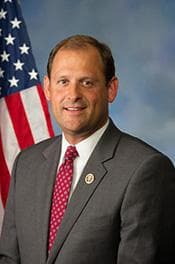
- Andy Barr
- Cosponsors
- - 4 - 2
- Introduced
- In Committee
What this bill would do
The Foreign Investment Guardrails to Help Thwart (FIGHT) China Act aims to protect United States national security. It empowers the President to impose sanctions on certain covered foreign persons from the People's Republic of China. The bill also implements prohibitions and notification requirements for United States persons engaging in specific national security transactions involving prohibited technologies. Additionally, it establishes requirements for securities related to the Non-SDN Chinese Military-Industrial Complex Companies List. This legislation includes provisions for the Department of the Treasury and Department of Commerce to conduct outreach and manage the Act's implementation.
Yes· 3 of 5
Does this give the federal government more power?+6
The bill expands Presidential authority to impose sanctions and prohibit certain transactions.
Does this better protect the country from computer attacks?+5
The bill implements guardrails for sensitive technologies like AI and semiconductors to protect national security.
Does this strengthen ties with allied countries?+4
The act encourages multilateral engagement and coordination with allies and partners.
The opposite· 3 of 7
Would business owners be better off under this?-4
Business owners may face new compliance costs, notification requirements, and potential civil penalties.
Does this make trade with other countries easier?-3
The bill imposes new restrictions on investments and transactions involving the People's Republic of China.
Would people with substantial wealth be better off under this?-2
The bill restricts holdings in certain securities and may compel divestment.
Who it would affect, and how
Potential Positive Impacts for People
-
National Security Protections: The bill provides the President authority to block and prohibit transactions in property of covered foreign persons to protect national security (Section 101(b)).
-
Investment Oversight: The Act implements a system where United States persons must submit written notifications for certain transactions in notifiable technology, allowing for government oversight of sensitive investments (Section s 802(a)).
-
Streamlined Regulatory Compliance: The Secretary is directed to issue regulations that minimize the cost and complexity of compliance for affected parties (Section 801(e)(5)).
-
Information Security: The Act includes provisions to keep specific information or documentary material exempt from public disclosure to protect sensitive data (Section 802(c)(1)).
-
Multilateral Coordination: The bill encourages working with allies and partners to create shared protocols and information-sharing mechanisms to prevent the acquisition of prohibited technologies (Section 804(a)).
Potential Negative Impacts for People
-
Financial Penalties: Individuals or entities may face significant civil penalties of up to $250,000 or twice the amount of the transaction for violating prohibitions or notification requirements (Section 801(e)(6)(B) and Section 802(b)(4)(B)).
-
Forced Divestment: The Secretary has the authority to compel a United States person to divest from a covered national security transaction that violates the Act (Section 801(e)(6)(iii)).
-
Investment Restrictions: The President is required to promulgate rules that prohibit United States persons from knowingly holding securities of entities on the Non-SDN Chinese Military-Industrial Complex Companies List (Section 301(b)).
-
Compliance Burdens: While the Act directs the Secretary to minimize complexity, it still mandates various notifications, regulations, and potential legal consequences for transactions involving prohibited or notifiable technologies (Section 802(a)).
Groups and Interests Ranking
Every group the model scored this bill for, from -10 to +10. Hover a score for the reason it gave.
- Demographic And Interest Groups
- Good For Business Owners-4Good For Billionaires-2Good For High Net Worth Individuals-2Good For Ultra High Net Worth Individuals-2
- Governance And Ideology
- Increases Federal Power+6Improves Government Transparency+2Improves Due Process-1
- National Security And Foreign Policy
- Improves Cybersecurity Defense+5Improves International Alliances+4Improves International Trade-3
- Education And Technology
- Increases Big Tech Regulation+3
- Economy And Finance
- Improves Consumer Protection-2
- 3/24/2025
- 2 Cosponsors added.
- 3/21/2025
- Referred to the Committee on Foreign Affairs, and in addition to the Committee on Financial Services, for a period to be subsequently determined by the Speaker, in each case for consideration of such provisions as fall within the jurisdiction of the committee concerned.
- 4 Cosponsors added.
- Introduced in House
One bill Congress.gov lists as related to this one — companions in the other chamber, earlier versions, and bills this one absorbed or was folded into.
 Jared Golden
Democrat · Maine
 Darin LaHood
Republican · Illinois
 Michael McCaul
Republican · Texas
 John Moolenaar
Republican · Michigan
 Thomas Suozzi
Democrat · New York
 Ann Wagner
Republican · Missouri