Bill · H.R. 2238· House(119-HR-2238)
Ranching Without Red Tape Act of 2025
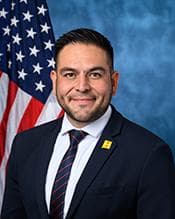
- Introduced
- 3/18/2025
- Last activity
- 4/18/2025 — Referred to the Subcommittee on Livestock, Dairy, and Poultry.
- Sponsored by
- Gabe Vasquez
- Cosponsors
- - 0 - 2
- Introduced
- In Committee
What this bill would do
The Ranching Without Red Tape Act of 2025 aims to allow certain grazing permit holders to perform minor range improvements on their lands. Under the bill, the Secretary of Agriculture would issue regulations for USFS grazing permits, while the Secretary of the Interior would issue regulations for BLM grazing permits or leases. These minor improvements include work on existing fences, wells, water pipelines, and stock tanks. The Act requires specific officials to respond to requests for range improvements within 30 days. It also establishes procedures for how permittees can carry out these improvements after providing notice.
Yes· 3 of 5
Would business owners be better off under this?+5
The bill significantly reduces administrative burdens and wait times for grazing permit holders.
Would farmers be better off under this?+5
The bill benefits agricultural operators through faster authorization for infrastructure improvements.
Would people in rural areas be better off under this?+3
Supports the ranching-based economy common in rural areas.
The opposite· 3 of 5
Would Native Americans be better off under this?-3
Changes to land use and agency oversight may impact traditional or treaty-protected land access.
Does this protect the right to fair treatment by the courts?-2
The bill allows for unilateral action by permittees if federal officials do not respond to notifications.
Does this better protect air, water and wildlife?-2
The bill allows for expedited, potentially less-scrutinized range improvements on public lands.
Who it would affect, and how
Potential Positive Impacts for People
-
Increased efficiency for permittees: Under Section 2(a) and Section 3(a), permittees can carry out minor range improvements—such as work on fences, wells, or water pipelines—if they notify the appropriate district or field manager at least 30 days in advance and receive approval or no response.
-
Faster government response times: Section 2(b) and Section 3(b) require the Secretary to respond to a "covered request" for a range improvement within 30 days of the request being submitted.
-
Expedited government work: If a response confirms the Secretary will carry out a requested improvement, the bill requires that the work be expedited using available administrative tools or authorities, including categorical exclusions (Section 2(b) and Section 3(b)).
Potential Negative Impacts for People
- Potential for unilateral action through silence: Under Section 2(a)(2)(B) and Section 3(a)(2)(B), a minor range improvement can proceed if the applicable district ranger or Bureau of Land Management district or field manager "does not respond" to the permittee's notification.
Groups and Interests Ranking
Every group the model scored this bill for, from -10 to +10. Hover a score for the reason it gave.
- Demographic And Interest Groups
- Good For Business Owners+5Good For Farmers+5Good For Rural Residents+3Good For Native Americans-3
- Governance And Ideology
- Improves Due Process-2Improves Government Transparency-1Increases Federal Power-1
- Environment Energy And Infrastructure
- Improves Rural Development+3Improves Public Land Management+2Improves Environmental Protections-2
- 4/18/2025
- Referred to the Subcommittee on Forestry and Horticulture.
- Referred to the Subcommittee on Livestock, Dairy, and Poultry.
- 3/18/2025
- Referred to the Committee on Natural Resources, and in addition to the Committee on Agriculture, for a period to be subsequently determined by the Speaker, in each case for consideration of such provisions as fall within the jurisdiction of the committee concerned.
- 2 Cosponsors added.
- Introduced in House
 Celeste Maloy
Republican · Utah
 Ryan Zinke
Republican · Montana