Bill · H.R. 2235· House(119-HR-2235)
Habitat Connectivity on Working Lands Act of 2025
- Introduced
- 3/18/2025
- Last activity
- 4/18/2025 — Referred to the Subcommittee on Conservation, Research, and Biotechnology.
- Sponsored by
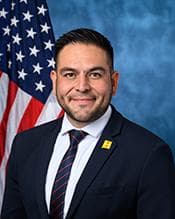
- Gabe Vasquez
- Cosponsors
- - 2 - 1
- Introduced
- In Committee
What this bill would do
The Habitat Connectivity on Working Lands Act of 2025 updates the Food Security Act of 1985 to improve wildlife migration corridors and habitat connectivity, specifically for big game species. It allows producers with land in the conservation reserve program to receive cost-share payments through the Environmental Quality Incentives Program and the Conservation Stewardship Program. The bill increases the rental payment limitation for the conservation reserve program from $50,000 to $125,000. It also requires the Secretary to incorporate nonstructural livestock control methods, like virtual fencing, into conservation standards. Additionally, the act provides for technical assistance and new research grants focused on virtual fencing technology.
Yes· 3 of 11
Would farmers be better off under this?+9
Directly increases financial incentives and technical support for farmers practicing conservation.
Would people in rural areas be better off under this?+8
Benefits those living and working in rural agricultural areas through increased funding.
Does this better protect air, water and wildlife?+8
Specifically designed to improve wildlife migration corridors and biodiversity for big game species.
The opposite
Does this reduce what the federal government spends?-3
The bill increases rental payment limits and creates new research grant opportunities.
Does this reduce what the federal government owes?-2
Increased payment limits and new grants likely increase federal spending.
Does this make the government pay for what it commits to?-2
Increases spending on conservation payments and research grants.
Who it would affect, and how
Potential Positive Impacts for People
-
Increased Financial Support for Producers: The bill raises the rental payment limitation for the conservation reserve program from $50,000 to $125,000, providing more financial resources for participating producers (Section 2(c)(3)).
-
Additional Funding Opportunities: Producers with land of ecological significance enrolled in the conservation reserve program can now receive payments for planning, design, materials, equipment, installation, labor, management, maintenance, or training through the Environmental Quality Incentives Program (Section 2(c)(1)) and the Conservation Stewardship Program (Section 2(c)(2)).
-
Preservation of Land Use: The bill ensures that efforts to enhance wildlife habitat connectivity will not prevent or change emergency grazing and haying access for grassland acres in the conservation reserve program (Section 2(c)(2)(B)(C)).
-
Access to Technology and Expertise: The Secretary must ensure adequate technical assistance is available for those using nonstructural methods for livestock distribution, such as virtual fencing (Section 2(e)(2)).
-
Investment in Innovation: Research and extension grants will be available to study virtual fencing technology and its effects on cultural and natural resources (Section 3).
Potential Negative Impacts for People
- Payment Restrictions: Producers are ineligible for cost-share payments under the Environmental Quality Incentives Program or the Conservation Stewardship Program if they are already receiving payments for the same practice or activity on the same land from another Federal program, unless that program is the conservation reserve program (Section 2(c)(1)(B) and Section 2(c)(2)(B)).
Groups and Interests Ranking
Every group the model scored this bill for, from -10 to +10. Hover a score for the reason it gave.
- Demographic And Interest Groups
- Good For Farmers+9Good For Rural Residents+8Good For Business Owners+6
- Environment Energy And Infrastructure
- Improves Environmental Protections+8Improves Rural Development+7Improves Public Land Management+6Reduces Carbon Emissions+2
- Education And Technology
- Increases Scientific Research Funding+5
- Governance And Ideology
- Increases Federal Power+1
- Economy And Finance
- Improves Small Business Support+5Improves Economic Growth+2Reduces Government Spending-3Improves Fiscal Responsibility-2Reduces National Debt-2
- 3/3/2026
- 1 Cosponsor added.
- 4/18/2025
- Referred to the Subcommittee on Conservation, Research, and Biotechnology.
- 3/18/2025
- Referred to the House Committee on Agriculture.
- 2 Cosponsors added.
- Introduced in House
 Sharice Davids
Democrat · Kansas
 Teresa Leger Fernandez
Democrat · New Mexico
 Ryan Zinke
Republican · Montana