Bill · H.R. 2116· House(119-HR-2116)
Law Enforcement Support and Counter Transnational Repression Act
- Introduced
- 3/14/2025
- Last activity
- 4/9/2025 — Ordered to be Reported by Voice Vote.
- Sponsored by
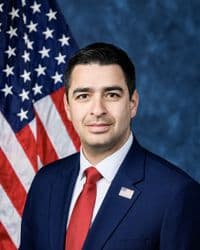
- Gabe Evans
- Cosponsors
- - 1 - 3
- Introduced
What this bill would do
This bill, known as the Law Enforcement Support and Counter Transnational Repression Act, seeks to amend the Homeland Security Act of 2002. It directs the Secretary to conduct a public service announcement campaign to educate the public and international allies about transnational repression and related terrorism threats. The campaign aims to inform people about available resources and how to anonymously report suspected acts to the FBI. Additionally, the bill requires research and development of technologies to help the Department support various government officials in countering these threats. This research must follow constitutional, privacy, civil rights, and civil liberties protections.
Yes· 3 of 9
Does this better protect the country from computer attacks?+5
The bill encourages R&D for technologies to counter foreign government threats, which includes digital/cyber threats.
Does this put more money into stopping terrorism?+4
The bill directs resources toward countering terrorism threats related to transnational repression.
Does this strengthen ties with allied countries?+3
The bill aims to educate international allies on the issue of transnational repression.
The opposite
Does this give the government more power to monitor people inside the country?-3
The mandate for R&D into new technologies to counter repression may increase domestic surveillance capabilities.
Does this protect people from being watched or searched?-2
The development of new technologies for countering repression may impact individual privacy rights.
Does this give people more control over their personal data?-2
The development of new technologies for monitoring threats could present potential risks to data privacy.
Who it would affect, and how
Potential Positive Impacts for People
-
Increased Public Awareness and Safety: The public service announcement campaign is designed to educate people on the issue of transnational repression and related terrorism threats, providing them with information on available resources. (Section 2(a)(1))
-
Anonymous Reporting Options: The campaign will teach people appropriate ways to contact the FBI to anonymously report suspected acts of transnational repression or related terrorism threats. (Section 2(a)(1))
-
Targeted Outreach: The implementation of these campaigns can include languages that the Secretary determines are relevant to reach specific groups of people. (Section 2(a)(2))
-
Enhanced Law Enforcement Capabilities: The bill mandates research and development into technologies and techniques intended to enhance support for Federal, State, local, Tribal, and territorial officials in countering these threats. (Section 2(b))
Potential Negative Impacts for People
- Privacy and Civil Liberty Concerns: While the bill states that research and development must be conducted in accordance with applicable constitutional, privacy, civil rights, and civil liberties protections, it involves the development of technologies and techniques for countering these threats. (Section 2(b))
Groups and Interests Ranking
Every group the model scored this bill for, from -10 to +10. Hover a score for the reason it gave.
- National Security And Foreign Policy
- Improves Cybersecurity Defense+5Increases Counter Terrorism Funding+4Improves International Alliances+3Improves Diplomatic Engagement+2Increases Domestic Surveillance-3
- Demographic And Interest Groups
- Good For Immigrants+3
- Governance And Ideology
- Improves Government Transparency+2Increases Federal Power+2Improves Freedom Of Speech+1Improves Privacy Rights-2
- Education And Technology
- Increases Scientific Research Funding+3Improves Data Privacy-2
- 10/21/2025
- 1 Cosponsor added.
- 10/17/2025
- 1 Cosponsor added.
- 4/9/2025
- Committee Consideration and Mark-up Session Held
- Ordered to be Reported by Voice Vote.
- 3/25/2025
- Subcommittee Consideration and Mark-up Session Held
- Forwarded by Subcommittee to Full Committee by Voice Vote.
- 3/14/2025
- Referred to the Committee on Homeland Security, and in addition to the Committee on the Judiciary, for a period to be subsequently determined by the Speaker, in each case for consideration of such provisions as fall within the jurisdiction of the committee concerned.
- Referred to the Subcommittee on Counterterrorism and Intelligence.
- 2 Cosponsors added.
- Introduced in House
 Laura Gillen
Democrat · New York
 Seth Magaziner
Democrat · Rhode Island
 August Pfluger
Republican · Texas
 Eugene Vindman
Democrat · Virginia