Bill · H.R. 205· House(119-HR-205)
No Congressional Funds for Sanctuary Cities Act
- Introduced
- 1/3/2025
- Last activity
- 1/3/2025 — Referred to the Committee on the Judiciary, and in addition to the Committee on Oversight and Government Reform, for a period to be subsequently determined by the Speaker, in each case for consideration of such provisions as fall within the jurisdiction of the committee concerned.
- Sponsored by
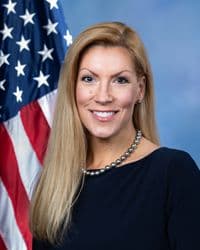
- Beth Van Duyne
- Cosponsors
- - 7 - 0
- Introduced
- In Committee
What this bill would do
This bill, titled the ``No Congressional Funds for Sanctuary Cities Act'', aims to stop the use of Federal funds for congressional earmarks directed at sanctuary jurisdictions. A sanctuary jurisdiction is defined as a State or local government with policies that restrict sharing immigration status information or complying with certain Department of Homeland Security requests. The Act includes an exception for officials who do not comply with detainer requests for individuals who are victims or witnesses to a criminal offense. This prohibition applies to fiscal year 2026 and all years following.
Yes
Does this give the federal government more power?+3
The bill uses federal funding as leverage to influence local government policies.
Does this tighten control of the border?+2
The bill encourages jurisdictions to cooperate with Department of Homeland Security requests.
The opposite· 3 of 5
Would Hispanic Americans be better off under this?-4
The bill targets jurisdictions that restrict information sharing regarding immigration status, which often impacts Hispanic communities.
Would immigrants be better off under this?-4
The bill restricts the financial autonomy of jurisdictions that provide protections for immigrants.
Does this make it easier for immigrants already here to become citizens?-3
The bill penalizes jurisdictions that restrict the exchange of immigration status information.
Who it would affect, and how
Potential Positive Impacts for People
- Restriction of Earmark Funds: The bill prohibits Federal funds from being used for congressional earmarks targeted to a State or unit of local government that is a sanctuary jurisdiction (Section 2(a)).
Potential Negative Impacts for People
-
Loss of Earmark Funding: States or local government units classified as sanctuary jurisdictions would be prohibited from receiving congressional earmarks (Section 2(a)).
-
Jurisdictions with specific policies labeled as sanctuary jurisdictions: Any State or political subdivision with a statute, ordinance, policy, or practice that restricts sharing information regarding citizenship or immigration status, or restricts complying with specific Department of Homeland Security requests, would be subject to this Act (Section 3(a)).
Groups and Interests Ranking
Every group the model scored this bill for, from -10 to +10. Hover a score for the reason it gave.
- Demographic And Interest Groups
- Good For Hispanic Americans-4Good For Immigrants-4Good For Low Income Households-2
- Governance And Ideology
- Increases Federal Power+3
- Economy And Finance
- Reduces Government Spending-2
- Social Issues And Justice
- Improves Border Security+2Improves Pathway To Citizenship-3
- 6/27/2025
- 1 Cosponsor added.
- 2/5/2025
- 1 Cosponsor added.
- 1/31/2025
- 2 Cosponsors added.
- 1/21/2025
- 1 Cosponsor added.
- 1/9/2025
- 1 Cosponsor added.
- 1/3/2025
- Referred to the Committee on the Judiciary, and in addition to the Committee on Oversight and Government Reform, for a period to be subsequently determined by the Speaker, in each case for consideration of such provisions as fall within the jurisdiction of the committee concerned.
- 1 Cosponsor added.
- Introduced in House
 Byron Donalds
Republican · Florida
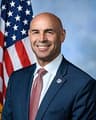 Jake Ellzey
Republican · Texas
 Michael Guest
Republican · Mississippi
 Michael Rulli
Republican · Ohio
 W. Steube
Republican · Florida
 Randy Weber
Republican · Texas
 Tony Wied
Republican · Wisconsin