Bill · H.R. 2025· House(119-HR-2025)
Northeastern Arizona Indian Water Rights Settlement Act of 2025
- Introduced
- 3/11/2025
- Last activity
- 3/11/2025 — Referred to the House Committee on Natural Resources.
- Sponsored by
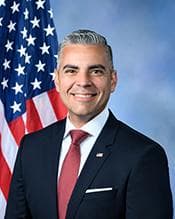
- Juan Ciscomani
- Cosponsors
- - 2 - 4
- Introduced
- In Committee
What this bill would do
The Northeastern Arizona Indian Water Rights Settlement Act of 2025 aims to provide a final settlement for the water rights claims of the Navajo Nation, the Hopi Tribe, and the San Juan Southern Paiute Tribe. It ratifies the Northeastern Arizona Indian Water Rights Settlement Agreement and authorizes the Secretary of the Interior to execute necessary duties. The legislation allocates specific quantities of Arizona Colorado River Water to the involved Tribes and establishes various trust funds for their use. It also directs the planning, design, and construction of the iina ba - paa tuwaqat'si pipeline to deliver potable water to tribal communities. Additionally, the Act provides for the creation of the San Juan Southern Paiute Reservation and outlines rules for water use, transfers, and environmental compliance.
Yes· 3 of 4
Would Native Americans be better off under this?+9
The bill provides substantial water rights settlements and funding for the Navajo, Hopi, and San Juan Southern Paiute Tribes.
Does this invest in rural communities?+7
The act establishes essential water infrastructure through the iina ba - paa tuwaqat'si pipeline for tribal communities.
Does this better protect public land such as parks and forests?+6
The act establishes the San Juan Southern Paiute Reservation through land management and water rights settlement.
The opposite
No question was scored the opposite.
Who it would affect, and how
Potential Positive Impacts for People
-
Settlement of Water Rights Claims: The bill achieves a fair, equitable, and final settlement of all claims to water rights for the Navajo Nation, the Hopi Tribe, and the San Juan Southern Paiute Tribe (Section 2).
-
Water Allocation for Tribes: The Act allocates specific volumes of water, such as 44,700 AFY of Upper Basin Colorado River Water to the Navajo Nation and 2,300 AFY to the Hopi Tribe (Section 6(a)).
-
Protection Against Water Loss: Water rights granted under this Act are protected from being lost due to non-use, forfeiture, or abandonment (Section 5(e)).
-
Creation of Trust Funds: The bill establishes various trust funds, including the Navajo Nation Water Settlement Trust Fund and the Hopi Tribe Water Settlement Trust Fund, to support tribal interests (Sections 10 and 11).
-
Water Storage Opportunities: The Act allows for the storage of water in underground facilities or groundwater savings facilities within various reservations (Section 6(c)(1)).
-
System Conservation Benefits: The legislation includes the NAIWRSA System Conservation Program to store water in Lake Powell for a 20-year period to benefit the Colorado River System (Section 6(c)(4)(C)).
-
Water Delivery via Pipeline: The construction of the iina ba - paa tuwaqat'si pipeline will deliver potable water for domestic, commercial, municipal, and industrial uses to the Navajo Nation, Hopi Tribe, and San Juan Southern Paiute Southern Area (Section 8(a)(1)(E)).
-
Tribal Control Over Infrastructure: Ownership of the pipeline will be transferred to the respective tribes upon substantial completion, allowing for local control over specific sections (Section 8(a)(3)(B)).
-
Dedicated Funding for Tribal Needs: The bill establishes specific trust funds for the Navajo Nation, Hopi Tribe, and San Juan Southern Paiute Tribe to fund water projects, operation and maintenance, and agricultural conservation (Sections 10, 11, and 12).
-
Support for Agricultural Improvements: Tribal funds can be used for improvements to reduce water shortages on historically irrigated lands, such as efficient irrigation systems, wells, and pumps (Section 10(f)(3), 11(f)(3), and 12(f)(3)).
-
Renewable Energy Development: The Navajo Nation Trust Fund includes money specifically for planning, designing, and constructing renewable energy facilities to support water project costs (Section 10(f)(4)).
-
Establishment of Tribal Reservations: The bill proclaims approximately 5,400 acres of land as the San Juan Southern Paiute Reservation, held in trust for the exclusive benefit of the San Juan Southern Paiute Tribe (Section 19(c)(1)).
-
Water Rights Satisfaction: The legislation provides for the satisfaction of water rights and other benefits for the Navajo Nation, Hopi Tribe, and San Juan Southern Paiute Tribe through the resources granted in the Settlement Agreement (Section 15).
-
Water Infrastructure Use: The Secretary is authorized to treat, store, and convey up to 12,000 AFY of Navajo Nation Upper Basin Colorado River Water using Navajo-Gallup Water Supply Project facilities (Section 20(a)(1)).
-
Tribal Jurisdiction: Upon the publication of legal descriptions in the Federal Register, the San Juan Southern Paiute Tribe will have full jurisdiction over matters within its reservation area to the fullest extent permitted by Federal law (Section 19(g)(1)(A)).
Potential Negative Impacts for People
-
Water Shortage Reductions: Delivery of certain water types, such as Navajo Nation Cibola Water or Hopi Tribe Fourth Priority Water, is subject to reduction during years when a shortage is declared (Section 6(b)(3)).
-
Restrictions on Water Use: Water use is subject to several limitations, such as a prohibition on using certain water types outside of the State (Section 6(b)(1)(D) and 6(b)(2)(C)).
-
Environmental Compliance Requirements: Implementing the settlement requires compliance with various environmental laws, including the Endangered Species Act and the National Environmental Policy Act (Section 4(c)).
-
Water Diversion Conditions in New Mexico: Water diverted from New Mexico is subject to specific requirements, such as obtaining permits from the New Mexico State Engineer and complying with specific agreements (Section 6(g)(1)).
-
Requirement for Supplemental Funding: If the iina ba - paa tuwat'si Implementation Fund Account is insufficient, the Navajo Nation and Hopi Tribe may be required to provide supplemental funding from their own Water Settlement Trust Funds (Section 13(a)(3)).
-
Limitation on Judicial Review: The ability to seek judicial review for certain determinations made by the Secretary regarding Tribal management or expenditure plans is limited (Sections 10(m) and 11(m)).
-
Waiver of Legal Claims: The bill authorizes the tribes and the United States to execute waivers and releases of various past, present, and future claims related to water rights and injuries to water (Sections 14(a), 14(b), 14(c), 14(e), 14(f), and 14(i)). This includes claims related to water infrastructure, irrigation systems, and natural resource damage on San Juan Southern Paiute Land (Section 14(l)).
-
Limitations on Water Rights: The act specifies that nothing in the agreement or the act recognizes or establishes a right for a Member of the Navajo Nation, Hopi Tribe, or San Juan Southern Paiute Tribe to water on their respective lands (Section 15(a)(3), 15(b)(3), and 15(c)(3)).
-
Financial Risk for Tribes: Any costs associated with increasing the capacity of the Navajo-Gallup Water Supply Project must be borne solely by the Navajo Nation (Section 20(b)(2)).
-
Potential Repeal of Act: If the Secretary fails to publish a statement of findings by June 30, 2035, the act will be repealed and any contracts or agreements entered into pursuant to it will be considered void (Section 16(b)(1)).
Groups and Interests Ranking
Every group the model scored this bill for, from -10 to +10. Hover a score for the reason it gave.
- Environment Energy And Infrastructure
- Improves Rural Development+7Improves Public Land Management+6Increases Renewable Energy Investment+5
- Demographic And Interest Groups
- Good For Native Americans+9
- 12/17/2025
- 1 Cosponsor added.
- 3/11/2025
- Referred to the House Committee on Natural Resources.
- 5 Cosponsors added.
- Introduced in House
One bill Congress.gov lists as related to this one — companions in the other chamber, earlier versions, and bills this one absorbed or was folded into.
 Yassamin Ansari
Democrat · Arizona
 Elijah Crane
Republican · Arizona
 Raúl Grijalva
Democrat · Arizona
 Adelita Grijalva
Democrat · Arizona
 David Schweikert
Republican · Arizona
 Greg Stanton
Democrat · Arizona