Bill · H.R. 1886· House(119-HR-1886)
Affordable College Textbook Act
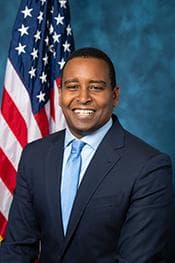
- Introduced
- 3/5/2025
- Last activity
- 3/5/2025 — Referred to the House Committee on Education and Workforce.
- Sponsored by
- Joe Neguse
- Cosponsors
- - 3 - 0
- Introduced
- In Committee
What this bill would do
The Affordable College Textbook Act aims to reduce the financial burden of college books on students by expanding the use of open textbooks. It establishes an Open Textbook Grant Program where the Secretary of Education awards competitive grants to institutions to support the creation or adaptation of these resources. The bill also updates the Higher Education Act to improve the transparency of textbook pricing and information. By mandating digital access to textbooks and tracking their impact, the act seeks to lower costs and improve student learning. Finally, it requires institutions to provide clearer information regarding whether materials are open educational resources.
Yes· 3 of 13
Would students be better off under this?+8
The bill directly targets the reduction of textbook costs to improve affordability for all students.
Does this make college cost less?+8
The bill establishes a grant program to expand the use of free open textbooks to reduce student costs.
Would people in their twenties and thirties be better off under this?+7
College students, who are typically young adults, benefit directly from reduced textbook costs.
The opposite
No question was scored the opposite.
Who it would affect, and how
Potential Positive Impacts for People
- Increased Savings for Students: The bill aims to achieve savings for students through the expansion of open textbooks (Section 3(b), Section 3(e)(1)).
- Improved Accessibility: The grant program requires plans to make open textbooks accessible to students with disabilities (Section 3(d)(2)(I), Section 3(f)(3)).
- Better Price Transparency: The act updates requirements for institutions to disclose the retail price, any applicable fees, and whether a textbook is an open educational resource (Section 4(3)).
- Data Privacy Information: For digital textbooks, the bill requires a summary of terms regarding how publishers collect and use student data, including opt-out options (Section 4(2)(C)).
- Expanded Access to Materials: Digital content for open textbooks must be made available free of charge to the public on easily accessible websites (Section 3(h)(1)).
- Support for Faculty: The bill provides for professional development to help faculty and staff adapt and use open textbooks (Section 3(d)(2)(G), Section 3(f)(1)).
Potential Negative Impacts for People
- No specific negative impacts or burdens are explicitly detailed in the provided text.
Groups and Interests Ranking
Every group the model scored this bill for, from -10 to +10. Hover a score for the reason it gave.
- Demographic And Interest Groups
- Good For Students+8Good For Low Income Households+7Good For Young Adults+7Good For People With Disabilities+6Good For Middle Class Households+4
- Education And Technology
- Improves College Affordability+8Improves Data Privacy+4
- Social Issues And Justice
- Improves Disability Rights+6Improves Poverty Reduction+3
- Governance And Ideology
- Improves Government Transparency+5Improves Privacy Rights+3
- Economy And Finance
- Improves Consumer Protection+5Improves Economic Growth+2
- 9/2/2026
- 3 Cosponsors added.
- 3/5/2025
- Referred to the House Committee on Education and Workforce.
- Introduced in House
One bill Congress.gov lists as related to this one — companions in the other chamber, earlier versions, and bills this one absorbed or was folded into.
 Sharice Davids
Democrat · Kansas
 Val Hoyle
Democrat · Oregon
 Andrea Salinas
Democrat · Oregon