Bill · H.R. 1873· House(119-HR-1873)
Broadband Grant Tax Treatment Act
- Introduced
- 3/5/2025
- Last activity
- 3/5/2025 — Referred to the House Committee on Ways and Means.
- Sponsored by
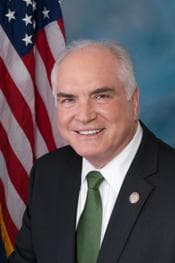
- Mike Kelly
- Cosponsors
- - 8 - 7
- Introduced
- In Committee
What this bill would do
This bill, known as the "Broadband Grant Tax Treatment Act," seeks to amend the Internal Revenue Code of 1986. It aims to exclude certain qualified broadband grants from gross income. These grants are specifically intended for broadband deployment. The bill identifies various programs, including those under the Infrastructure Investment and Jobs Act, that qualify for this tax treatment. It also includes provisions to prevent a double benefit for these expenditures.
Yes· 3 of 11
Would people in rural areas be better off under this?+5
The bill supports rural broadband through specific programs like those under the Rural Electrification Act.
Does this cut taxes for small businesses?+5
The bill excludes qualified broadband grants from gross income, which provides tax relief for entities receiving these funds for deployment.
Does this invest in rural communities?+5
The bill specifically includes grants from the Rural Electrification Act to support broadband deployment in rural areas.
The opposite
No question was scored the opposite.
Who it would affect, and how
Potential Positive Impacts for People
-
Tax Exclusion for Broadband Deployment: Gross income will not include any qualified broadband grant made for purposes of broadband deployment (Section 2(a)). This could benefit those receiving specific grants by ensuring the funds are not treated as taxable income.
-
Specific Program Support: The bill includes several grant types such as the Broadband Equity, Access, and Deployment Program, the State Digital Equity Capacity Grant Program, and others (Section 2(c)). This provides clear tax guidance for various federal and local broadband investment programs.
Potential Negative Impacts for People
-
Denial of Double Benefit: No deduction or credit will be allowed for expenditures related to the amount excluded from gross income (Section 2(b)).
-
Reduction of Property Basis: The adjusted basis of any property will be reduced by the amount of the excluded grant (Section 2(b)).
Groups and Interests Ranking
Every group the model scored this bill for, from -10 to +10. Hover a score for the reason it gave.
- Demographic And Interest Groups
- Good For Rural Residents+5Good For Native Americans+4Good For Low Income Households+3
- Economy And Finance
- Reduces Small Business Taxes+5Improves Small Business Support+4Improves Economic Growth+3
- Environment Energy And Infrastructure
- Improves Rural Development+5Improves Public Transit+2
- Education And Technology
- Improves Internet Access+5
- Healthcare
- Improves Healthcare Access+3
- Social Issues And Justice
- Improves Poverty Reduction+2
- 7/13/2026
- 2 Cosponsors added.
- 6/29/2026
- 1 Cosponsor added.
- 6/4/2026
- 1 Cosponsor added.
- 5/7/2026
- 1 Cosponsor added.
- 11/10/2025
- 1 Cosponsor added.
- 8/5/2025
- 1 Cosponsor added.
- 6/25/2025
- 1 Cosponsor added.
- 5/13/2025
- 1 Cosponsor added.
- 5/5/2025
- 1 Cosponsor added.
- 4/28/2025
- 2 Cosponsors added.
- 4/17/2025
- 1 Cosponsor added.
- 3/31/2025
- 1 Cosponsor added.
- 3/5/2025
- Referred to the House Committee on Ways and Means.
- 1 Cosponsor added.
- Introduced in House
One bill Congress.gov lists as related to this one — companions in the other chamber, earlier versions, and bills this one absorbed or was folded into.
 Rick Allen
Republican · Georgia
 Mike Bost
Republican · Illinois
 Jim Costa
Democrat · California
 Earl Carter
Republican · Georgia
 Donald Davis
Democrat · North Carolina
 Randy Feenstra
Republican · Iowa
 Dusty Johnson
Republican · South Dakota
 Jennifer McClellan
Democrat · Virginia
 Jimmy Panetta
Democrat · California
 David Rouzer
Republican · North Carolina
 Eric Sorensen
Democrat · Illinois
 Derek Schmidt
Republican · Kansas
 Eugene Vindman
Democrat · Virginia
 James Walkinshaw
Democrat · Virginia
 Rudy Yakym
Republican · Indiana