Bill · H.R. 1865· House(119-HR-1865)
Mining Waste, Fraud, and Abuse Prevention Act of 2025
- Introduced
- 3/5/2025
- Last activity
- 3/5/2025 — Referred to the House Committee on Natural Resources.
- Sponsored by
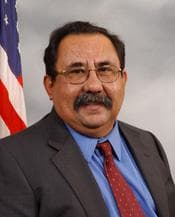
- Raúl Grijalva
- Cosponsors
- - 1 - 0
- Introduced
- In Committee
What this bill would do
The Mining Waste, Fraud, and Abuse Prevention Act of 2025 modifies requirements for locatable minerals on public domain lands by closing Federal land to new entry and location under existing general mining laws. It establishes new systems for prospecting licenses, noncompetitive leases, and small miner's leases while implementing stricter standards for exploration, operations permits, and reclamation to prevent land degradation. The Act creates a system for royalties and annual claim maintenance fees and funds an Abandoned Hardrock Mine Reclamation Program. Additionally, the legislation establishes strict penalties and oversight, granting the Secretary and the Secretary of Agriculture regulatory and investigative powers.
Yes· 3 of 9
Does this better protect air, water and wildlife?+7.5
The bill establishes strict standards for exploration, operations, reclamation, and enforcement mechanisms to prevent land degradation.
Does this better protect public land such as parks and forests?+7
The bill implements stricter standards for permits, financial assurance, and the reclamation of Federal lands.
Does this give the federal government more power?+6
The bill expands the regulatory, investigative, and oversight powers of the Secretary of the Interior and Agriculture.
The opposite· 3 of 13
Would business owners be better off under this?-5
The bill imposes new annual maintenance fees, higher regulatory standards, and the risk of heavy civil penalties for mining operators.
Is this likely to grow the economy?-3
The bill closes Federal land to new mining entry, which restricts future commercial mining expansion.
Would households on low incomes be better off under this?-1
The bill's regulatory costs may have broader economic impacts, though it primarily affects industry.
Who it would affect, and how
Potential Positive Impacts for People
-
Protection of Sacred and Cultural Sites: The bill prohibits mineral activities in sacred sites identified by Indian Tribes, protecting their religious and cultural significance (Section 111).
-
Enhanced Environmental Protections: The Act requires that mineral activities be carefully controlled to prevent unnecessary or undue degradation of Federal land and resources (Section s 301).
-
Support for Small Miners: The bill provides for a "small miner's lease," which offers exclusive rights to prospect for hardrock minerals on up to 200 acres (Section 105).
-
Reclamation of Abandoned Mines: Revenue from claim maintenance fees and other sources is directed toward the Abandoned Hardrock Mine Reclamation Program to address historical mining impacts (Section 109, Section 401).
-
Tribal Consultation: The bill requires agencies to conduct meaningful and timely consultation with Indian Tribes regarding mineral activities that may impact their lands or cultural practices (Section 201).
-
Protection of Natural Areas: The Act restricts mineral activities in several protected areas, including National Park System units, Wilderness study areas, and critical habitats (Section 111).
-
Public Transparency: The bill requires that records, reports, and inspection materials obtained by the Secretary or the Secretary of Agriculture be made immediately available to the public on the internet and in local areas, ensuring residents stay informed about nearby mineral activities (SEC. 511).
-
Increased Accountability: The Act establishes significant penalties, including fines and imprisonment, for those who engage in mineral activities without a permit or violate permit requirements, acting as a deterrent against illegal or unsafe mining (SEC. 507).
-
Protection of Existing Laws: A savings clause ensures that existing federal laws regarding environmental protection, the National Environmental Policy Act, the Clean Air Act, and the Safe Drinking Water Act are not altered or superseded (SEC. 510).
-
Preservation of Tribal Rights: The Act specifies that it shall not modify or affect various federal Indian laws, such as the Native American Graves Protection and Repatriation Act or the American Indian Religious Freedom Act (SEC. 510).
-
Protection of Tribal Sovereignty: The legislation explicitly states that nothing in the Act shall be construed to waive the sovereign immunity of any Indian Tribe (SEC. 510).
Potential Negative Impacts for People
-
Closure to New Mining Claims: The bill closes all Federal land to new entry and location under the general mining laws (Section 101).
-
Expiration of Existing Claims: Existing mining claims that do not have an approved plan of operations or a notice of operations may be subject to a 10-year limit or a shortened 3-year limit, after which they may become void (Section 101).
-
New Financial Obligations for Claim Holders: Claim holders are required to pay an annual maintenance fee of $200 per claim (Section 109).
-
Stringent Permitting and Financial Requirements: Operators must provide financial assurance, such as surety bonds or cash, to cover the costs of reclamation (Section s 306).
-
Increased Fees for Operators: An operator conducting mineral activities must pay a displaced material reclamation fee of 7 cents per ton of displaced material (Section 402).
-
Potential for Increased Costs through Penalties: The bill establishes various civil and criminal penalties for failures to comply with permit requirements, reporting, or environmental standards (Section 507, Section 506).
-
Strict Penalties for Violations: Individuals or entities found guilty of violating permit requirements can face fines of not less than $10,000 and imprisonment for up to six years; each day of a continuing violation counts as a separate violation (SEC. 507).
-
Increased Investigative Pressure: The Secretary is granted broad powers to conduct investigations, audits, and hearings, including the power to subpoena witnesses and require the production of books and records (SEC. 512).
-
Intrusive Entry and Inspection Rights: The Secretary has the right to enter any claim, license, or lease site without advance notice, including the power to stop and inspect motorized transportation if there is probable cause (SEC. 512).
-
Penalties for Obstructing Investigations: Any person who fails to obey a court order following a refused subpoena can be held in contempt and face a penalty of up to $10,000 per day (SEC. 512).
Groups and Interests Ranking
Every group the model scored this bill for, from -10 to +10. Hover a score for the reason it gave.
- Environment Energy And Infrastructure
- Improves Environmental Protections+7.5Improves Public Land Management+7
- Governance And Ideology
- Increases Federal Power+6Improves Government Transparency+5
- Demographic And Interest Groups
- Good For Native Americans+4.5Good For Rural Residents+3.5Good For Union Workers+1Good For Business Owners-5Good For Farmers-1Good For Gun Owners-1Good For Immigrants-1Good For Low Income Households-1Good For People With Disabilities-1Good For Retirees-1Good For Students-1Good For Urban Residents-1Good For Veterans-1Good For Women-1
- Economy And Finance
- Improves Small Business Support+0.5Improves Economic Growth-3
- Social Issues And Justice
- Improves Racial Equity+3.5Improves Affordable Housing-1
- 3/5/2025
- Referred to the House Committee on Natural Resources.
- 1 Cosponsor added.
- Introduced in House
 Jared Huffman
Democrat · California