Bill · H.R. 1864· House(119-HR-1864)
Risky Research Review Act
- Introduced
- 3/5/2025
- Last activity
- 3/5/2025 — Referred to the Committee on Science, Space, and Technology, and in addition to the Committee on Energy and Commerce, for a period to be subsequently determined by the Speaker, in each case for consideration of such provisions as fall within the jurisdiction of the committee concerned.
- Sponsored by
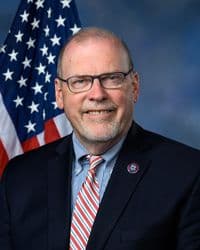
- H. Griffith
- Cosponsors
- None
- Introduced
- In Committee
What this bill would do
This bill establishes the Life Sciences Research Security Board as an independent agency within the Executive Branch. The Board is tasked with reviewing proposed Federal funding for high-risk life sciences research, including gain of function and dual use research of concern. It holds the authority to issue binding determinations on whether an agency may award funding for such research. Members of the Board are appointed by the President and include scientists, national security experts, and biosafety experts. The legislation also outlines specific agency procedures for attestation, certification, and notification of research changes.
Yes· 3 of 4
Does this better protect air, water and wildlife?+1
The bill provides oversight to protect agricultural crops and other plants from high-consequence pathogens.
Does this make what the government does easier for the public to see?+1
The bill requires regular reports to Congress and public publication of many Board determinations and violations.
Does this make health care easier to get in general?+1
The oversight of high-risk research aims to protect public health and prevent the spread of dangerous pathogens.
The opposite· 3 of 6
Would business owners be better off under this?-3
Research entities face increased compliance burdens, mandatory disclosures, and strict agency consent requirements for subcontracts.
Does this put more money into scientific research?-2
The bill introduces new mandatory review processes and potential funding suspensions for high-risk life sciences research.
Would union members be better off under this?-1
The potential for research pauses and funding disruptions could negatively impact workers in the life sciences industry.
Who it would affect, and how
Potential Positive Impacts for People
-
Enhanced National Security and Public Health Safety: The Board's mission is to review high-risk research to determine if it poses threats to public health, safety, national security, or agricultural crops (Section 7904(b); Section 7906(b)).
-
Increased Oversight of High-Risk Research: The Board has the power to review classified research and can direct agencies to temporarily suspend funding if the research is deemed high-risk (Section 7904(b); Section 7906(a)(4)).
-
Mandatory Conflict of Interest Protections: The bill requires the establishment of criteria to ensure Board members do not have conflicts of interest, which may include recusal or removal to maintain impartiality (Section 7902(c); Section 7902(e)).
Potential Negative Impacts for People
-
Mandatory Research Pauses: If circumstances change during active research, entities may be required to pause their life sciences research immediately upon identification of the change (Section 7905(f)(1)(A)).
-
Strict Compliance Burdens for Research Entities: Entities seeking Federal funding must provide attestations under the penalty of perjury regarding whether their research is high-risk or involves select agents or toxins (Section 7905(b)(1)).
-
Requirements for Subcontractor Disclosure: Entities performing high-risk research are required to continuously disclose any subcontracts or subawards and must obtain agency consent before awarding them (Section 7905(h)(1)).
Groups and Interests Ranking
Every group the model scored this bill for, from -10 to +10. Hover a score for the reason it gave.
- Demographic And Interest Groups
- Good For Business Owners-3Good For Union Workers-1
- Economy And Finance
- Increases Job Creation-1Reduces Government Spending-1
- Education And Technology
- Increases Scientific Research Funding-2
- Environment Energy And Infrastructure
- Improves Environmental Protections+1
- Governance And Ideology
- Improves Government Transparency+1
- Healthcare
- Improves Healthcare Access+1
- National Security And Foreign Policy
- Improves Cybersecurity Defense+1
- Social Issues And Justice
- Improves Poverty Reduction-1
- 3/5/2025
- Referred to the Committee on Science, Space, and Technology, and in addition to the Committee on Energy and Commerce, for a period to be subsequently determined by the Speaker, in each case for consideration of such provisions as fall within the jurisdiction of the committee concerned.
- Introduced in House
One bill Congress.gov lists as related to this one — companions in the other chamber, earlier versions, and bills this one absorbed or was folded into.