Bill · H.R. 1853· House(119-HR-1853)
CALL Act
- Introduced
- 3/5/2025
- Last activity
- 3/28/2025 — Referred to the Subcommittee on Conservation, Research, and Biotechnology.
- Sponsored by
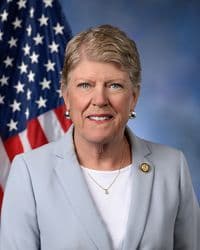
- Julia Brownley
- Cosponsors
- - 2 - 0
- Introduced
- In Committee
What this bill would do
The CALL Act requires the Secretary of Agriculture to conduct a study regarding how conservation programs and practices are used on leased agricultural land. This study aims to identify various barriers that prevent landowners and tenants from adopting these practices. The Secretary must collaborate with the Economic Research Service to complete this research. The study will look at many factors, including lease structures, ownership trends, and existing incentives. Finally, the Secretary must submit a report to Congress by December 31, 2026, including recommendations to address these barriers.
Yes· 3 of 8
Would farmers be better off under this?+6
The bill seeks to identify and address barriers that prevent farmers and ranchers from participating in conservation programs.
Would Black Americans be better off under this?+5
The bill mandates particular consideration for Black farmers and ranchers in the study of conservation barriers.
Would Native Americans be better off under this?+5
The bill mandates particular consideration for indigenous farmers and ranchers in the study of conservation barriers.
The opposite
No question was scored the opposite.
Who it would affect, and how
Potential Positive Impacts for People
-
Improved understanding of conservation barriers: The study aims to understand why participation in conservation programs is limited by factors such as lease terms, operator independence, and awareness of opportunities (Section 2).
-
Targeted support for specific groups: The study is required to give particular consideration to beginning farmers and ranchers, as well as people of color, including Black and indigenous farmers and ranchers (Section 3(d)).
-
Identification of effective solutions: The final report must include recommendations for addressing unique barriers to conservation, which can include those implementable under existing authorities or those requiring new congressional authorization (Section 3(e)).
-
Improved communication: The study will research how the Department of Agriculture communicates regarding conservation practice adoption to both landowners and farmers or ranchers who do not own the land they operate (Section 3(c)(12)).
Potential Negative Impacts for People
- No specific negative impacts are explicitly stated in the provided text.
Groups and Interests Ranking
Every group the model scored this bill for, from -10 to +10. Hover a score for the reason it gave.
- Demographic And Interest Groups
- Good For Farmers+6Good For African Americans+5Good For Native Americans+5Good For Business Owners+4Good For Rural Residents+4Good For Young Adults+3
- Environment Energy And Infrastructure
- Improves Environmental Protections+5
- Social Issues And Justice
- Improves Racial Equity+5
- 3/28/2025
- Referred to the Subcommittee on Conservation, Research, and Biotechnology.
- 3/5/2025
- Referred to the House Committee on Agriculture.
- 2 Cosponsors added.
- Introduced in House
 Melanie Stansbury
Democrat · New Mexico
 Andrea Salinas
Democrat · Oregon