Bill · H.R. 185· House(119-HR-185)
Responsible Legislating Act
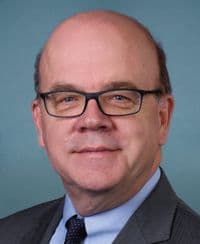
- Introduced
- 1/3/2025
- Last activity
- 3/14/2025 — Referred to the Subcommittee on Livestock, Dairy, and Poultry.
- Sponsored by
- James McGovern
- Cosponsors
- None
- Introduced
- In Committee
What this bill would do
The Responsible Legislating Act updates livestock reporting, advances retirement security, and provides resources for veterans and military families. It establishes protections for injured federal employees in specialized roles and creates a database to help people find lost retirement savings. The bill modifies the Internal Revenue Code regarding automatic enrollment, student loan matching, and small employer credits. Additionally, it includes provisions for domestic abuse victims, entrepreneurship training for service members, and the study of a National Museum of Asian Pacific American History and Culture. The legislation also addresses the semiconductor supply chain, foreign ownership of US ports, and increased penalties for certain crimes.
Yes· 3 of 26
Would people over 65 be better off under this?+5
Improves retirement savings access, catch-up contributions, and distribution rules.
Would Asian Americans be better off under this?+5
The establishment of a National Museum of Asian Pacific American History and Culture is a significant cultural win.
Would veterans be better off under this, taking everything together?+5
Veterans benefit from the Boots to Business program and improved transition assistance.
The opposite
No question was scored the opposite.
Who it would affect, and how
Potential Positive Impacts for People
-
Veterans' Access to Information: The bill requires a user-sary, searchable website to help veterans find information about approved apprenticeship programs, including costs and certification details (Section 202).
-
Protections for Injured Federal Employees: It allows individuals in "covered positions"—such as law enforcement, firefighters, and air traffic controllers—to transition into similar civil service positions while maintaining retirement service status (Section 302).
-
Increased Retirement Savings via Automatic Enrollment: The bill mandates automatic enrollment requirements for qualified cash or deferred arrangements, starting with a contribution of at least 3 percent (Section 414).
-
Support for Student Loan Repayment: Employers can provide matching contributions to retirement plans based on an employee's qualified student loan payments (Section 411).
-
Military Spouse Benefits: A new retirement plan eligibility credit is created to assist small employers in providing benefits to military spouses (Section 413).
-
Easier Access to Lost Savings: The "Retirement Savings Lost and Found" database will help individuals search for and locate missing retirement plan administrators and contact information (Section 427).
-
Updated Mandatory Distribution Limits: The bill increases the dollar limit for mandatory distributions (Section 428).
-
Support for Domestic Abuse Victims: Victims of domestic abuse can access retirement plan distributions without certain penalties (Section 439).
-
Empowerment of Military Families: The "Boots to Business Program" provides entrepreneurship training and tools to help members of the Armed Forces and their families start small businesses (Section 501).
-
Financial Relief for First Responders: Provisions for disability-related retirement payments for first responders, such as law enforcement and firefighters, may be excluded from gross income (Section 433).
-
Cultural Preservation and Recognition: A commission will study the feasibility of a National Museum of Asian Pacific American History and Culture to promote and preserve history and culture (Section 701).
-
Economic Security and Job Stability: Efforts to secure the semiconductor supply chain aim to protect industries employing millions of Americans and support national security (Section 802).
-
Improved Access to Pension Information: Certain pension benefit statements must be provided in paper form to ensure participants have physical records (Section 435).
Potential Negative Impacts for People
-
Mandatory Contribution Increases: Under new automatic enrollment rules, employee contributions must increase by 1 percentage point each year until reaching a cap of 10 to 15 percent (Section 414(b)(3)(A)).
-
Restrictions on Deductions: The bill disallows certain tax deductions for portions of startup costs covered by new increased tax credits (Section 402(c)).
-
Restrictions on Retirement Distributions: The bill imposes a three-year limit on the repayment of certain qualified birth or adoption distributions (Section 437).
-
Potential Impact on Existing Museums: The study for a new National Museum notes the need to consider the impact on existing history-related museums (Section 702).
-
Increased Penalties for Specific Crimes: The bill increases prison time for human trafficking and coercion/enticement crimes committed in school zones or near institutions of higher education (Section 601 and Section 602).
Groups and Interests Ranking
Every group the model scored this bill for, from -10 to +10. Hover a score for the reason it gave.
- Demographic And Interest Groups
- Good For Asian Americans+5Good For Retirees+5Good For Seniors+5Good For Veterans+5Good For Business Owners+4Good For Middle Class Households+4Good For Students+4Good For Young Adults+4Good For Low Income Households+3Good For Rural Residents+2Good For Women+2
- Economy And Finance
- Improves Small Business Support+5Reduces Small Business Taxes+4Improves Economic Growth+3Reduces Middle Class Taxes+3Improves Consumer Protection+2Increases Job Creation+2
- National Security And Foreign Policy
- Improves Veterans Benefits+5Improves International Trade+2
- Education And Technology
- Improves Student Loan Relief+4Improves Data Privacy+2
- Social Issues And Justice
- Improves Criminal Sentencing Reform+3Improves Racial Equity+3
- Governance And Ideology
- Improves Government Transparency+3
- Environment Energy And Infrastructure
- Improves Public Land Management+2
- Healthcare
- Improves Healthcare Access+2
- 3/14/2025
- Referred to the Subcommittee on Livestock, Dairy, and Poultry.
- 3/12/2025
- Referred to the Subcommittee on Economic Opportunity.
- 1/3/2025
- Referred to the Committee on Ways and Means, and in addition to the Committees on Agriculture, Armed Services, Veterans' Affairs, Oversight and Government Reform, Intelligence (Permanent Select), Foreign Affairs, Education and Workforce, Small Business, the Judiciary, Natural Resources, House Administration, Energy and Commerce, Homeland Security, Science, Space, and Technology, Appropriations, Rules, Ethics, Transportation and Infrastructure, the Budget, and Financial Services , for a period to be subsequently determined by the Speaker, in each case for consideration of such provisions as fall within the jurisdiction of the committee concerned.
- Introduced in House
5 bills Congress.gov lists as related to this one — companions in the other chamber, earlier versions, and bills this one absorbed or was folded into.