Bill · H.R. 1828· House(119-HR-1828)
School Bus Safety Act of 2025
- Introduced
- 3/4/2025
- Last activity
- 3/4/2025 — Referred to the Subcommittee on Highways and Transit.
- Sponsored by
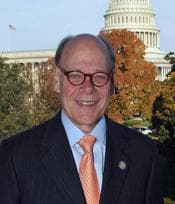
- Steve Cohen
- Cosponsors
- - 1 - 0
- Introduced
- In Committee
What this bill would do
The School Bus Safety Act of 2025 directs the Secretary of Transportation to issue new safety rules for school buses. These rules include requirements for 3-point safety belts in buses weighing more than 10,000 pounds. The Act also mandates fire suppression systems, improved firewalls, and stricter standards for interior flammability and smoke emissions. Additionally, it requires buses to be equipped with automatic emergency braking, event data recorders, and electronic stability control. The bill also calls for increased behind-the-wheel training for bus operators and a final rule regarding obstructive sleep apnea evaluations. Finally, it establishes a grant program to help local educational agencies purchase or modify school buses with these new safety features.
Yes· 3 of 5
Would children be better off under this?+9
The bill mandates various safety features like 3-point belts and fire suppression systems to protect student passengers.
Would students be better off under this?+9
The bill introduces significant safety enhancements for school bus travel, including seat belts and collision avoidance systems.
Does this put more money into public schools?+6
The bill establishes a safety grant program to assist local educational agencies in purchasing or modifying school buses.
The opposite
No question was scored the opposite.
Who it would affect, and how
Potential Positive Impacts for People
-
Enhanced Passenger Safety: The mandate for 3-point safety belts at each designated seating position for buses over 10,000 pounds provides better restraint for students (Section 3(a)).
-
Fire Prevention and Protection: Requiring fire suppression systems to address engine fires and ensuring firewalls prevent gas or flames from reaching the passenger compartment can protect occupants during a fire (Section 3(b)(1) and 3(b)(2)).
-
Reduced Smoke and Flame Risks: Implementing more rigorous standards for interior flammability and smoke emissions can help protect passengers from harmful fumes (Section 3(b)(3)).
-
Collision Avoidance and Stability: Requiring automatic emergency braking, event data recorders, and electronic stability control systems can help prevent or mitigate accidents (Section 3(c)(1)).
-
Improved Driver Training: Requiring at least 8 hours of behind-the-wheel instruction on public roads with a trained instructor aims to ensure bus operators are properly skilled (Section 3(c)(2)).
-
Financial Assistance for Schools: The establishment of a grant program allows local educational agencies to receive funds to purchase or modify school buses with new safety equipment (Section 5(a)).
Potential Negative Impacts for People
- No specific negative impacts are explicitly detailed in the text provided.
Groups and Interests Ranking
Every group the model scored this bill for, from -10 to +10. Hover a score for the reason it gave.
- Demographic And Interest Groups
- Good For Children+9Good For Students+9Good For Low Income Households+3
- Education And Technology
- Increases Public School Funding+6
- Environment Energy And Infrastructure
- Improves Public Transit+5
- 4/20/2026
- 1 Cosponsor added.
- 3/4/2025
- Referred to the Committee on Transportation and Infrastructure, and in addition to the Committee on Education and Workforce, for a period to be subsequently determined by the Speaker, in each case for consideration of such provisions as fall within the jurisdiction of the committee concerned.
- Referred to the Subcommittee on Highways and Transit.
- Introduced in House
One bill Congress.gov lists as related to this one — companions in the other chamber, earlier versions, and bills this one absorbed or was folded into.
 Kelly Morrison
Democrat · Minnesota