Bill · H.R. 1795· House(119-HR-1795)
NETWORKS Act
- Introduced
- 3/3/2025
- Last activity
- 3/3/2025 — Referred to the House Committee on Foreign Affairs.
- Sponsored by
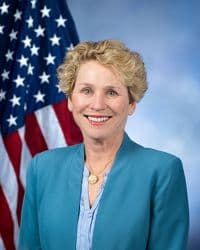
- Chrissy Houlahan
- Cosponsors
- - 0 - 3
- Introduced
- In Committee
What this bill would do
The NETWORKS Act aims to impose sanctions on foreign telecommunications companies involved in economic or industrial espionage against United States persons. The bill directs the President to use powers under the International Emergency Economic Powers Act to block significant transactions involving specific foreign persons. These foreign persons are defined as those producing fifth or future generation telecommunications technology and conducting business against U.S. national security interests. The legislation includes exceptions for intelligence activities and various forms of humanitarian assistance. It also allows the President to waive sanctions if deemed vital to national security.
Yes· 3 of 7
Does this better protect the country from computer attacks?+8
The bill strengthens national security by targeting industrial espionage in telecommunications.
Does this give people more control over their personal data?+7
The bill aims to protect communications and data security from foreign espionage.
Does this make patent and copyright rules fairer?+5
Targeting industrial espionage helps protect intellectual property interests.
The opposite
Does this make trade with other countries easier?-3
The imposition of sanctions may restrict trade and international economic transactions.
Who it would affect, and how
Potential Positive Impacts for People
-
Protection of National Security: The bill seeks to promote secure telecommunications networks, which Congress views as important to the national security of the United States (Section 2).
-
Security of Communications and Data: The legislation addresses risks posed by untrusted telecommunications vendors to communications and data security (Section 2).
-
Protection of Humanitarian Interests: Sanctions will not be imposed on transactions involving the sale of food, medicine, or medical devices, or the provision of humanitarian assistance (Section 3(c)(2)).
Potential Negative Impacts for People
-
Restrictions on Transactions: The President is directed to block and prohibit all significant transactions in property and interests in property of certain foreign persons (Section 3(a)).
-
Legal Penalties: Any person that violates, attempts to violate, or conspires to violate the provisions regarding blocked transactions shall be subject to specific penalties (Section 3(e)(2)).
Groups and Interests Ranking
Every group the model scored this bill for, from -10 to +10. Hover a score for the reason it gave.
- Education And Technology
- Improves Data Privacy+7Improves Intellectual Property Fairness+5Increases Big Tech Regulation+4
- National Security And Foreign Policy
- Improves Cybersecurity Defense+8Improves International Alliances+3Improves International Trade-3
- Economy And Finance
- Improves Consumer Protection+5
- Governance And Ideology
- Increases Federal Power+5
- 6/30/2025
- 1 Cosponsor added.
- 4/24/2025
- 1 Cosponsor added.
- 3/3/2025
- Referred to the House Committee on Foreign Affairs.
- 1 Cosponsor added.
- Introduced in House
 Brian Fitzpatrick
Republican · Pennsylvania
 Zachary Nunn
Republican · Iowa
 Dale Strong
Republican · Alabama