Bill · H.R. 1608· House(119-HR-1608)
Department of Homeland Security Vehicular Terrorism Prevention and Mitigation Act of 2025
- Introduced
- 2/26/2025
- Last activity
- 11/18/2025 — Received in the Senate and Read twice and referred to the Committee on Homeland Security and Governmental Affairs.
- Sponsored by
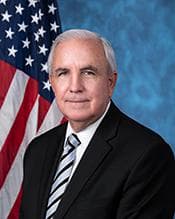
- Carlos Gimenez
- Cosponsors
- - 1 - 1
- Introduced
- Passed House
- In Senate committee
What this bill would do
This Act, known as the "Department of Homeland Security Vehicular Terrorism Prevention and Mitigation Act of 2025," directs the Secretary of Homeland Security to create a comprehensive report on vehicular terrorism. The report must address emerging threats, such as those involving autonomous or connected vehicles, and evaluate high-risk locations like critical infrastructure and crowded public spaces. It also requires a summary of actions taken by DHS, TSA, and CISA to research and implement prevention and response measures. Furthermore, the report must cover engagement with various stakeholders, law enforcement coordination, and the potential use of new technologies. The Secretary is also tasked with describing efforts to ensure that countermeasures respect privacy, civil rights, and civil liberties. Finally, the Secretary must provide a briefing to appropriate congressional committees following the report's submission.
Yes· 3 of 11
Does this better protect the country from computer attacks?+5
The bill addresses cybersecurity threats to autonomous vehicle software.
Does this give the government more power to monitor people inside the country?+4
The bill explores the use of surveillance systems and AI to monitor vehicle behavior.
Does this put more money into stopping terrorism?+3
The act funds research into preventing and responding to vehicular terrorism.
The opposite
No question was scored the opposite.
What Congress actually voted on
One recorded vote has been taken on this bill.
- The House: a fast-track vote, needing two-thirds to passPassed 400–15
The House sets aside its normal procedure to move quickly: no amendments, little debate, and a two-thirds bar instead of a simple majority. It is used for measures expected to be uncontroversial, so a bill that fails here failed despite broad expectations that it would not.
11/17/2025 · Roll call 286 · recorded as “On Motion to Suspend the Rules and Pass, as Amended”
Who it would affect, and how
Potential Positive Impacts for People
-
Enhanced Public Safety through Threat Assessment: The bill requires an assessment of current and emerging threats, including the misuse of autonomous vehicles and advancements in automotive technologies, to better understand how to protect the public (Section 3(a)(2)(A)).
-
Protection of High-Risk Areas: By reviewing vulnerable locations—ranging from critical infrastructure like power plants and airports to "soft-targets" like parades and places of worship—the government can better prepare to protect people in crowded spaces (Section 3(a)(2)(B)).
-
Improved Emergency Response: The report calls for the creation of real-time response strategies and the coordination of law enforcement to handle incidents, which can help neutralize threats more effectively (Section 3(a)(2)(C) and Section 3(a)(2)(E)).
-
Development of Protective Infrastructure: The bill looks at the strategic placement of physical barriers and bollards at higher-risk locations to prevent vehicle-based attacks (Section 3(a)(2)(C)(i)).
-
Safeguarding Individual Rights: The Act specifically requires the Department to engage with privacy, civil rights, and civil liberties stakeholders to ensure that new technologies and countermeasures respect individual rights and freedoms (Section 3(a)(2)(G)).
Potential Negative Impacts for People
-
New Vulnerabilities via Technology: The bill notes that emerging technologies, such as autonomous vehicles and ride-sharing platforms, could be leveraged by malicious actors to conduct sophisticated attacks (Section 2(4)).
-
Risks Associated with High-Tech Countermeasures: The use of advanced technologies, such as vehicle immobilization, remote disablement, and predictive analytics/AI to flag suspicious behavior, represents a significant change in how vehicles and movements are monitored (Section 3(a)(2)(F)).
Groups and Interests Ranking
Every group the model scored this bill for, from -10 to +10. Hover a score for the reason it gave.
- National Security And Foreign Policy
- Improves Cybersecurity Defense+5Increases Domestic Surveillance+4Increases Counter Terrorism Funding+3
- Governance And Ideology
- Increases Federal Power+3Improves Government Transparency+2Improves Privacy Rights+1
- Education And Technology
- Increases Scientific Research Funding+3Improves Data Privacy+2
- Environment Energy And Infrastructure
- Improves Roads And Bridges+3Improves Public Transit+2
- Demographic And Interest Groups
- Good For Urban Residents+3
- 11/18/2025
- Received in the Senate and Read twice and referred to the Committee on Homeland Security and Governmental Affairs.
- 11/17/2025
- Motion to reconsider laid on the table Agreed to without objection.
- Passed/agreed to in House: On motion to suspend the rules and pass the bill, as amended Agreed to by the Yeas and Nays: (2/3 required): 400 - 15 (Roll no. 286). (text: CR H4681-4682)
- On motion to suspend the rules and pass the bill, as amended Agreed to by the Yeas and Nays: (2/3 required): 400 - 15 (Roll no. 286). (text: CR H4681-4682)
- Considered as unfinished business. (consideration: CR H4691-4692)
- At the conclusion of debate, the Yeas and Nays were demanded and ordered. Pursuant to the provisions of clause 8, rule XX, the Chair announced that further proceedings on the motion would be postponed.
- DEBATE - The House proceeded with forty minutes of debate on H.R. 1608.
- Considered under suspension of the rules. (consideration: CR H4681-4682)
- Mr. Garbarino moved to suspend the rules and pass the bill, as amended.
- 8/8/2025
- Reported (Amended) by the Committee on Homeland Security. H. Rept. 119-222.
- Placed on the Union Calendar, Calendar No. 180.
- 4/9/2025
- Subcommittee on Transportation and Maritime Security Discharged
- Subcommittee on Counterterrorism and Intelligence Discharged
- Committee Consideration and Mark-up Session Held
- Ordered to be Reported (Amended) by Voice Vote.
- 4/8/2025
- 1 Cosponsor added.
- 2/26/2025
- Referred to the House Committee on Homeland Security.
- Referred to the Subcommittee on Transportation and Maritime Security.
- Referred to the Subcommittee on Counterterrorism and Intelligence.
- 1 Cosponsor added.
- Introduced in House
 Troy Carter
Democrat · Louisiana
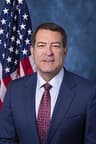 Mark Green
Republican · Tennessee