Bill · H.R. 1594· House(119-HR-1594)
Sustainable Aviation Fuel Act
- Introduced
- 2/26/2025
- Last activity
- 2/26/2025 — Referred to the Subcommittee on Aviation.
- Sponsored by
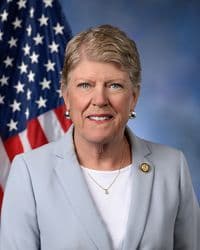
- Julia Brownley
- Cosponsors
- - 1 - 0
- Introduced
- In Committee
What this bill would do
The Sustainable Aviation Fuel Act establishes national goals to reduce greenhouse gas emissions in aviation by 35 percent by 2035 and reach net zero by 2050. To support these goals, the bill creates a low carbon aviation fuel standard and authorizes funding for various aviation technology and fuel projects. It mandates that the Department of Defense purchase a specific amount of sustainably produced aviation fuel under certain conditions. The legislation also authorizes research through the FAA and the Department of Energy regarding climate impacts and crop usage. Finally, it extends and modifies tax credits for the production and property related to sustainable aviation fuel.
Yes· 3 of 12
Does this cut the pollution that drives climate change?+8
The bill sets a national goal to reduce aviation greenhouse gas emissions by 35 percent by 2035 and reach net zero by 2050 through a low carbon fuel standard.
Does this put more money into wind, solar and other renewable power?+7
The bill authorizes significant funding for the production, transport, and storage of sustainable aviation fuels.
Does this put more money into scientific research?+6
The bill authorizes millions of dollars for research into aviation climate impacts and sustainable fuel feedstocks.
The opposite
No question was scored the opposite.
Who it would affect, and how
Potential Positive Impacts for People
-
Support for Aviation Technology Development: The bill authorizes $200,000,000 for fiscal years 2026 through 2030 to fund projects that produce, transport, blend, or store sustainable aviation fuel, or develop low-emission aviation technologies (Section 4).
-
Increased Research Capabilities: The bill authorizes $35,000,000 annually from 2026 through 2030 for the FAA to study climate impacts such as water vapor and contrails, and to develop new methodologies for quantifying climate impacts (Section 7).
-
Agricultural Research Opportunities: The Secretary of Energy is directed to carry out a program researching the use of cover crops or other crops grown for conservation to be used in fuel production (Section 8).
-
Economic Incentives for Fuel Production: The bill extends the clean fuel production credit for sustainable aviation fuel through December 31, 2032 (Section 9).
-
Investment in Production Infrastructure: The bill adds "sustainable aviation fuel production property" to the energy credit, providing incentives for property used to produce or distribute such fuel (Section 10).
Potential Negative Impacts for People
-
Mandated Fuel Reductions: The bill requires the establishment of a low carbon aviation fuel standard that mandates a reduction in carbon intensity for aviation fuels, targeting a 20 percent reduction by 2030 and a 50 percent reduction by 2050 (Section 5).
-
Regulatory Burdens on Producers: The fuel standard applies specifically to persons who produce or import aviation fuel (Section 5).
-
Potential Credit Loss: For certain energy properties, the Secretary may recapture the benefit of the tax credit if the sustainable aviation fuel production comprises less than 80 percent of the total fuel production of that property (Section 10).
Groups and Interests Ranking
Every group the model scored this bill for, from -10 to +10. Hover a score for the reason it gave.
- Environment Energy And Infrastructure
- Reduces Carbon Emissions+8Increases Renewable Energy Investment+7Improves Environmental Protections+3Improves Rural Development+2
- Demographic And Interest Groups
- Good For Business Owners+5Good For Farmers+3Good For Urban Residents+2
- Economy And Finance
- Increases Job Creation+3Improves Economic Growth+2Reduces Small Business Taxes+2
- Education And Technology
- Increases Scientific Research Funding+6
- National Security And Foreign Policy
- Improves Veterans Benefits+1
- 2/26/2025
- Referred to the Committee on Energy and Commerce, and in addition to the Committees on Transportation and Infrastructure, Armed Services, Science, Space, and Technology, and Ways and Means, for a period to be subsequently determined by the Speaker, in each case for consideration of such provisions as fall within the jurisdiction of the committee concerned.
- Referred to the Subcommittee on Aviation.
- 1 Cosponsor added.
- Introduced in House
 Bradley Schneider
Democrat · Illinois