Bill · H.R. 152· House(119-HR-152)
Federal Disaster Assistance Coordination Act
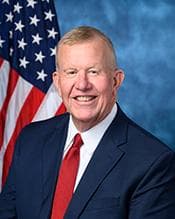
- Introduced
- 1/3/2025
- Last activity
- 1/14/2025 — Received in the Senate and Read twice and referred to the Committee on Homeland Security and Governmental Affairs.
- Sponsored by
- Mike Ezell
- Cosponsors
- - 0 - 2
- Introduced
- Passed House
- In Senate committee
What this bill would do
The Federal Disaster Assistance Coordination Act aims to amend the Disaster Recovery Reform Act of 2018. The bill directs the Administrator to conduct a study to improve how information is collected from disaster assistance applicants and grantees. It seeks to make these processes more efficient, simplified, and less burdensome. Additionally, the bill calls for a plan regarding the regular collection and reporting of information on Federal disaster assistance awarded. A working group will also be convened to examine preliminary damage assessments to identify duplication or fragmentation. Finally, the Administrator must submit a comprehensive report of these findings to specific congressional committees and make it available to the public.
Yes· 3 of 9
Does this improve help for people hit by a disaster?+5
The bill mandates a study to make disaster assistance information collection more efficient, flexible, and less duplicative.
Does this make what the government does easier for the public to see?+5
The bill requires a plan for regular reporting of disaster assistance and the creation of a public website for this information.
Would households on low incomes be better off under this?+3
Streamlining disaster assistance processes can provide quicker relief to those in need following a disaster.
The opposite
No question was scored the opposite.
What Congress actually voted on
One recorded vote has been taken on this bill.
- The House: a fast-track vote, needing two-thirds to passPassed 405–5
The House sets aside its normal procedure to move quickly: no amendments, little debate, and a two-thirds bar instead of a simple majority. It is used for measures expected to be uncontroversial, so a bill that fails here failed despite broad expectations that it would not.
01/13/2025 · Roll call 9 · recorded as “On Motion to Suspend the Rules and Pass”
Who it would affect, and how
Potential Positive Impacts for People
-
Streamlined Assistance Processes: The bill directs the development of a plan to modify information collection so that it is "streamled, expedited, efficient, flexible, consolidated, and simplified" (Section 2(a)(1)). This is intended to make the process "less burdensome, duplicative, and time consuming for applicants and grantees" (Section 2(a)(1)).
-
Increased Transparency: The bill requires the development of a plan for the "regular collection and reporting of information on Federal disaster assistance awarded," which includes "the establishment and maintenance of a website for presenting the information to the public" (Section 2(a)(2)).
-
Improved Damage Assessments: The bill seeks to identify "potential areas of duplication or fragmentation in preliminary damage assessments" (Section 2(b)(1)) and look into "potential emerging technologies, such as unmanned aircraft systems" to "expedite the administration of preliminary damage assessments" (Section 2(b)(3)).
Potential Negative Impacts for People
- No specific negative impacts or burdens are explicitly mentioned in the provided text.
Groups and Interests Ranking
Every group the model scored this bill for, from -10 to +10. Hover a score for the reason it gave.
- Demographic And Interest Groups
- Good For Low Income Households+3Good For Middle Class Households+3Good For Rural Residents+3Good For Urban Residents+3
- Economy And Finance
- Improves Fiscal Responsibility+3Improves Small Business Support+3
- Environment Energy And Infrastructure
- Improves Disaster Relief And F E M A+5
- Governance And Ideology
- Improves Government Transparency+5
- Education And Technology
- Increases Scientific Research Funding+2
- 1/14/2025
- Received in the Senate and Read twice and referred to the Committee on Homeland Security and Governmental Affairs.
- 1/13/2025
- Motion to reconsider laid on the table Agreed to without objection.
- Passed/agreed to in House: On motion to suspend the rules and pass the bill Agreed to by the Yeas and Nays: (2/3 required): 405 - 5 (Roll no. 9). (text: CR H100-101)
- On motion to suspend the rules and pass the bill Agreed to by the Yeas and Nays: (2/3 required): 405 - 5 (Roll no. 9). (text: CR H100-101)
- Considered as unfinished business. (consideration: CR H107-108)
- At the conclusion of debate, the Yeas and Nays were demanded and ordered. Pursuant to the provisions of clause 8, rule XX, the Chair announced that further proceedings on the motion would be postponed.
- DEBATE - The House proceeded with forty minutes of debate on H.R. 152.
- Considered under suspension of the rules. (consideration: CR H100-101)
- Mr. Graves moved to suspend the rules and pass the bill.
- 2 Cosponsors added.
- 1/4/2025
- Referred to the Subcommittee on Economic Development, Public Buildings, and Emergency Management.
- 1/3/2025
- Referred to the House Committee on Transportation and Infrastructure.
- Introduced in House
One bill Congress.gov lists as related to this one — companions in the other chamber, earlier versions, and bills this one absorbed or was folded into.
 Pablo Hernández
Democrat · Puerto Rico
 Stacey Plaskett
Democrat · Virgin Islands