Bill · H.R. 1493· House(119-HR-1493)
To reauthorize and make improvements to Federal programs relating to the prevention, detection, and treatment of traumatic brain injuries, and for other purposes.
- Introduced
- 2/21/2025
- Last activity
- 7/21/2026 — Received in the Senate and Read twice and referred to the Committee on Health, Education, Labor, and Pensions.
- Sponsored by
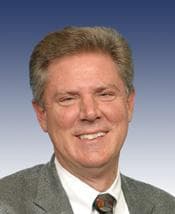
- Frank Pallone
- Cosponsors
- - 3 - 3
- Introduced
- Passed House
- In Senate committee
What this bill would do
This Act seeks to reauthorize and improve Federal programs focused on the prevention, detection, and treatment of traumatic brain injuries. It expands the scope of the Bill Pascrell, Jr., National Program for Traumatic Brain Injury Surveillance and Registries to better identify high-risk populations and their risk factors. The legislation also updates state grant programs to include Tribal considerations and specific maintenance of effort requirements. Furthermore, it authorizes new appropriations for surveillance and state programs through the year 2030. Finally, it mandates a study regarding the long-term symptoms and chronic conditions associated with traumatic brain injuries.
Yes· 3 of 6
Would Native Americans be better off under this?+5
The bill explicitly includes Tribal entities in state grant programs for traumatic brain injury activities.
Does this make health care easier to get in general?+5
The bill enhances the prevention, detection, and treatment of traumatic brain injuries through increased surveillance and data collection.
Would people with disabilities be better off under this?+4
The bill's focus on the long-term outcomes of brain injuries directly addresses the needs of those living with permanent impairments.
The opposite
Does this make the government pay for what it commits to?-1
The bill imposes a maintenance of effort requirement that mandates states maintain certain levels of non-federal spending.
Who it would affect, and how
Potential Positive Impacts for People
-
Improved Identification of High-Risk Groups: The bill expands the national program to identify populations at higher risk due to occupational or circumstantial factors, which helps in understanding who needs more protection. (Section 1(a)(1))
-
Increased Transparency and Information: The Secretary is required to make aggregated information regarding traumatic brain injuries and concussions publicly available on the CDC website, including strategies tailored to high-risk populations. (Section 1(a)(2))
-
Expanded Scope of Support: The definition of traumatic brain injury is updated to include injuries caused by factors like anoxia, infection, toxicity, surgery, or vascular disorders. (Section 1(b)(1))
-
Enhanced State and Tribal Support: State grant programs are updated to explicitly consider populations at higher risk and include "Tribal" entities in outreach efforts. (Section 1(b)(1))
-
Long-Term Research Insights: A required study will examine the incidence of long-term or chronic symptoms, such as dementia and mental health conditions, and assess existing services to identify research gaps. (Section 1(d)(1))
Potential Negative Impacts for People
-
Financial Maintenance Burdens on States: States or American Indian consortiums receiving grants must agree to maintain their non-Federal spending for these activities at a level no less than the previous fiscal year. (Section 1(b)(1))
-
Financial Limitations for Grants: While a waiver can be requested, the Secretary can waive no more than 50 percent of the matching fund amount, which may still pose a financial burden on some entities. (Section 1(b)(1))
Groups and Interests Ranking
Every group the model scored this bill for, from -10 to +10. Hover a score for the reason it gave.
- Demographic And Interest Groups
- Good For Native Americans+5Good For People With Disabilities+4Good For Low Income Households+2
- Healthcare
- Improves Healthcare Access+5Improves Mental Health Access+3
- Economy And Finance
- Improves Fiscal Responsibility-1
- Social Issues And Justice
- Improves Poverty Reduction+1
- 7/21/2026
- Received in the Senate and Read twice and referred to the Committee on Health, Education, Labor, and Pensions.
- 7/20/2026
- Motion to reconsider laid on the table Agreed to without objection.
- Passed/agreed to in House: On motion to suspend the rules and pass the bill, as amended Agreed to by voice vote. (text: CR H4646-4647)
- On motion to suspend the rules and pass the bill, as amended Agreed to by voice vote. (text: CR H4646-4647)
- DEBATE - The House proceeded with forty minutes of debate on H.R. 1493.
- Considered under suspension of the rules. (consideration: CR H4646-4648)
- Mr. Guthrie moved to suspend the rules and pass the bill, as amended.
- 7/2/2026
- Reported by the Committee on Energy and Commerce. H. Rept. 119-720.
- Placed on the Union Calendar, Calendar No. 625.
- 5/21/2026
- Committee Consideration and Mark-up Session Held
- Ordered to be Reported by the Yeas and Nays: 43 - 0.
- 5/19/2026
- 1 Cosponsor added.
- 7/23/2025
- 1 Cosponsor added.
- 3/25/2025
- 1 Cosponsor added.
- 2/21/2025
- Referred to the House Committee on Energy and Commerce.
- 3 Cosponsors added.
- Introduced in House
3 bills Congress.gov lists as related to this one — companions in the other chamber, earlier versions, and bills this one absorbed or was folded into.
 Don Bacon
Republican · Nebraska
 Dan Crenshaw
Republican · Texas
 Christopher Deluzio
Democrat · Pennsylvania
 Robert Menendez
Democrat · New Jersey
 John Rutherford
Republican · Florida
 Eugene Vindman
Democrat · Virginia