Bill · H.R. 1490· House(119-HR-1490)
TRIO Access Act
- Introduced
- 2/21/2025
- Last activity
- 2/21/2025 — Referred to the Committee on Ways and Means, and in addition to the Committee on Education and Workforce, for a period to be subsequently determined by the Speaker, in each case for consideration of such provisions as fall within the jurisdiction of the committee concerned.
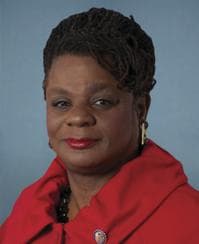
- Sponsored by
- Gwen Moore
- Cosponsors
- - 2 - 2
- Introduced
- In Committee
What this bill would do
This bill, known as the ``TRIO Access Act'', aims to amend the Internal Revenue Code of 1986. It seeks to allow certain tax return information disclosed to institutions of higher education for financial aid purposes to be used for specific Federal TRIO programs. Specifically, it expands the use of this information to include programs authorized under sections 402D and 402E of the Higher Education Act of 1965. The bill includes conforming amendments to the Higher Education Act of 1965 regarding the authorization to disclose and use information.
Yes· 3 of 6
Would people in their twenties and thirties be better off under this?+2
The bill enhances the administration of student support services that benefit college-aged individuals.
Would households on low incomes be better off under this?+2
The bill aids the administration of TRIO programs which are designed to support students from disadvantaged backgrounds.
Would students be better off under this?+2
The bill expands the ability of institutions to use financial information to support students in various federal programs.
The opposite
No question was scored the opposite.
Who it would affect, and how
Potential Positive Impacts for People
-
Expanded use of information for student support: Under Section 2, institutions of higher education would be allowed to use certain return information for programs authorized under sections 402D and 402E of the Higher Education Act of 1965, which relates to student support services and the Ronald E. McNair Post-Baccalaureate Achievement Program.
-
Improved eligibility determination: According to Section 3(c), the bill allows for situations where an institution of higher education may be unable to determine the eligibility of an individual for a program authorized under section 402D or 402E without this information.
Potential Negative Impacts for People
- No negative impacts or burdens are explicitly stated in the provided text.
Groups and Interests Ranking
Every group the model scored this bill for, from -10 to +10. Hover a score for the reason it gave.
- Demographic And Interest Groups
- Good For Low Income Households+2Good For Students+2Good For Young Adults+2
- Education And Technology
- Improves College Affordability+2
- Social Issues And Justice
- Improves Poverty Reduction+2
- Governance And Ideology
- Improves Government Transparency+1
- 3/6/2025
- 1 Cosponsor added.
- 2/21/2025
- Referred to the Committee on Ways and Means, and in addition to the Committee on Education and Workforce, for a period to be subsequently determined by the Speaker, in each case for consideration of such provisions as fall within the jurisdiction of the committee concerned.
- 3 Cosponsors added.
- Introduced in House
 Suzanne Bonamici
Democrat · Oregon
 Linda Sánchez
Democrat · California
 Glenn Thompson
Republican · Pennsylvania
 Claudia Tenney
Republican · New York