Bill · H.R. 1466· House(119-HR-1466)
Cardiac Arrest Survival Act of 2025
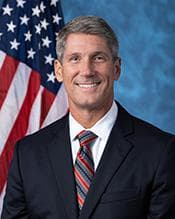
- Introduced
- 2/21/2025
- Last activity
- 2/21/2025 — Referred to the House Committee on Energy and Commerce.
- Sponsored by
- Scott Franklin
- Cosponsors
- - 5 - 4
- Introduced
- In Committee
What this bill would do
The Cardiac Arrest Survival Act of 2025 aims to amend the Public Health Service Act to clarify liability protections for the use of automated external defibrillators (AEDs). It seeks to establish a nationally uniform baseline of protection to encourage the deployment of these life-saving devices. The bill provides immunity from civil liability to individuals who use AEDs during perceived medical emergencies, as well as to those who own, manage, or occupy the premises where an AED is used or taken from. It also protects device owner-acquirers, provided the harm was not caused by a failure to maintain the device according to manufacturer guidelines. This legislation is intended to address the inconsistent patchwork of existing State "Good Samaritan" laws.
Yes· 3 of 6
Does this make health care easier to get in general?+5
The bill encourages the deployment of life-saving AEDs by providing uniform liability protections for users and owners.
Would business owners be better off under this?+4
The bill provides immunity from civil liability for owners and managers of premises where AEDs are used.
Would people over 65 be better off under this?+3
The bill facilitates quicker access to life-saving cardiac intervention via AEDs.
The opposite
Does this leave more decisions to the states?-4
The bill preempts State laws to establish a nationally uniform baseline of liability protection.
Who it would affect, and how
Potential Positive Impacts for People
-
Encouragement of AED Deployment: By establishing a nationally uniform baseline of protection, the bill intends to encourage the deployment of additional AEDs to save lives that might otherwise be lost to cardiac arrest (Section 2).
-
Protection for Individuals Using AEDs: Persons who use or attempt to use an AED on a victim of a perceived medical emergency are granted immunity from civil liability for resulting harm, provided they are not the owner-acquirer of the device (Section 3(a)).
-
Protection for Property Owners and Managers: People who own, occupy, or manage the premises where an AED is used or taken from are immune from civil liability (Section 3(b)).
-
Protection for Device Owners: Owners or acquirers of AEDs are protected from civil liability for harm resulting from the use or attempted use of the device, unless the harm was caused by a failure to properly maintain it according to manufacturer guidelines (Section 3(c)).
-
Consistency Across State Lines: The bill aims to resolve concerns for entities that operate in multiple states by providing a uniform standard that preempts inconsistent State laws (Section 2 and Section 3(f)).
Potential Negative Impacts for People
-
Loss of Immunity for Maintenance Failures: An owner-acquirer of an AED is not protected from liability if the harm was proximately caused by their failure to properly maintain the device according to manufacturer guidelines (Section 3(c)).
-
Exceptions for Misconduct: Immunity does not apply to individuals whose harm was proximately caused by willful or criminal misconduct, gross negligence, reckless misconduct, or a conscious, flagrant indifference to the rights or safety of the victim (Section 3(e)).
-
No Immunity for Licensed Health Professionals: Licensed or certified health professionals acting within the scope of their employment or agency are not covered by this immunity (Section 3(e)).
-
No Immunity for Certain Healthcare Entities: Hospitals, clinics, or other healthcare-providing entities are not covered if the harm was caused by an employee or agent acting within the scope of their employment or agency (Section 3(e)).
-
No Immunity for Leased Device Providers: An owner-acquirer who leased an AED to a healthcare entity for compensation is not protected if the harm was caused by an employee or agent of that entity acting within their scope of employment (Section 3(e)).
Groups and Interests Ranking
Every group the model scored this bill for, from -10 to +10. Hover a score for the reason it gave.
- Demographic And Interest Groups
- Good For Business Owners+4Good For Seniors+3Good For Urban Residents+2
- Healthcare
- Improves Healthcare Access+5
- Governance And Ideology
- Increase States Rights-4
- Economy And Finance
- Improves Small Business Support+3
- Social Issues And Justice
- Improves Poverty Reduction+1
- 11/17/2025
- 1 Cosponsor added.
- 2/21/2025
- Referred to the House Committee on Energy and Commerce.
- 8 Cosponsors added.
- Introduced in House
 Gus Bilirakis
Republican · Florida
 Donald Beyer
Democrat · Virginia
 Ken Calvert
Republican · California
 Kat Cammack
Republican · Florida
 Gerald Connolly
Democrat · Virginia
 Ben Cline
Republican · Virginia
 Darren Soto
Democrat · Florida
 Jefferson Van Drew
Republican · New Jersey
 Eugene Vindman
Democrat · Virginia