Bill · H.R. 1459· House(119-HR-1459)
Protect the West Act of 2025
- Introduced
- 2/21/2025
- Last activity
- 3/20/2025 — Referred to the Subcommittee on Conservation, Research, and Biotechnology.
- Sponsored by
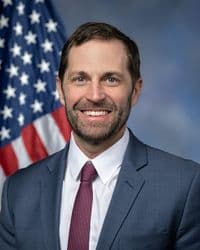
- Jason Crow
- Cosponsors
- None
- Introduced
- In Committee
What this bill would do
The "Protect the West Act of 2025" establishes the Outdoor and Watershed Restoration Fund to finance large-scale environmental projects. This fund supports two main tracks: a grant program for various entities and a Restoration and Resilience Partnership Program. The legislation aims to improve forest conditions, rangeland health, watershed function, and wildlife habitat. It creates a Restoration Fund Advisory Council to provide expertise and guidance to the Secretary of Agriculture. Additionally, the bill outlines specific ways to address wildfire risks and ecological restoration across Federal and non-Federal lands.
Yes· 3 of 13
Does this better protect air, water and wildlife?+8
The bill funds large-scale restoration of forests, rangelands, and watersheds.
Does this better protect public land such as parks and forests?+7
It establishes a fund and council to enhance the management of forest and watershed conditions.
Would people in rural areas be better off under this?+7
The bill explicitly targets rural communities for economic security and grant opportunities.
The opposite
No question was scored the opposite.
Who it would affect, and how
Potential Positive Impacts for People
-
Job Creation and Economic Security: The bill prioritizes projects that create or sustain jobs, employ local or regional labor, and expand the outdoor workforce (Section 5(e)(1)). It also seeks to improve long-term economic security in regions transitioning from fossil-s fuel extraction (Section 5(e)(7)).
-
Support for Local and Underserved Communities: The Secretary is directed to provide grant-writing training and mentoring to lower-capacity or underserved communities to lower barriers to participation (Section 5(d)(2)(C)). Furthermore, matching requirements may be waived for these same communities and rural areas (Section 5(d)(3)(C)).
-
Wildfire Risk Reduction: The partnership program aims to reduce uncharacteristic wildfires in high-risk areas (Section 6(a)(4)) and improve wildfire resistive construction within the home ignition zone (Section 5(a)(2)(B)).
-
Improved Ecosystem Health: Projects are designed to measurably improve forest conditions, rangeland and native grassland health, watershed function, and wildlife habitat (Section 2(8)).
Potential Negative Impacts for People
-
Restrictions on Land Use: Restoration and resilience projects are explicitly prohibited from being carried out in wilderness areas or designated wilderness study areas (Section 6(e)(4)(i)).
-
Prohibitions on Certain Activities: The bill prohibits projects from constructing permanent roads or trails (Section 6(e)(4)(ii)) and prevents the removal of vegetation on certain Federal lands where such removal is restricted by law or Presidential proclamation (Section 6(e)(4)(iii)).
-
Restrictions on Old Growth: Projects are not permitted to remove old growth stands (Section 6(e)(4)(v)).
Groups and Interests Ranking
Every group the model scored this bill for, from -10 to +10. Hover a score for the reason it gave.
- Environment Energy And Infrastructure
- Improves Environmental Protections+8Improves Public Land Management+7Improves Disaster Relief And F E M A+6Improves Rural Development+5
- Demographic And Interest Groups
- Good For Rural Residents+7Good For Native Americans+6Good For Business Owners+4Good For Farmers+4Good For Low Income Households+3
- Economy And Finance
- Increases Job Creation+7Improves Economic Growth+5
- Governance And Ideology
- Increases Federal Power+3Improves Government Transparency+2
- 3/20/2025
- Referred to the Subcommittee on Conservation, Research, and Biotechnology.
- 2/21/2025
- Referred to the Committee on Agriculture, and in addition to the Committee on Natural Resources, for a period to be subsequently determined by the Speaker, in each case for consideration of such provisions as fall within the jurisdiction of the committee concerned.
- Introduced in House
One bill Congress.gov lists as related to this one — companions in the other chamber, earlier versions, and bills this one absorbed or was folded into.